All species › Passerines › Gnatwrens and gnatcatchers › California Gnatcatcher
Position in the tree Birds Aves › Birds with a flexible palate Neognathae › All other modern birds Neoaves › Landbirds Telluraves › Falcons, parrots and passerines Australaves › Falcons and passerines Eufalconimorphae › Parrots and passerines Psittacopasserae
California Gnatcatcher | Polioptila californica
Californische muggenvanger | Perlita californiana
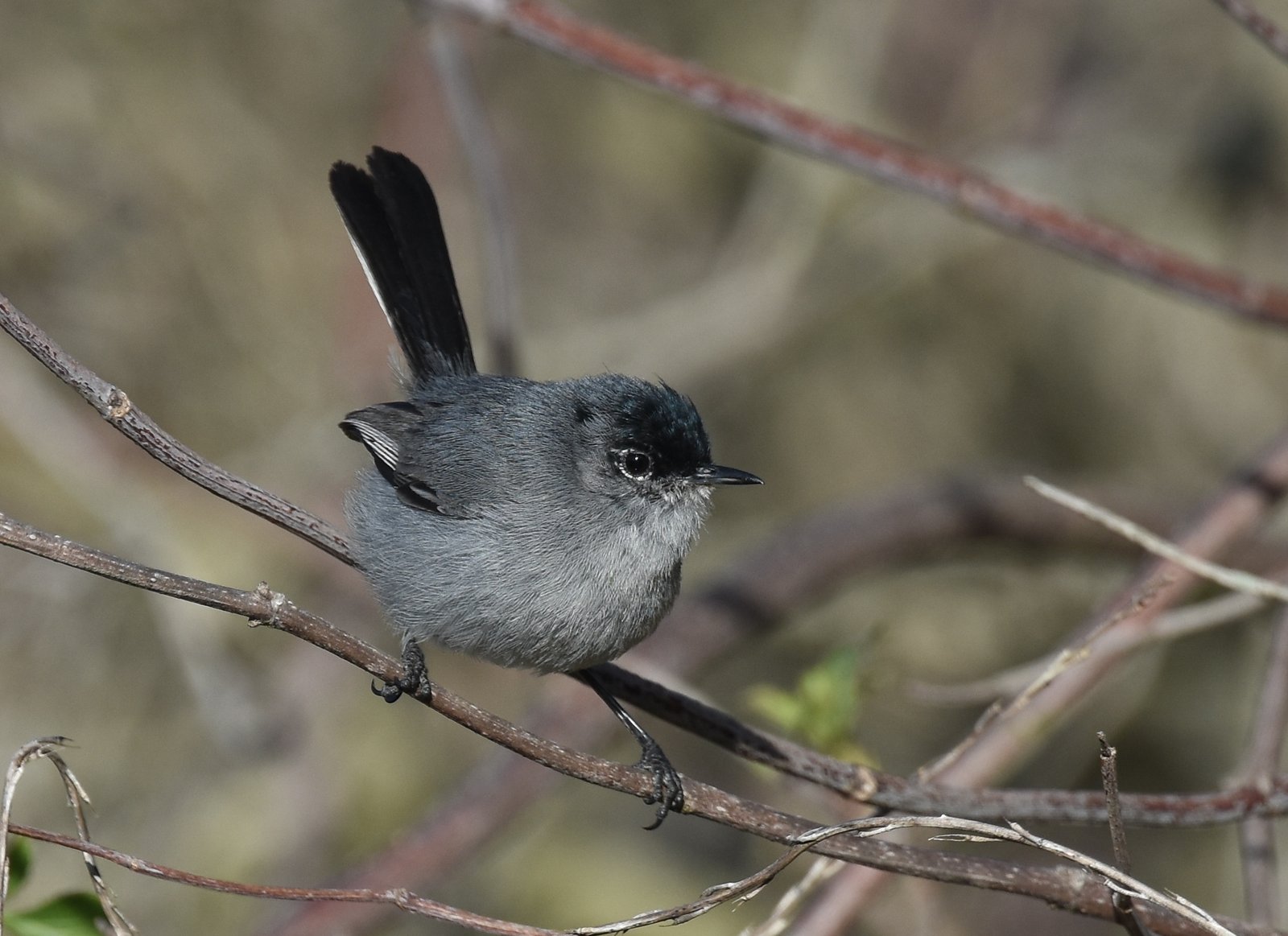
The California Gnatcatcher is a dark grey gnatcatcher of coastal sage scrub and desert scrub, with a tail that is almost entirely black below. It was formerly included in Black-tailed Gnatcatcher. In the guide area it lives only on the Baja California Peninsula.
Voice
The call is distinctive: a plaintive, mewing zeeew, like a kitten's mew, rising and falling in pitch. Also short, rasping calls.
Recording: A Richardson — CC BY-NC-SA 4.0 · converted to mono · xeno-canto
Identification
10–11 cm, with a long tail. Upperparts dark grey, underparts greyish with brownish-grey flanks. Narrow white eye-ring. In the breeding season the male has a black cap reaching above the eye; outside the breeding season often only a short black line above the eye. Tail black; seen from below almost entirely black, with very narrow white edges to the outer feathers.
Confusion species
Black-tailed Gnatcatcher Polioptila melanura is paler grey, has whiter underparts and more white on the tail edges, and lives mainly in desert scrub. Blue-grey Gnatcatcher Polioptila caerulea has an almost entirely white underside to the tail.
Habitat
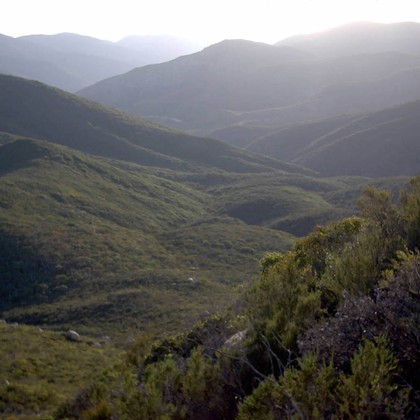
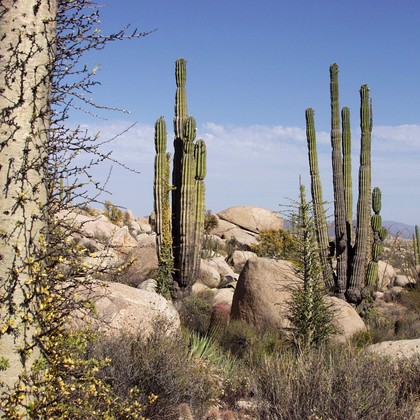
Coastal sage scrub on dry slopes and terraces and, further south, desert scrub; mostly below 500 m. It lives in pairs in a permanent territory and searches low shrubs for small insects and spiders.
Where the bird is most at home, classified by the vegetation units of Mexico and Central America.
Range and movements
Baja California Peninsula, from the north-west on the Pacific side south to the Cape region of Baja California Sur. Outside the guide area only in south-western California in the United States.
- Resident
- dark = core range, pale = thinly spread
How and when to look
The mewing call is often the first sign; it is locally common in coastal sage scrub in north-western Baja California.
Conservation status
Not threatened. In southern California it has declined strongly through the loss of coastal sage scrub; that population is legally protected as threatened in the United States.
Scientific name
Polioptila californica | Brewster, 1881
Brewster described the species in 1881 and placed it straight away in the genus where it still stands. The genus Polioptila was introduced in 1855 by Sclater. Polioptila is Greek, from polios 'grey' and ptilon 'feather': 'grey-feathered'. californica refers to California, where the type was collected. The specimen the first description was based on came from Riverside, California.