All species › Passerines › Gnatwrens and gnatcatchers › Black-capped Gnatcatcher
Position in the tree Birds Aves › Birds with a flexible palate Neognathae › All other modern birds Neoaves › Landbirds Telluraves › Falcons, parrots and passerines Australaves › Falcons and passerines Eufalconimorphae › Parrots and passerines Psittacopasserae
Black-capped Gnatcatcher | Polioptila nigriceps
Zwartkapmuggenvanger | Perlita sinaloense
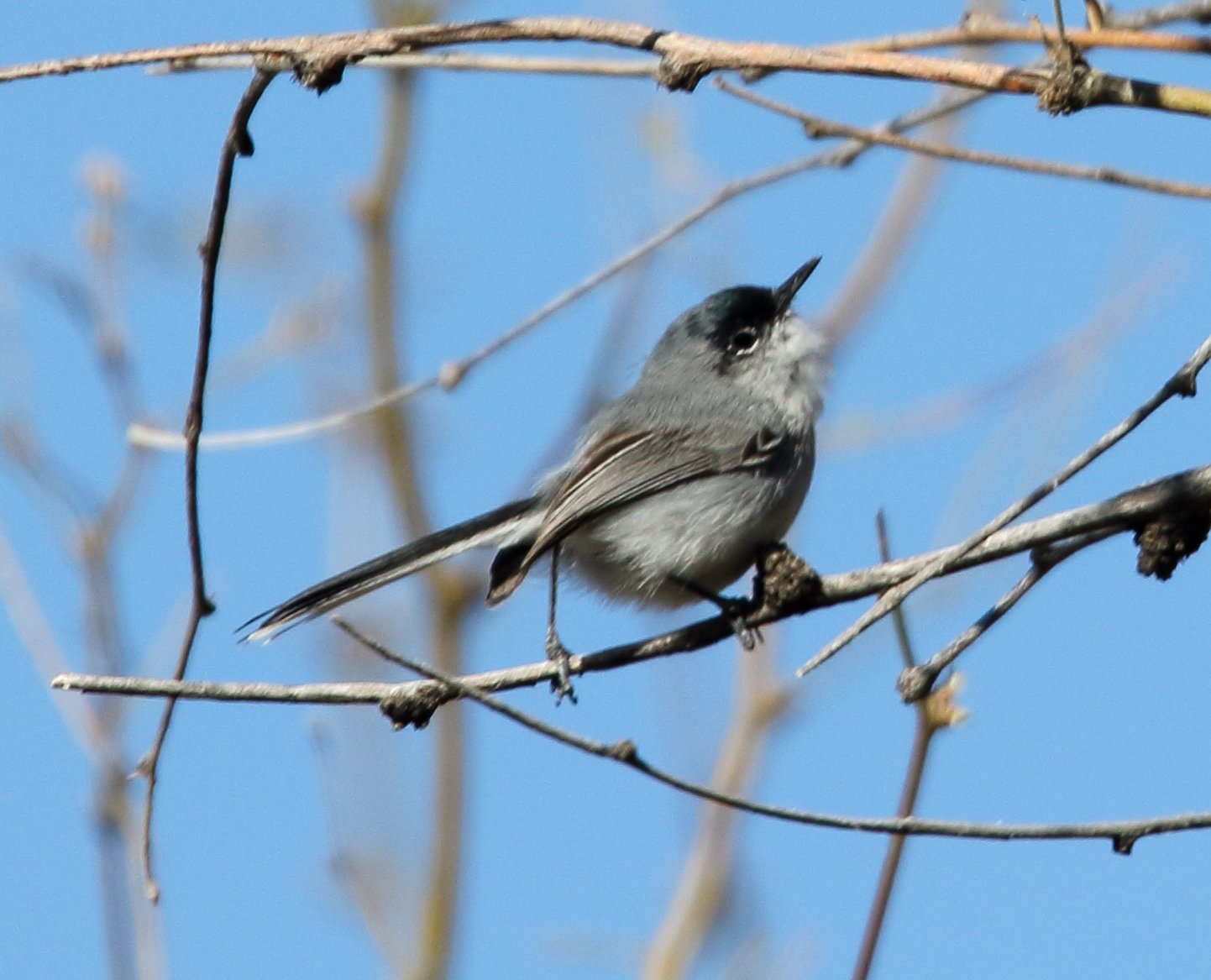
The Black-capped Gnatcatcher is a grey gnatcatcher of dry forest and thorn scrub in western Mexico, with a relatively long bill. The breeding male has a full black cap. It occurs almost only in the guide area.
Voice
Nasal, mewing calls, somewhat harsher than those of Blue-grey Gnatcatcher, and a short, chattering song.
Recording: Isain Contreras Rodríguez — CC BY-NC-SA 4.0 · converted to mono · xeno-canto
Identification
10–11 cm, with a long tail. Upperparts blue-grey, underparts white. Bill long and thin for a gnatcatcher. In the breeding season the male has a glossy black cap reaching below the eye; outside the breeding season, and in the female, the head is grey with a white eye-ring. Tail strongly graduated, black with white along the outer feathers; seen from below largely white.
Confusion species
Blue-grey Gnatcatcher Polioptila caerulea, present in the same area in winter, has a shorter bill and in the male only a narrow black line above the eye. Black-tailed Gnatcatcher Polioptila melanura has an almost entirely black underside to the tail. White-lored Gnatcatcher Polioptila albiloris lives further south.
Habitat
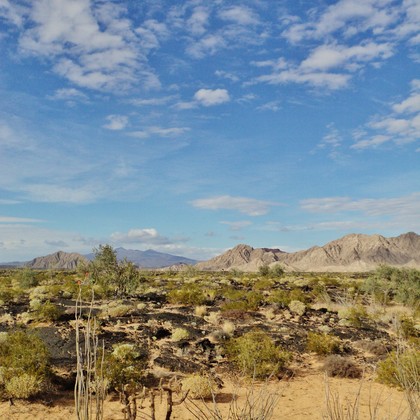
Thorn scrub, dry tropical deciduous forest and scrub along streams and in dry canyons, in lowlands and on low slopes. It gleans small insects and spiders from foliage, often in pairs.
Where the bird is most at home, classified by the vegetation units of Mexico and Central America.



Range and movements
Pacific slope of western Mexico, from Sonora and south-western Chihuahua south to about Colima. Outside the guide area very rare and local in south-eastern Arizona in the United States.
- Resident
- dark = core range, pale = thinly spread
How and when to look
Search vegetated dry canyons and streams lined with shrubs in Sonora and Sinaloa. Females and non-breeding birds closely resemble Blue-grey Gnatcatcher; note the bill length.
Conservation status
Not threatened. Locally fairly common in suitable thorn scrub and dry forest.
Scientific name
Polioptila nigriceps | Baird, 1864
Baird described the species in 1864 and placed it straight away in the genus where it still stands. The genus Polioptila was introduced in 1855 by Sclater. Polioptila is Greek, from polios 'grey' and ptilon 'feather': 'grey-feathered'. nigriceps is Latin, from niger 'black' and -ceps '-headed', after the male's black cap. The specimen the first description was based on came from Mazatlán, Sinaloa, Mexico.