All species › Kingfishers, bee-eaters and rollers › Motmots › Blue-throated Motmot
Position in the tree Birds Aves › Birds with a flexible palate Neognathae › All other modern birds Neoaves › Landbirds Telluraves › Raptors, owls, kingfishers and woodpeckers Afroaves › Mousebirds, rollers and woodpeckers Coraciimorphae › Trogons and cavity nesters Cavitaves › Hornbills, kingfishers and woodpeckers Picocoraciae › Kingfishers, bee-eaters and woodpeckers Picodynastornithes
Blue-throated Motmot | Aspatha gularis
Blauwkeelmotmot | Momoto garganta azul
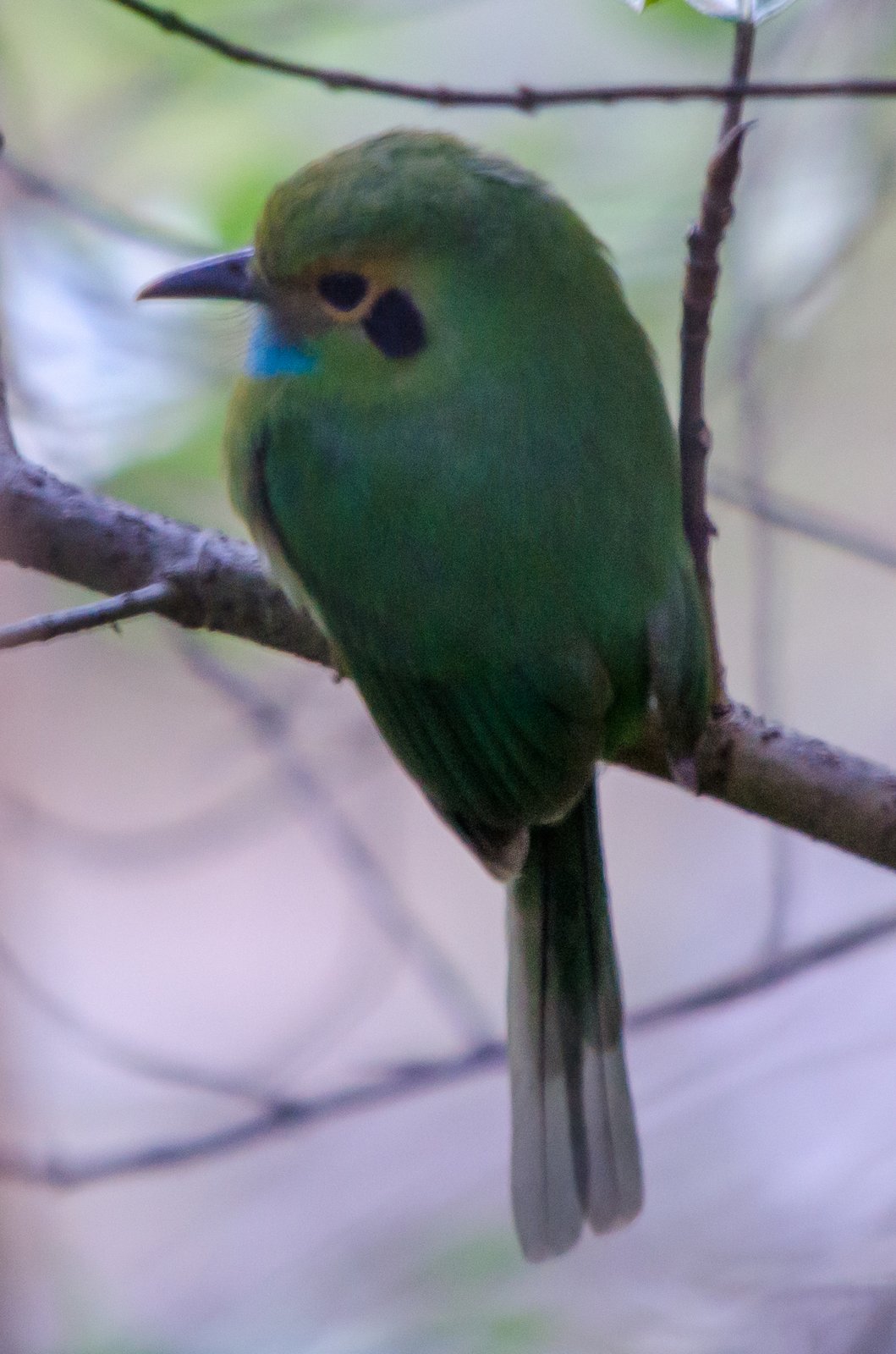
The Blue-throated Motmot is the motmot of the highlands of northern Central America, from Chiapas to Honduras. It is the only species of the genus Aspatha and occurs only in the guide area. Unlike most motmots it has a tail without rackets.
Voice
A series of hollow, owl-like hoo-hoo-hoo or oot-oot notes; pairs often call in duet, mainly around dawn and dusk. The sound can be mistaken for a small owl.
Recording: Sasha Robinson — CC BY-NC-SA 4.0 · converted to mono · xeno-canto
Identification
26–28 cm. Largely green, paler and more olive below. The throat is turquoise to sky blue. Behind the eye is a round black ear spot surrounded by a paler, ochre or greenish zone, and on the breast a small black spot. The tail is long, graduated and green to blue-green, without bare shafts or rackets. The bill is blackish and fairly narrow. The sexes are alike.
Confusion species
Few other motmots occur in the highlands. Lesson's Motmot Momotus lessonii and Russet-crowned Motmot Momotus mexicanus mostly live lower, are larger, have a black mask and tail rackets; the first has a black crown ringed blue, the second a rufous crown. No other motmot in the guide area has a blue throat.
Habitat
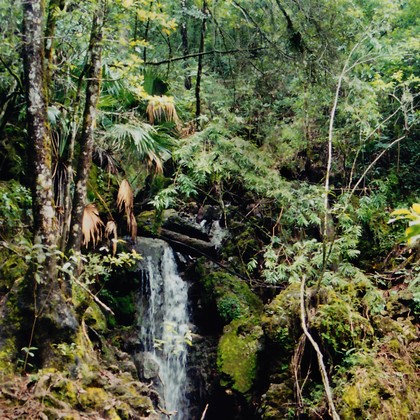
Cloud forest, humid pine-oak and oak forest in the mountains, mostly between 1500 and 3000 m, also in ravines, at forest edges and in shade coffee bordering forest. It sits still on a branch in the lower and middle tree layers and catches insects and other small animals. It nests in a self-dug tunnel in a steep bank or road cut.
Where the bird is most at home, classified by the vegetation units of Mexico and Central America.

Range and movements
Highlands of Chiapas in southern Mexico, Guatemala, El Salvador and Honduras. Absent from Nicaragua and further south. Not present outside the guide area.
- Resident
- dark = core range, pale = thinly spread
How and when to look
The duet of hollow notes at twilight is often the first sign of its presence. Recorded in high-elevation protected areas such as La Tigra near Tegucigalpa in Honduras and Montecristo in El Salvador.
Conservation status
Least Concern. The range is small and montane forest is cleared locally, but the species is still fairly common in suitable forest.
Scientific name
Aspatha gularis | (de Lafresnaye, 1840)
De Lafresnaye described the species in 1840 as Prionites gularis; because it was later moved to another genus, the author and year stand in brackets. The genus Aspatha was introduced in 1892 by Sharpe. Aspatha is Greek, from a- 'without' and spathē 'spatula': the central tail feathers lack the racket tips of other motmots. gularis is New Latin for 'of the throat', from gula 'throat', after the blue throat. The specimen the first description was based on came from Guatemala.