All species › Passerines › New World blackbirds, troupials and allies › Black-vented Oriole
Position in the tree Birds Aves › Birds with a flexible palate Neognathae › All other modern birds Neoaves › Landbirds Telluraves › Falcons, parrots and passerines Australaves › Falcons and passerines Eufalconimorphae › Parrots and passerines Psittacopasserae
Black-vented Oriole | Icterus wagleri
Waglers troepiaal | Bolsero de Wagler
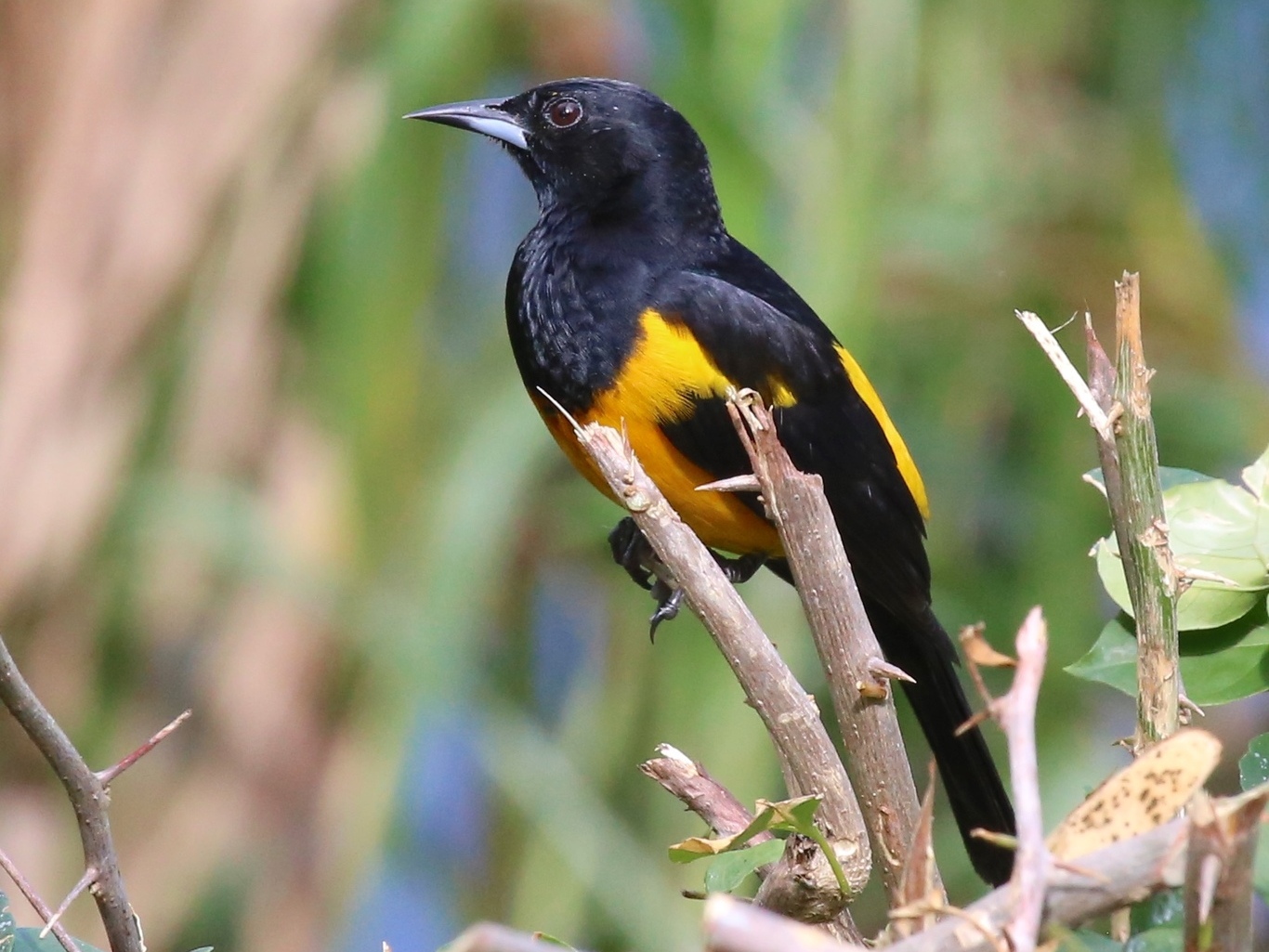
The Black-vented Oriole is an orange-yellow oriole with a black head, breast, back, wings and tail. It lives in dry, semi-open country from northern Mexico to north-western Nicaragua. The black undertail coverts separate it from the other black-headed orioles in the guide area.
Voice
The song is an irregular series of high, somewhat nasal whistles and chattering notes. Call a nasal nyeh, often repeated, and a dry, rattling chatter.
Recording: Manuel Grosselet — CC BY-NC-SA 4.0 · converted to mono · xeno-canto
Identification
20–23 cm. Adult with black head, throat and upper breast and black back, wings and tail. Belly, flanks, rump and a patch on the shoulder orange-yellow to yellow. Undertail coverts black. No white wing bars. Bill slender, slightly curved and black. The sexes are alike. Juveniles olive-yellow with a black throat; immatures in their second year with a mottled black-and-yellow pattern.
Confusion species
Scott's Oriole Icterus parisorum is lemon yellow with white wing bars and yellow undertail coverts. Audubon's Oriole Icterus graduacauda has a greenish-yellow back and yellow undertail coverts. Bar-winged Oriole Icterus maculialatus has a white patch on the wing and yellow undertail coverts. Black-cowled Oriole Icterus prosthemelas, of the humid lowlands on the Caribbean side, has yellow undertail coverts. Young Hooded Orioles Icterus cucullatus have a black throat but white wing bars.
Habitat
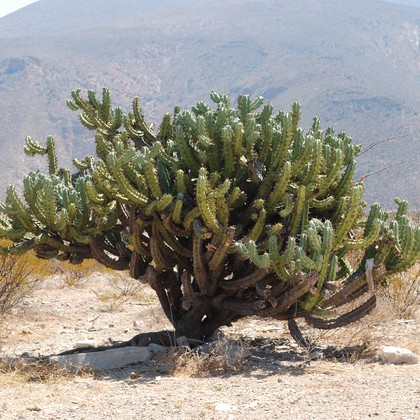
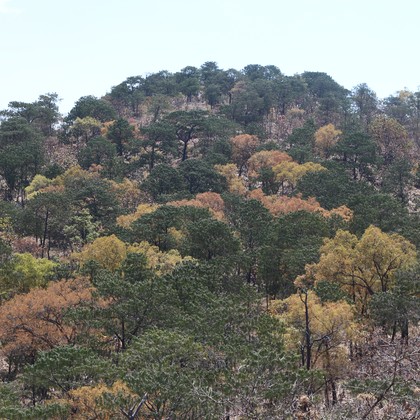
Dry and semi-arid open woodland, thorn scrub, oak and pine-oak woodland, riparian woodland, and gardens and parks with trees, mainly between about 500 and 2,500 m. It searches for insects, fruit and nectar, among others at flowering agaves and trees. It builds a hanging, pouch-shaped nest.
Where the bird is most at home, classified by the vegetation units of Mexico and Central America.




Range and movements
From northern Mexico (Sonora, Chihuahua, Coahuila and Nuevo León) south through the highlands and the Pacific slope to Chiapas, and further in Guatemala, El Salvador, Honduras and north-western Nicaragua. Rare vagrant to the southern United States. Largely resident; in the north some birds move to lower or more southerly areas in winter.
- Resident
- dark = core range, pale = thinly spread
How and when to look
When a bird is seen from below, check the undertail coverts first: black means Black-vented Oriole, yellow points to one of the other black-headed orioles.
Conservation status
Not threatened (LC). Widespread and fairly common in dry, semi-open country; also occurs in gardens and villages.
Scientific name
Icterus wagleri | Sclater, 1857
Sclater described the species in 1857 and placed it straight away in the genus where it still stands. The genus Icterus was introduced in 1760 by Brisson. Icterus is from Ancient Greek ikteros, a yellow bird usually taken to be the golden oriole, the sight of which was thought to cure jaundice. wagleri honours the German zoologist Johann Georg Wagler (1800–1832), a specialist in reptiles and birds. The specimen the first description was based on came from Mexico (unspecified).