All species › Passerines › New World warblers › Black-throated Green Warbler
Position in the tree Birds Aves › Birds with a flexible palate Neognathae › All other modern birds Neoaves › Landbirds Telluraves › Falcons, parrots and passerines Australaves › Falcons and passerines Eufalconimorphae › Parrots and passerines Psittacopasserae
Black-throated Green Warbler | Setophaga virens
Gele zwartkeelzanger | Chipe dorso verde
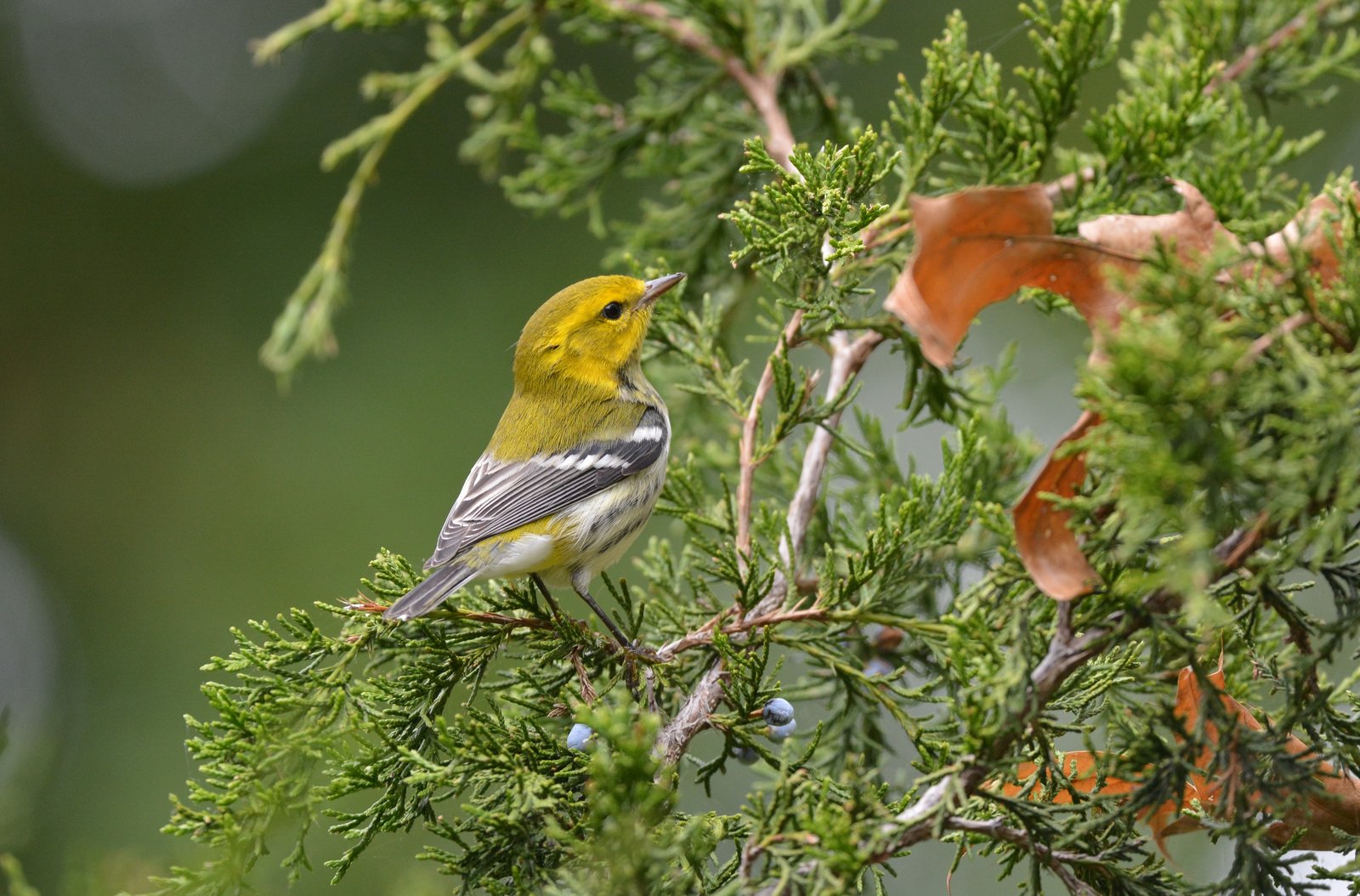
The Black-throated Green Warbler is a small warbler with a yellow head, an olive-green back and, in the male, a black throat and breast. It breeds in mixed and coniferous forest in Canada and the eastern United States. In the guide area it is a common winter visitor, mainly to montane and foothill forest from eastern Mexico to Panama.
Voice
The song is a buzzy series of five or six notes, zee zee zoo zoo zee or zoo zee zoo zoo zee; in the guide area heard mainly in spring. The call is a flat, short tsik, the flight call a high see.
Recording: Bobby Wilcox — CC BY-NC-SA 4.0 · converted to mono · xeno-canto
Identification
11–12 cm. Face bright yellow with an olive-green cheek patch and a narrow dark line through the eye; crown and back olive-green. Two broad white wing bars. Underparts white with black streaks on the flanks and a pale yellow wash at the vent. The male has a black throat and breast; in the female and young birds the throat is yellowish or white and the black is limited to spots on the sides of the breast. In winter the male's black is partly obscured by pale fringes.
Confusion species
Townsend's Warbler Setophaga townsendi has a dark cheek patch outlined in yellow, a yellow breast and black spots on the back. Hermit Warbler Setophaga occidentalis has an all-yellow head without a cheek patch and a grey back. Golden-cheeked Warbler Setophaga chrysoparia, a scarce winter visitor in the highlands from Chiapas to Nicaragua, has a black line through the eye and, in the male, a black crown and back; the vent is white without a yellow wash.
Habitat
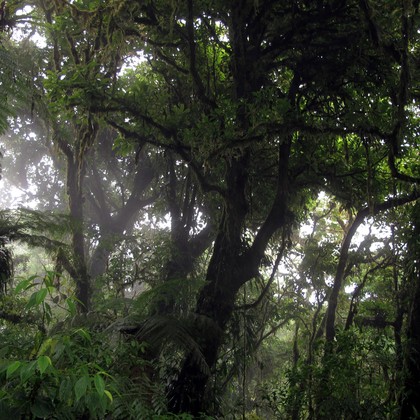
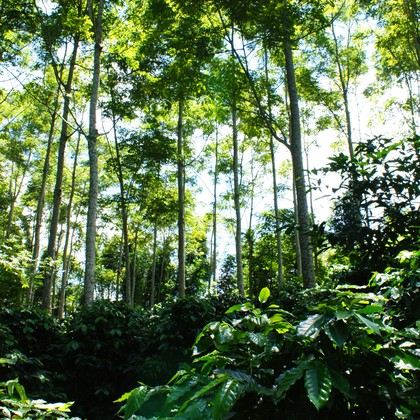
In winter mainly cloud forest, pine-oak forest and humid forest in the hills and mountains, from about 500 to 3000 m, also forest edges, secondary forest and shade coffee; in smaller numbers in lowland forest. It searches for insects in the middle and upper levels of the trees and often joins mixed flocks.
Where the bird is most at home, classified by the vegetation units of Mexico and Central America.





Range and movements
Breeds in Canada and the eastern United States, south along the Appalachians and locally on the Gulf of Mexico coast. Winters from north-eastern and central Mexico through Central America to Panama, and in small numbers in the Caribbean. Common on migration in eastern Mexico. On the range map, areas with year-round occurrence in the north of the guide area reflect overlapping records of migrants and wintering birds; the species does not breed in the guide area.
- Winter visitor (c. Oct–Mar)
- dark = core range, pale = thinly spread
How and when to look
In winter one of the most frequent North American warblers in mixed flocks in montane forest, for example in the highlands of Chiapas, Guatemala and Costa Rica. The bright yellow face with the olive-green cheek patch shows well in the canopy.
Conservation status
Not threatened (LC). Common and widespread; the breeding population in North America is large and appears stable.
Scientific name
Setophaga virens | (Gmelin, 1789)
Gmelin described the species in 1789 as Motacilla virens; because it was later moved to another genus, the author and year stand in brackets. The genus Setophaga was introduced in 1827 by Swainson. Setophaga is Greek, from sēs, sētos 'moth' and -phagos '-eating': 'moth-eater'. virens is Latin for 'green', after the olive-green upperparts. The specimen the first description was based on came from Philadelphia, Pennsylvania (USA).