All species › Passerines › New World warblers › Black-polled Yellowthroat
Position in the tree Birds Aves › Birds with a flexible palate Neognathae › All other modern birds Neoaves › Landbirds Telluraves › Falcons, parrots and passerines Australaves › Falcons and passerines Eufalconimorphae › Parrots and passerines Psittacopasserae
Black-polled Yellowthroat | Geothlypis speciosa
Zwartkruinmaskerzanger | Mascarita transvolcánica
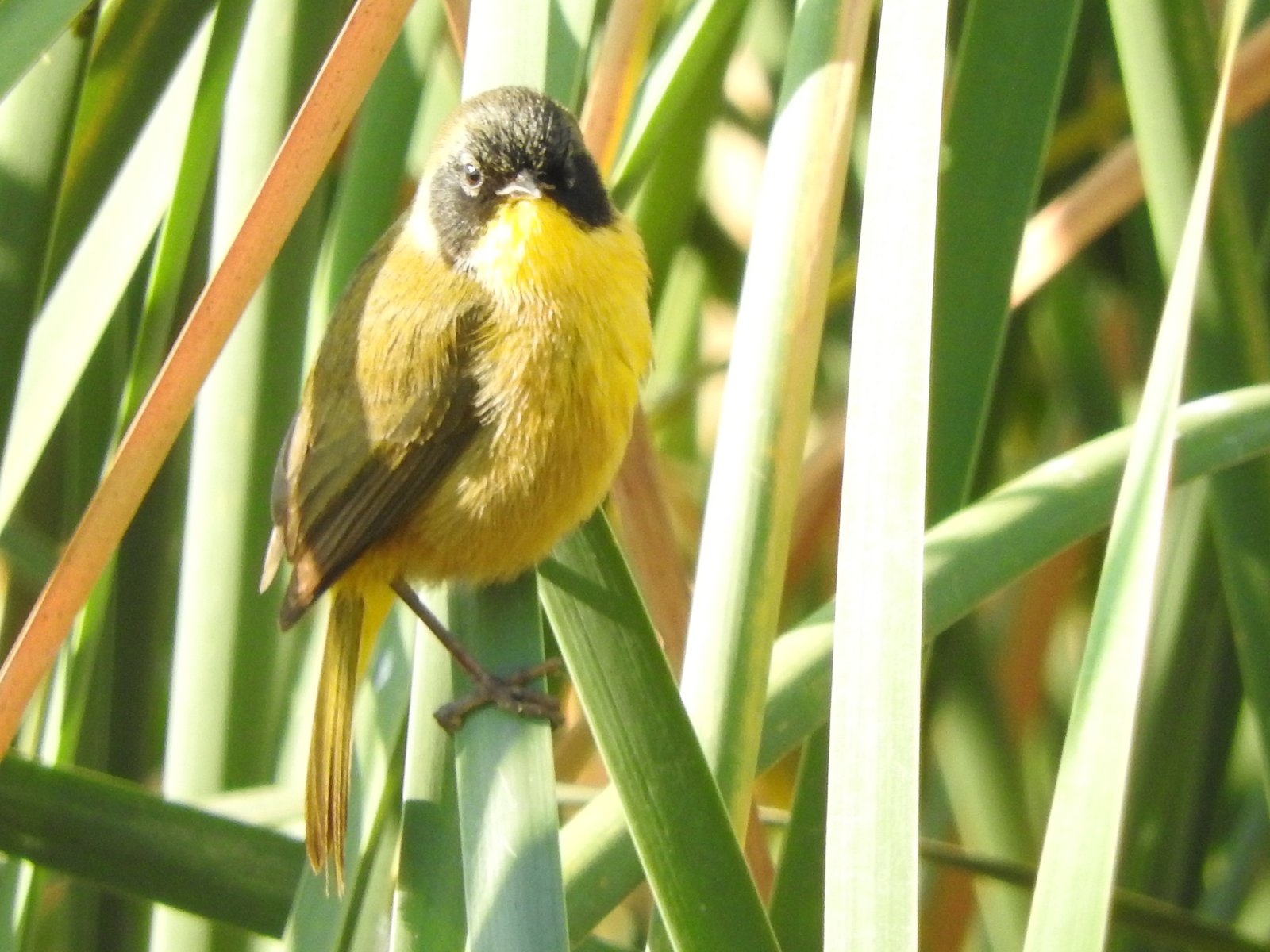
The Black-polled Yellowthroat is a dark yellowthroat found only in marshes on the plateau of central Mexico. In the male the black mask extends over the forehead and forecrown, without a pale border. The species depends on reedbeds and bulrush marshes around lakes and has become vulnerable through the loss of these marshes.
Voice
The song is a rich, varied warble of clear whistled notes, longer and less regular than the song of Common Yellowthroat. The call is a dry, low chek.
Recording: Manuel Grosselet — CC BY-NC-SA 4.0 · shortened to the first 60 s, mono · xeno-canto
Identification
12–13 cm. The male has a black mask that covers the whole face and extends over the forehead and forecrown, without a pale border above it; hindcrown and upperparts dark olive-brown. Throat and breast warm ochre-yellow, flanks and belly darker brownish yellow. The female has no mask, an olive-brown head and duller ochre-yellow underparts. Bill dark, legs pinkish brown.
Confusion species
Common Yellowthroat Geothlypis trichas occurs in the same marshes in winter; the male has a mask with a whitish or grey border above it, an olive-green crown, a brighter yellow throat and a paler belly. Females of Common Yellowthroat are paler and greener with a whitish belly. Hooded Yellowthroat Geothlypis nelsoni has a grey-bordered mask and lives in dry scrub on mountain slopes, not in marshes.
Habitat
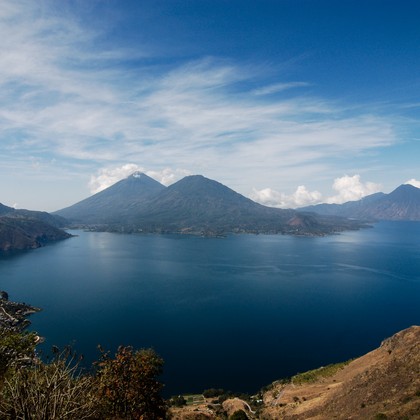
Freshwater marshes with cattail, bulrush and reeds along lakes and in marshland on the plateau, between about 1700 and 2500 m. It searches for insects low in the dense marsh vegetation.
Where the bird is most at home, classified by the vegetation units of Mexico and Central America.

Range and movements
Endemic to Mexico. Found only in scattered marshes on the plateau of the Trans-Mexican Volcanic Belt, mainly in Michoacán (lakes Cuitzeo and Pátzcuaro), southern Guanajuato (Yuriria) and the State of México (upper Lerma); formerly also at other sites in the region.
- Resident
- dark = core range, pale = thinly spread
How and when to look
Best found early in the morning along the shores of the large marshes in Michoacán and Guanajuato, when the male sings from a cattail stem at the edge of the reeds.
Conservation status
Vulnerable (VU). The range is small and highly fragmented. Drainage of marshes, pollution, burning and cutting of reeds and conversion of shores to farmland have destroyed much of its habitat.
Scientific name
Geothlypis speciosa | Sclater, 1859
Sclater described the species in 1859 and placed it straight away in the genus where it still stands. The genus Geothlypis was introduced in 1847 by Cabanis. Geothlypis is Greek, from gē 'ground' and thlupis, an unidentified small bird: 'ground warbler', after its life low in dense cover. speciosa is Latin for 'beautiful, showy', after the contrasting black and yellow plumage. The specimen the first description was based on came from Mexico (probably Orizaba, Veracruz).