All species › Passerines › Crows, jays and magpies › Black-chested Jay
Position in the tree Birds Aves › Birds with a flexible palate Neognathae › All other modern birds Neoaves › Landbirds Telluraves › Falcons, parrots and passerines Australaves › Falcons and passerines Eufalconimorphae › Parrots and passerines Psittacopasserae
Black-chested Jay | Cyanocorax affinis
Zwartborstgaai | Chara pechinegra
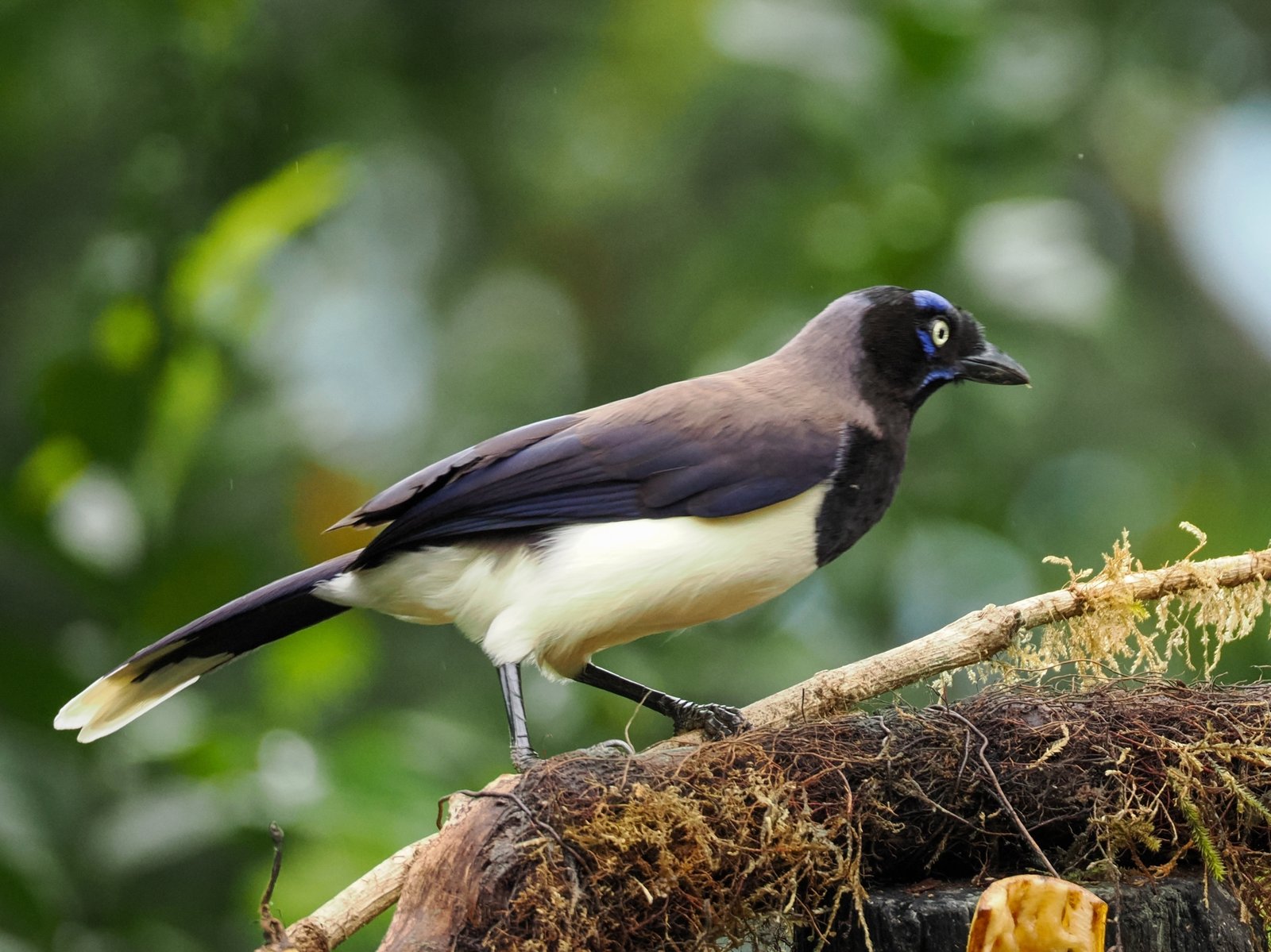
The Black-chested Jay is a large, noisy Cyanocorax jay with a black head and breast, a white belly and a purplish-blue back. It lives in small groups at forest edges and in semi-open country. In the guide area it occurs only in Panama and extreme south-eastern Costa Rica.
Voice
Very varied. Typical are a loud, clear chow-chow or kyowng, harsh calls and rattles, and soft cooing and chirping notes within the group.
Recording: Kent Livezey — CC BY-NC-SA 4.0 · shortened to the first 60 s, mono · xeno-canto
Identification
33–37 cm, including the fairly long tail. Head, throat and breast black, with a bright blue spot above and a smaller one below the eye. Belly and undertail coverts white, sharply demarcated from the black breast. Back, wings and tail dark violet-blue; tail with a broad white terminal band. Iris yellow. Bill and legs black.
Confusion species
Brown Jay Cyanocorax morio (Caribbean slope, in Panama only in the far west) is larger, brown without blue and has a dark eye. No other jays with a black breast and white belly occur within the range of Black-chested Jay.
Habitat
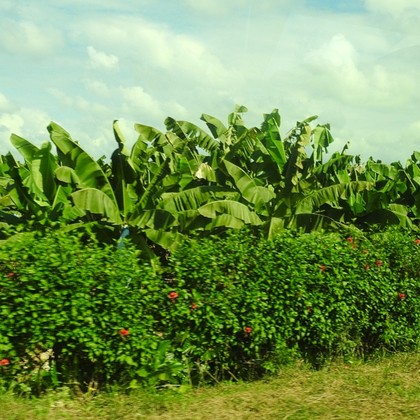
Edges of humid forest, secondary forest, scrub, plantations and semi-open country with trees, mainly in the lowlands and foothills. It lives in family groups that move through the middle and upper levels. It eats insects, other invertebrates, small vertebrates, fruit and seeds.
Where the bird is most at home, classified by the vegetation units of Mexico and Central America.




Range and movements
In the guide area in extreme south-eastern Costa Rica, near the border with Panama, and in much of Panama. Outside the guide area in northern Colombia and north-western Venezuela.
- Resident
- dark = core range, pale = thinly spread
How and when to look
In Panama it can be seen in many places at forest edges and in semi-open country, including the area around the Panama Canal. Groups are usually noticed first by their loud calls.
Conservation status
Not threatened. Fairly common in Panama; benefits in part from semi-open country with trees and from forest edges.
Scientific name
Cyanocorax affinis | Pelzeln, 1856
Pelzeln described the species in 1856 and placed it straight away in the genus where it still stands. The genus Cyanocorax was introduced in 1826 by Boie. Cyanocorax is Greek, from kuanos 'dark blue' and korax 'raven': a 'blue raven', after the blue colours of many species. affinis is Latin for 'related', after its resemblance to related jays. The specimen the first description was based on came from 'Bogotá', Colombia (trade skin).