All species › Passerines › Wrens › Bewick's Wren
Position in the tree Birds Aves › Birds with a flexible palate Neognathae › All other modern birds Neoaves › Landbirds Telluraves › Falcons, parrots and passerines Australaves › Falcons and passerines Eufalconimorphae › Parrots and passerines Psittacopasserae
Bewick's Wren | Thryomanes bewickii
Bewicks winterkoning | Chivirín cola oscura
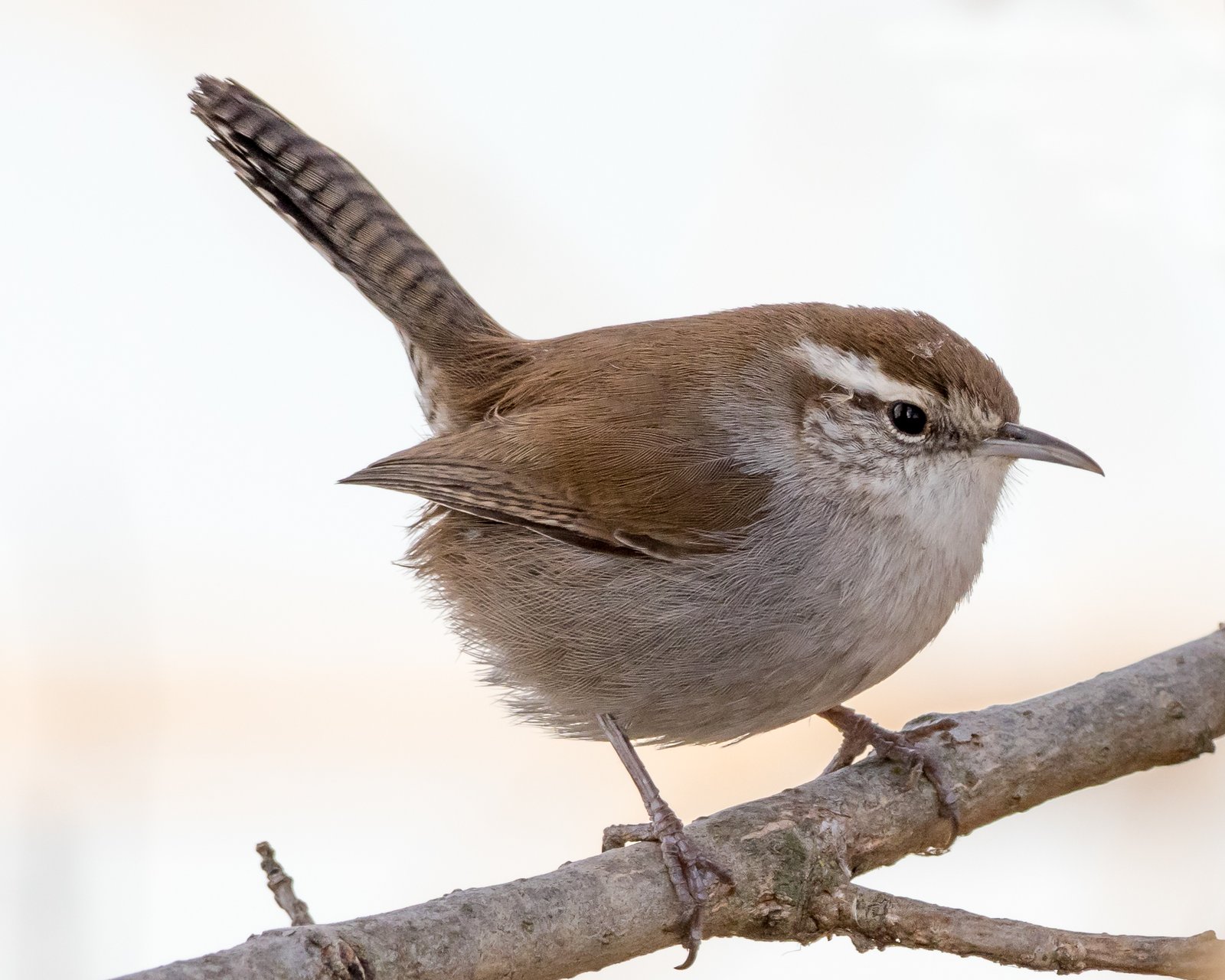
Bewick's Wren is a slender, grey-brown wren with a conspicuous white supercilium and a long tail that it constantly swings from side to side. It lives in scrub, dry open woodland and gardens. In the guide area it occurs in northern and central Mexico.
Voice
The song is varied: a few high introductory notes, followed by buzzy notes and a clear trill; each male has several song types. The call is a dry, rasping jeep and a whirring chatter.
Recording: Ed Pandolfino — CC BY-NC-SA 4.0 · shortened to the first 60 s, mono · xeno-canto
Identification
13–14 cm, with a long tail. Upperparts grey-brown, unspotted. Long white supercilium. Underparts greyish-white, flanks slightly browner. Tail long, finely barred black, with white corners to the outer feathers. Bill long, thin and slightly decurved.
Confusion species
Carolina Wren Thryothorus ludovicianus is warmer rufous-brown, with ochre underparts and a shorter tail without white corners. Northern House Wren Troglodytes aedon lacks the clear white supercilium. Rock Wren Salpinctes obsoletus is speckled and lives on rocks.
Habitat
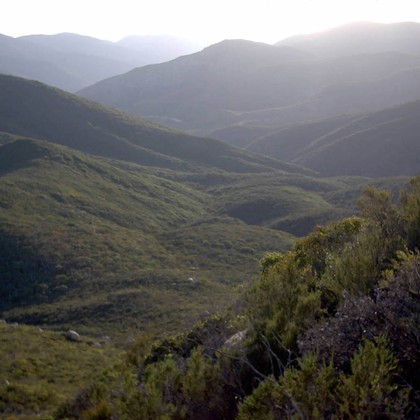
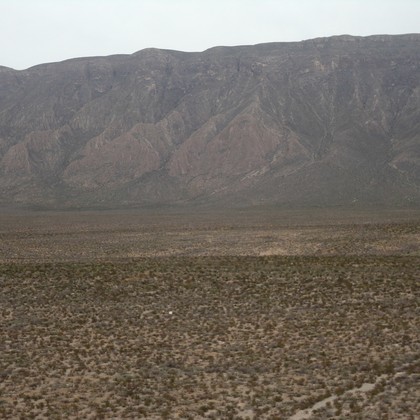
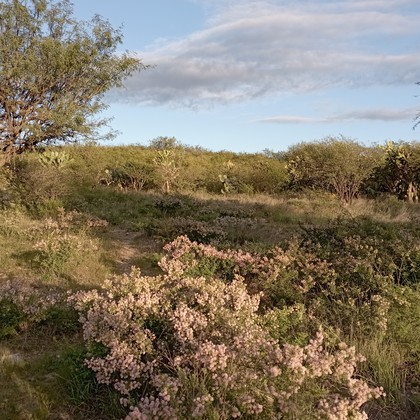
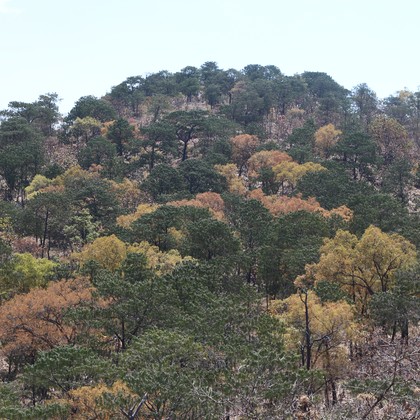
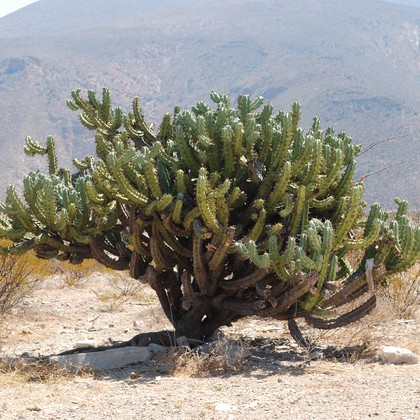
Scrub in semi-desert and chaparral, dry open oak and pine-oak woodland, riparian vegetation and gardens and yards in villages; from the lowlands high into the mountains. It forages on the ground and in shrubs for insects and spiders.
Where the bird is most at home, classified by the vegetation units of Mexico and Central America.


Range and movements
Baja California and northern and central Mexico, south to the highlands of Oaxaca. Outside the guide area over much of the western and southern United States and south-western Canada.
- Resident
- dark = core range, pale = thinly spread
How and when to look
Often the first wren to catch the eye in scrub and gardens in the Mexican highlands; look for the white supercilium and the swinging tail.
Conservation status
Not threatened. Common in the west of its range; it has declined strongly in the eastern United States. A subspecies of Guadalupe Island off Baja California is extinct.
Scientific name
Thryomanes bewickii | (Audubon, 1827)
Audubon described the species in 1827 as Troglodytes bewickii; because it was later moved to another genus, the author and year stand in brackets. The genus Thryomanes was introduced in 1862 by Sclater. Thryomanes is Greek, from thruon 'reed' and -manēs 'passionately fond of'; the name reflects its affinity to Thryothorus rather than a liking for reeds. bewickii honours the English wood engraver and natural-history illustrator Thomas Bewick (1753–1828). The specimen the first description was based on came from near St. Francisville, Louisiana.