All species › Passerines › Shrike-babblers, Erpornis and vireos › Bell's Vireo
Position in the tree Birds Aves › Birds with a flexible palate Neognathae › All other modern birds Neoaves › Landbirds Telluraves › Falcons, parrots and passerines Australaves › Falcons and passerines Eufalconimorphae › Parrots and passerines Psittacopasserae
Bell's Vireo | Vireo bellii
Bells vireo | Vireo de Bell
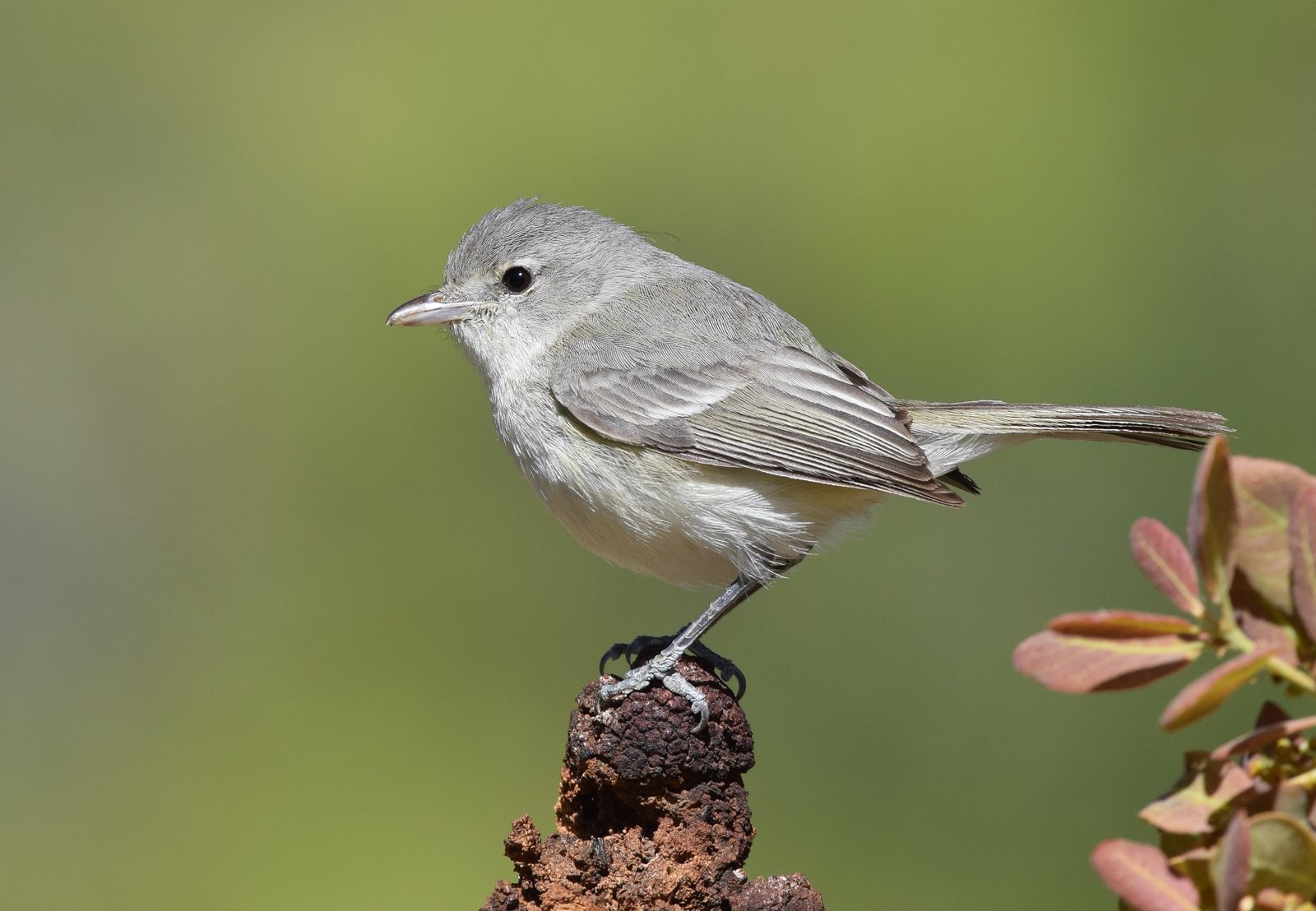
Bell's Vireo is a small, greyish vireo of riverside thickets and scrub in dry country. It breeds in northern Mexico and winters on the Pacific slope of Mexico and in northern Central America. It often flicks or wags its tail up and down or sideways.
Voice
The song is a fast, scratchy, somewhat halting series of notes; phrases end alternately with a rising and a falling note, as if a question is asked and answered. Sings a lot, even in the middle of the day.
Recording: Scott Crabtree — CC BY-NC-SA 4.0 · shortened to the first 60 s, mono · xeno-canto
Identification
11–12 cm. Upperparts grey to greyish olive-green, eastern birds greener than western. Lores and faint eye-ring white, forming indistinct spectacles. One or two narrow pale wing bars, the lower one more obvious. Underparts white with a yellowish wash on the flanks, stronger in eastern birds. Eye dark.
Confusion species
Grey Vireo Vireo vicinior is plainer grey, has at most one faint wing bar and a longer tail, and lives in dry open scrub. Hutton's Vireo Vireo huttoni is stockier, with a thicker bill and an eye-ring broken above the eye. Dwarf Vireo Vireo nelsoni is smaller and lives in south-western Mexico.
Habitat
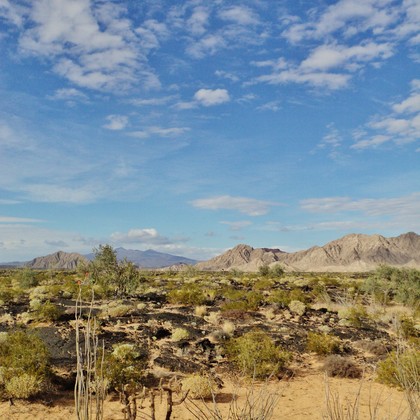
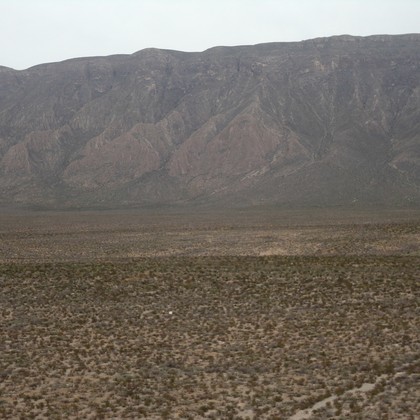
Dense scrub along rivers and streams, mesquite and willow thickets, thorn scrub and overgrown margins in dry country. In winter in scrub and dry forest in the lowlands. Forages for insects in dense shrubs.
Where the bird is most at home, classified by the vegetation units of Mexico and Central America.



Range and movements
Breeds in northern Mexico, from northern Baja California and Sonora east to Tamaulipas. Winters on the Pacific slope of Mexico, from southern Sonora southwards, and in Guatemala, El Salvador and Honduras. Outside the guide area it breeds in the south-western and central United States.
- Resident
- Summer visitor (c. Apr–Sep)
- Winter visitor (c. Oct–Mar)
- Passage (Mar–Apr, Oct–Nov)
- dark = core range, pale = thinly spread
How and when to look
In the breeding season best found by song in riverside thickets in northern Mexico; in winter it often forages with groups of other small birds.
Conservation status
Not threatened. Locally declined through the loss of riverside vegetation and brood parasitism by cowbirds.
Scientific name
Vireo bellii | Audubon, 1844
Audubon described the species in 1844 and placed it straight away in the genus where it still stands. The genus Vireo was introduced in 1808 by Vieillot. Vireo was used by Latin authors for a small, green, migratory bird, probably the Eurasian golden oriole, though the European greenfinch has also been suggested. bellii honours the American taxidermist John Graham Bell (1812–1889), who accompanied Audubon on his 1843 Missouri River expedition. The specimen the first description was based on came from near St. Joseph, Missouri (USA).