All species › Woodpeckers and allies › Woodpeckers › Acorn Woodpecker
Position in the tree Birds Aves › Birds with a flexible palate Neognathae › All other modern birds Neoaves › Landbirds Telluraves › Raptors, owls, kingfishers and woodpeckers Afroaves › Mousebirds, rollers and woodpeckers Coraciimorphae › Trogons and cavity nesters Cavitaves › Hornbills, kingfishers and woodpeckers Picocoraciae › Kingfishers, bee-eaters and woodpeckers Picodynastornithes
Acorn Woodpecker | Melanerpes formicivorus
Eikelspecht | Carpintero bellotero
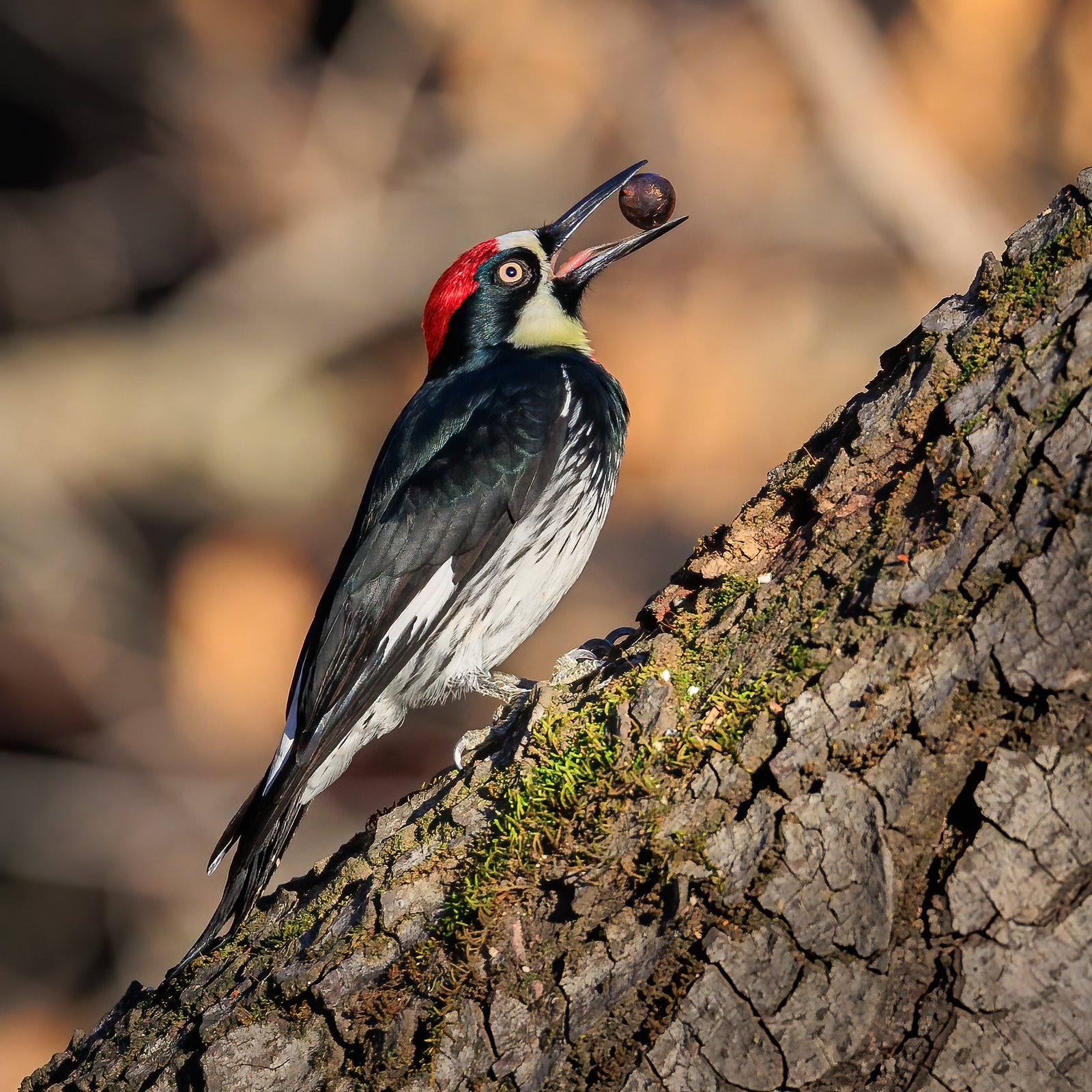
The Acorn Woodpecker is a social woodpecker of oak and pine-oak woodland that occurs from the western United States through the mountains of Mexico and Central America to Colombia. Groups jointly build granaries: a dead tree, post or barn into which they drill hundreds to thousands of holes and fill each one with an acorn. In such a group several males and females breed together and young from earlier broods help raise the chicks.
Voice
Noisy. The best-known call is a raucous, repeated waka-waka-waka or ja-cob, ja-cob, often given in chorus by several group members. Also a rattling krrrr and various harsh calls. It rarely drums.
Recording: Paul Driver — CC BY-NC-SA 4.0 · converted to mono · xeno-canto
Identification
20–23 cm. Black above with a white rump, and in flight a white patch at the base of the primaries. The face has a clown-like pattern: black around the bill and eye, a white or cream forehead band continuing into a pale throat, and a white iris. The breast is black, breaking into black streaks on a white belly. The male has a red crown reaching to the white forehead; in the female a black band separates the white forehead from the red of the hindcrown. Birds in Central America have a blacker breast and a yellower forehead and throat than northern birds.
Confusion species
No other woodpecker in the guide area has this combination of black-and-white face, white iris and black breast. Golden-fronted Woodpecker Melanerpes aurifrons and Gila Woodpecker Melanerpes uropygialis have a black-and-white barred back and drab greyish underparts. Lewis's Woodpecker Melanerpes lewis also catches insects in the air but is uniformly dark with a grey collar and a pink belly.
Habitat
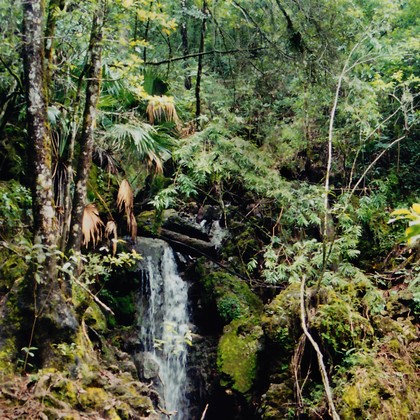
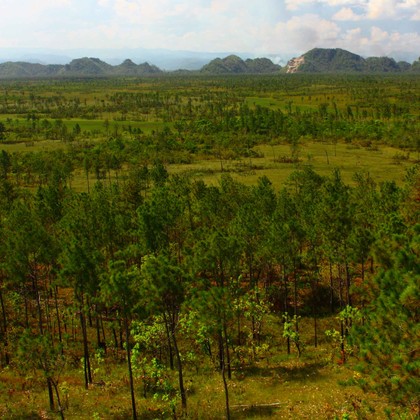
Oak and pine-oak woodland and open montane forest with many oaks, forest edges, open country with scattered oaks, cloud-forest edges and villages with large trees; locally also pine savanna in the lowlands. Mostly between about 1000 and 3000 m, lower in pine savanna. It eats acorns, insects often caught in flight, fruit and sap. The granaries are defended by the group all year round.
Where the bird is most at home, classified by the vegetation units of Mexico and Central America.





Range and movements
Resident in Baja California (both in the north and in the mountains of the Cape region), the Sierra Madre Occidental and Sierra Madre Oriental, the mountains of central and southern Mexico and Chiapas; also in the highlands of Guatemala, El Salvador, Honduras and northern and central Nicaragua, and in the pine savannas of Belize and eastern Honduras. Also in the mountains of Costa Rica and western Panama. Outside the guide area in the western and south-western United States and in the Andes of Colombia.
- Resident
- dark = core range, pale = thinly spread
How and when to look
Common and regularly found in oak and pine-oak woodland in the highlands of Mexico and Guatemala, and in Costa Rica for example in the Cordillera de Talamanca at San Gerardo de Dota. A dead tree or post full of acorns in holes indicates a group nearby; the loud waka-waka often gives the birds away from afar.
Conservation status
Not threatened. It can adapt to open country with oaks and to villages, but depends on oaks and on dead trees or posts for its stores.
Scientific name
Melanerpes formicivorus | (Swainson, 1827)
Swainson described the species in 1827 as Picus formicivorus; because it was later moved to another genus, the author and year stand in brackets. The genus Melanerpes was introduced in 1832 by Swainson. Melanerpes is Greek, from melas 'black' and herpēs 'creeper': 'black creeper'. formicivorus is Latin for 'ant-eating', from formica 'ant' and -vorus '-eating'; the species in fact eats mainly acorns. The specimen the first description was based on came from Temascaltepec, Mexico.