All species › Passerines › New World warblers › Yellow-rumped Warbler
Yellow-rumped Warbler | Setophaga coronata
Mirtezanger | Reinita coronada
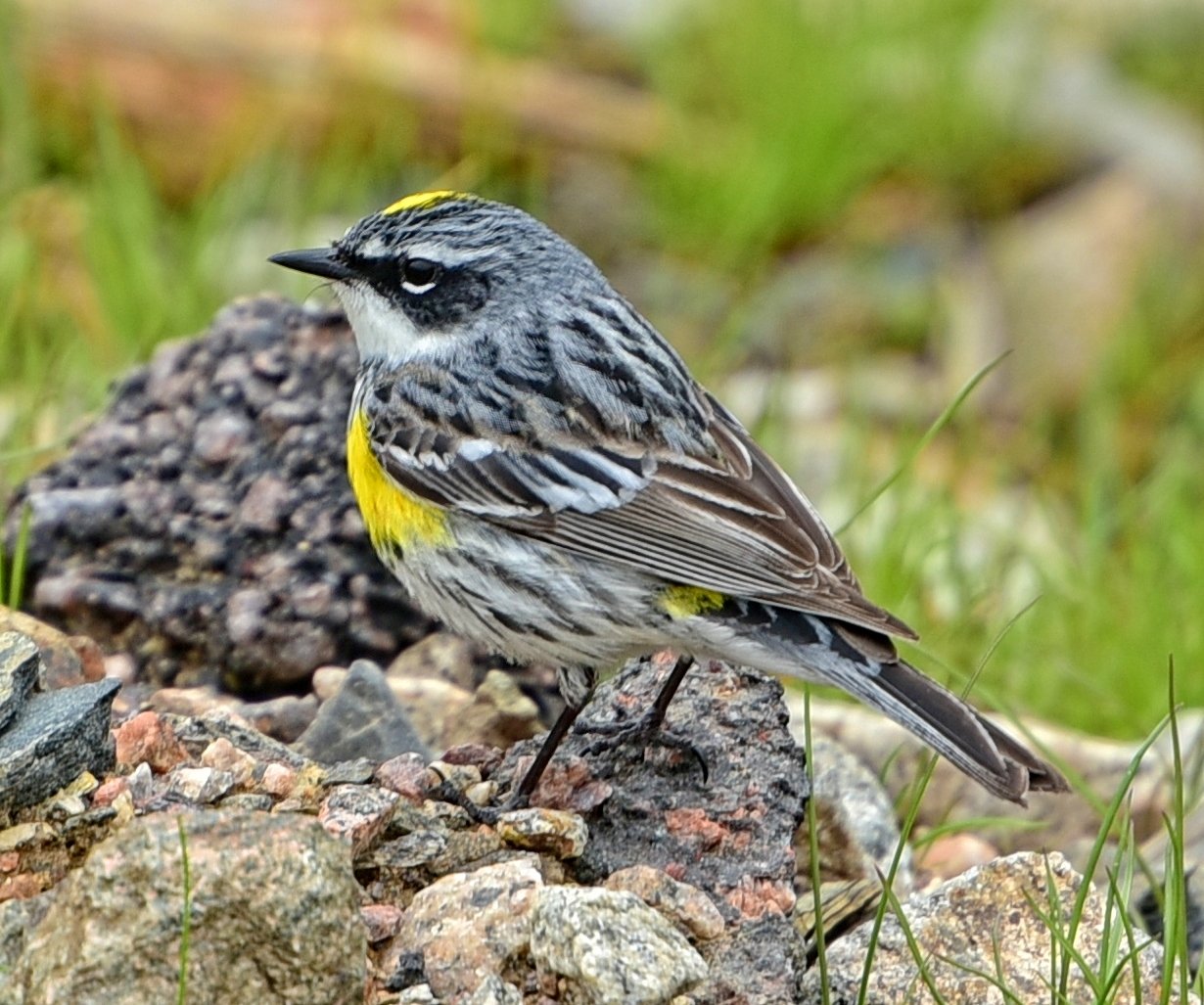
The Yellow-rumped Warbler is the warbler that winters furthest north, thanks to an adaptation: it is the only warbler that can digest the wax of bayberry and related shrubs. As a result only part of the population reaches the Caribbean, and how many arrive depends on the severity of the winter and the berry crop further north. Birds in the region belong to the eastern ‘Myrtle’ group; the western ‘Audubon's’ group, with a yellow throat, is not expected here.
Voice
The call is a fairly loud, flat check, often given on take-off and a good clue to the species; the flight call a thin sveet. The song, a loose trill that changes pitch at the end, is seldom heard in winter.
Recording: Stanislas Wroza — CC BY-NC-SA 4.0 · converted to mono · xeno-canto
Identification
12–14 cm, fairly bulky and long-tailed. In all plumages the bright yellow rump, a yellow patch on the side of the breast and white spots in the tail are visible. In winter brownish grey above with dark streaks, white below with fine brown streaks on the breast and flanks, a white throat that curls back around the dark cheek, a pale supercilium, a broken white eye-ring and two white wing bars. The breeding male is blue-grey with a black breast shield, a black mask and a yellow crown patch.
Confusion species
The yellow rump combined with the white throat is enough. Magnolia Warbler Setophaga magnolia also has a yellow rump but is yellow below with a white tail band. Cape May Warbler Setophaga tigrina is smaller, with an olive-yellow rump and a yellow neck patch. Palm Warbler Setophaga palmarum has a yellow undertail and pumps its tail. Yellow-throated Warbler Setophaga dominica has a yellow throat and an unstreaked grey back.
Habitat
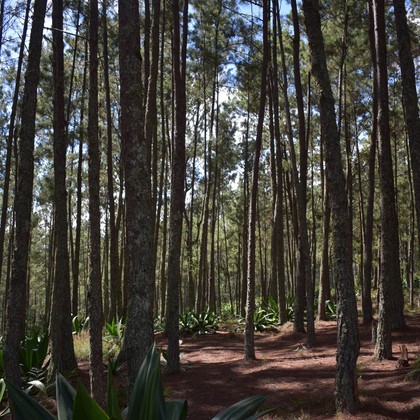
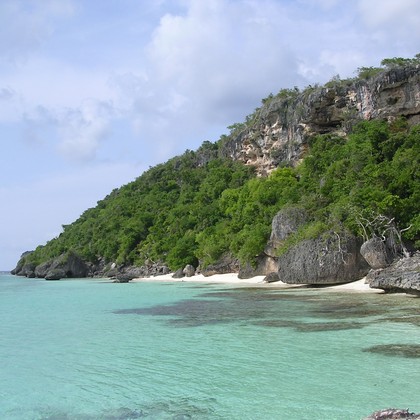
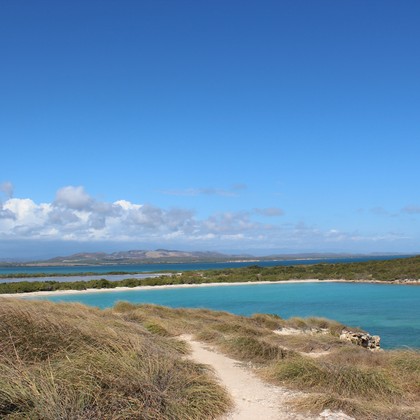
Pine forest, coastal woodland and coastal scrub, mangrove edges, dry forest, gardens, parks and open ground with scattered trees. It searches foliage and the ground for insects, also catches them in flight, and in winter eats many berries. Often in flocks, sometimes dozens together.
Where the bird is most at home, classified by the vegetation types of the Caribbean.



Range and movements
Common winter visitor in the Bahamas, the Turks and Caicos Islands, Cuba and the Cayman Islands, with the largest numbers in the north and west. Fairly common to scarce in Jamaica and Hispaniola (Haiti and the Dominican Republic), scarce in Puerto Rico and the Virgin Islands, rare in the Lesser Antilles, the ABC Islands and Trinidad and Tobago. In severe North American winters more birds reach the region. Breeds in the conifer forests of Alaska, Canada and the north-eastern United States.
- Winter visitor (c. Apr–Sep)
- Passage (Mar–Apr, Oct–Nov)
- dark = core range, pale = thinly spread
How and when to look
The pine forest of the Bahamas and western Cuba and the coastal woodland of the Cayman Islands are the best places, from December to March. A flock of warblers that shows a bright yellow rump on take-off and calls check is Yellow-rumped Warblers.
Conservation status
Not threatened. One of the most numerous warblers in North America, with a large breeding range and a very large population.
Scientific name
Setophaga coronata | (Linnaeus, 1766)
Linnaeus described the species in 1766 as Motacilla coronata; because it was later moved to another genus, the author and year stand in brackets. The genus Setophaga was introduced in 1827 by Swainson. Setophaga is Greek, from sēs, sētos 'moth' and -phagos '-eating': 'moth-eater'. coronata is from Latin coronatus 'crowned', after the yellow crown patch. The specimen the first description was based on came from Philadelphia, Pennsylvania.