All species › Passerines › New World warblers › Palm Warbler
Palm Warbler | Setophaga palmarum
Palmzanger | Reinita palmera
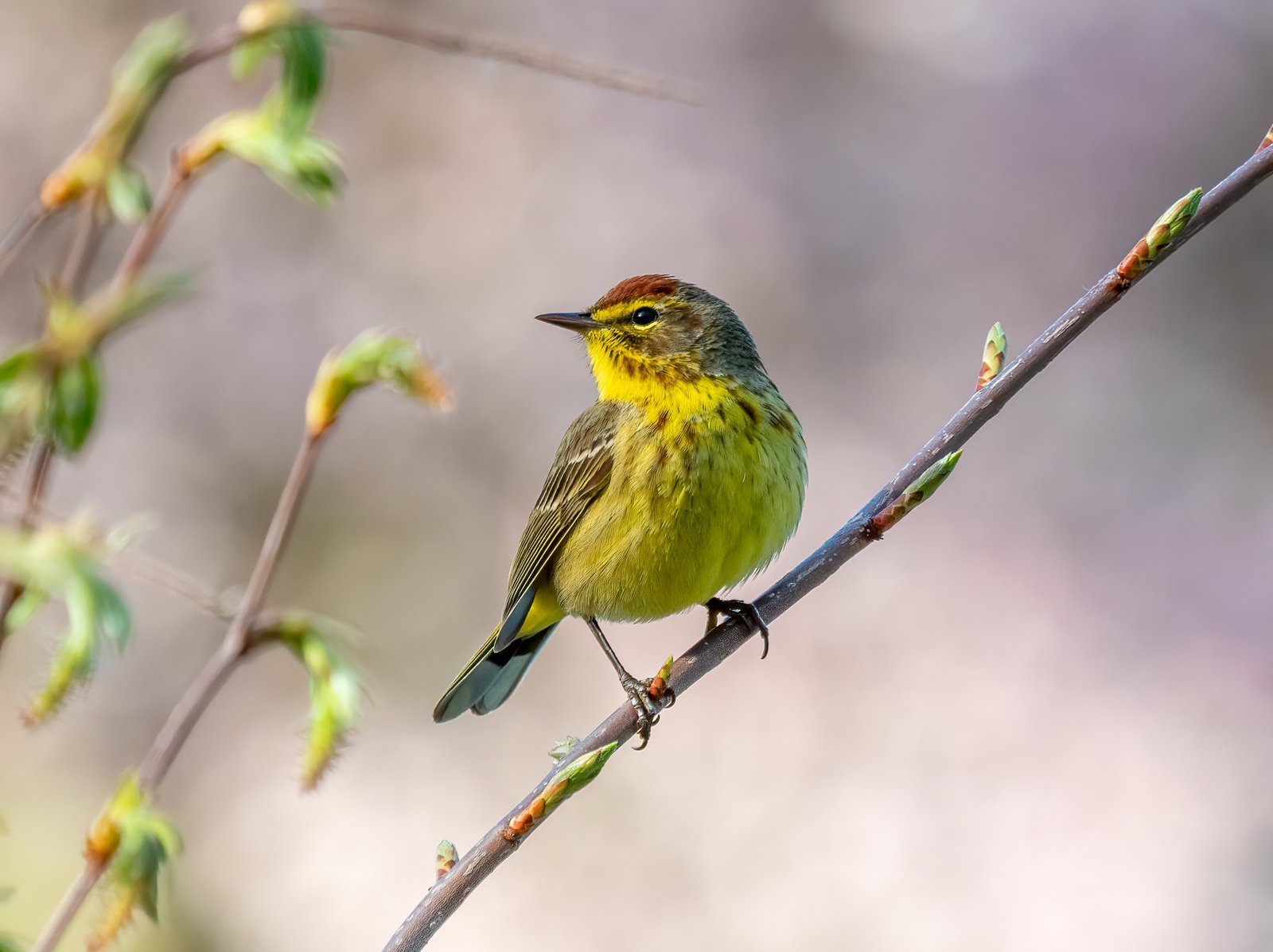
The Palm Warbler is one of the most numerous warblers in the north-west of the Caribbean in winter. Unlike most warblers it feeds a great deal on the ground and in low vegetation, and it constantly pumps its tail up and down. Despite its name it has no special preference for palms; it breeds in the bogs of the boreal forest of Canada.
Voice
The call is a full, slightly nasal chik, often given on take-off; the flight call a thin see. The song, a buzzy trill on one pitch, is occasionally heard in spring.
Recording: Stanislas Wroza — CC BY-NC-SA 4.0 · shortened to the first 60 s, mono · xeno-canto
Identification
12–14 cm, slim, with a fairly long tail. In winter brownish grey above with a pale supercilium and a dark eye-line, and dingy white to yellowish below with faint brown breast streaks. Characteristic are the bright yellow undertail coverts, the olive-yellow rump and the constant tail-pumping. In spring many birds acquire a rufous crown. The western form palmarum, which winters most in the region, is duller and greyer; the eastern form hypochrysea is entirely yellow below with rufous streaks.
Confusion species
Prairie Warbler Setophaga discolor also pumps its tail, but is bright yellow below with black flank streaks and a patterned yellow face. Cape May Warbler Setophaga tigrina has a whitish undertail and feeds higher in trees. Yellow-rumped Warbler Setophaga coronata has a bright yellow rump, yellow flank patches and a white undertail. Pipits Anthus are larger and show no yellow.
Habitat
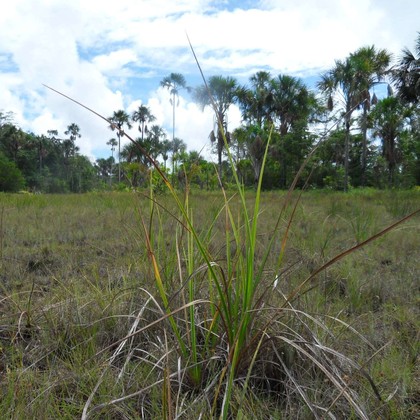
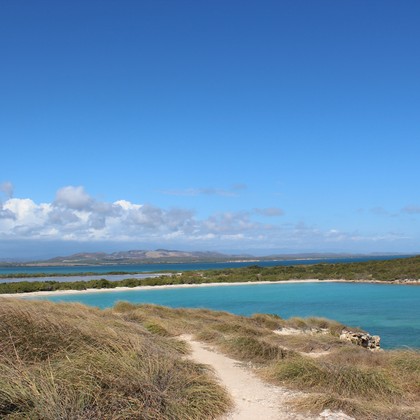
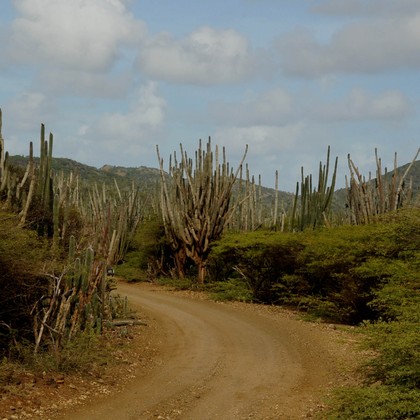
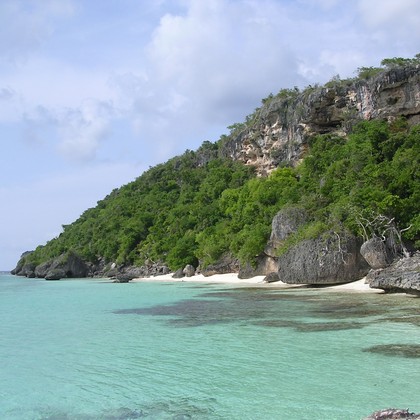
Open ground with scattered bushes: grassland and pasture, lawns, golf courses, roadsides, coastal scrub, the edges of mangrove and beach, dry scrub and gardens. It forages largely on the ground and in low bushes for insects, and also eats seeds and berries. It is often found in loose small groups.
Where the bird is most at home, classified by the vegetation types of the Caribbean.


Range and movements
Very common winter visitor in the Bahamas, the Turks and Caicos Islands, Cuba, the Cayman Islands and Hispaniola (Haiti and the Dominican Republic), fairly common in Jamaica, scarcer in Puerto Rico and the Virgin Islands and rare in the Lesser Antilles, the ABC Islands and Trinidad and Tobago. Breeds in Canada and the far northern United States and winters along the south-eastern coast of the United States, in the Caribbean and to a lesser extent on the Yucatán Peninsula and in Central America.
- Resident
- Summer visitor (c. Oct–Mar)
- Winter visitor (c. Apr–Sep)
- Passage (Mar–Apr, Oct–Nov)
- dark = core range, pale = thinly spread
How and when to look
Lawns, roadsides and golf courses in the Bahamas and Cuba almost always produce Palm Warblers in winter, often near buildings. The tail-pumping can be seen from a distance.
Conservation status
Not threatened. The species breeds in large, little-disturbed peatlands and in winter adapts well to man-made open ground.
Scientific name
Setophaga palmarum | (Gmelin, 1789)
Gmelin described the species in 1789 as Motacilla palmarum; because it was later moved to another genus, the author and year stand in brackets. The genus Setophaga was introduced in 1827 by Swainson. Setophaga is Greek, from sēs, sētos 'moth' and -phagos '-eating': 'moth-eater'. palmarum is Latin for 'of the palms', after the palm trees in which the species was observed on Hispaniola. The specimen the first description was based on came from Hispaniola.