All species › Passerines › Tyrant flycatchers › Stolid Flycatcher
Stolid Flycatcher | Myiarchus stolidus
Dikkoptiran | Manuelito
The Stolid Flycatcher is a medium-sized Myiarchus of Jamaica and Hispaniola. On Hispaniola it is the only member of the genus and is known as manuelito; on Jamaica it shares the island with Sad and Rufous-tailed Flycatchers. There are two subspecies: stolidus on Jamaica and dominicensis on Hispaniola.
Voice
A rolling whee-ee-ee, a swee-ip and a buzzy bzzrt; on Hispaniola also a plaintive jui.
Recording: Johan Chaves — CC BY-NC-SA 4.0 · converted to mono · xeno-canto
Identification
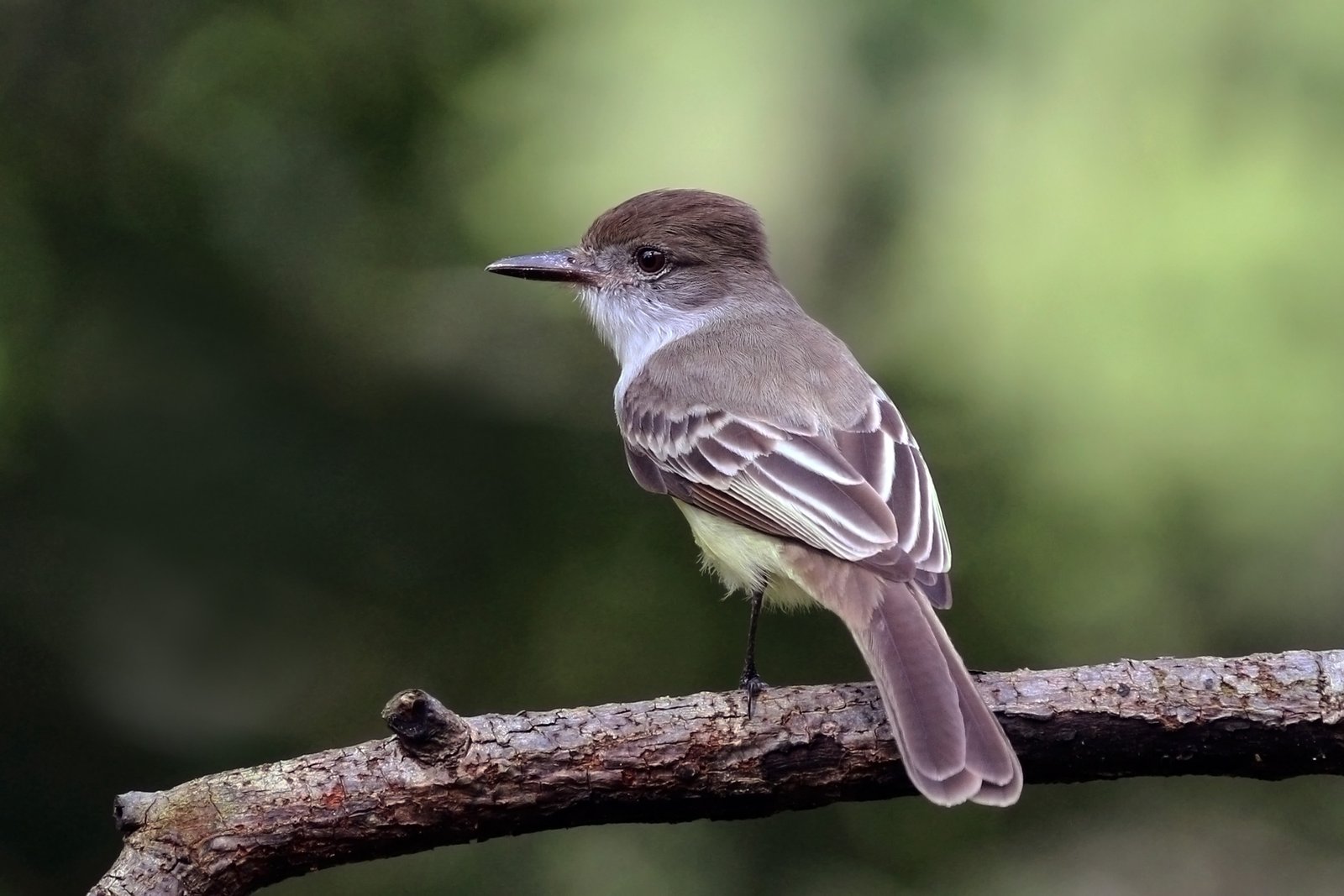
19–21 cm, with a small crest. Crown and upperparts are olive-green to olive-brown, the face dark grey. The wings are brown; the primaries have rufous edges, the secondaries and greater coverts greyish-white edges that form two pale wing bars and a pale wing panel. The tail is brown with rufous inner webs, on Hispaniola on all tail feathers. Throat and breast are pale ashy grey, belly and undertail yellow. The sexes are alike.
Confusion species
On Jamaica, Rufous-tailed Flycatcher Myiarchus validus is larger, with much more rufous and a darker grey breast; Sad Flycatcher Myiarchus barbirostris is smaller, with a dark cap and yellower underparts. Great Crested Flycatcher Myiarchus crinitus, a rare winter visitor, has a darker grey throat and breast and a brighter yellow belly. Hispaniolan Pewee Contopus hispaniolensis is smaller, without crest or yellow.
Habitat
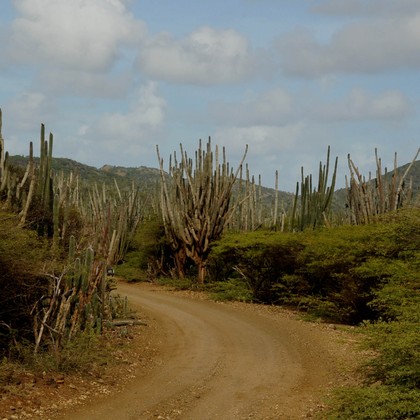
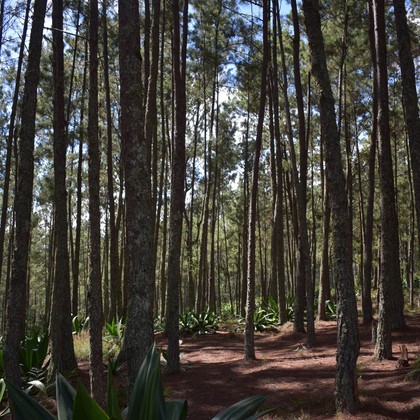
Mainly dry lowland forest and scrub, also the interior and edges of moister forest, mangroves and, on Hispaniola, pine forest, from sea level to 1,800 m, but scarcer higher in the mountains. It hunts insects from a perch in the lower and middle storey and also eats fruit. It nests in tree cavities.
Where the bird is most at home, classified by the vegetation types of the Caribbean.




Range and movements
Jamaica (subspecies stolidus) and Hispaniola, in both Haiti and the Dominican Republic, including offshore islands (subspecies dominicensis). It occurs nowhere else.
- Resident
- dark = core range, pale = thinly spread
How and when to look
On Jamaica in dry lowland forest along the south coast, such as the Hellshire Hills; in the Dominican Republic almost anywhere in dry forest, for example in the south-west around Lago Enriquillo and in Parque Nacional del Este. The pale wing bars help to separate it from the other Jamaican Myiarchus.
Conservation status
Not threatened, but numbers seem to be declining through forest loss from logging, fire, farming and urbanisation, and through hurricane damage.
Scientific name
Myiarchus stolidus | (Gosse, 1847)
Gosse described the species in 1847 as Myiobius stolidus; because it was later moved to another genus, the author and year stand in brackets. The genus Myiarchus was introduced in 1844 by Cabanis. Myiarchus is Greek, from muia 'fly' and arkhos 'ruler': 'fly-ruler'. stolidus is Latin for 'dull, stupid', after the tame, sluggish behaviour noted by Gosse. The specimen the first description was based on came from Jamaica.