All species › Passerines › Tyrant flycatchers › La Sagra's Flycatcher
La Sagra's Flycatcher | Myiarchus sagrae
La Sagra's tiran | Copetón de La Sagra
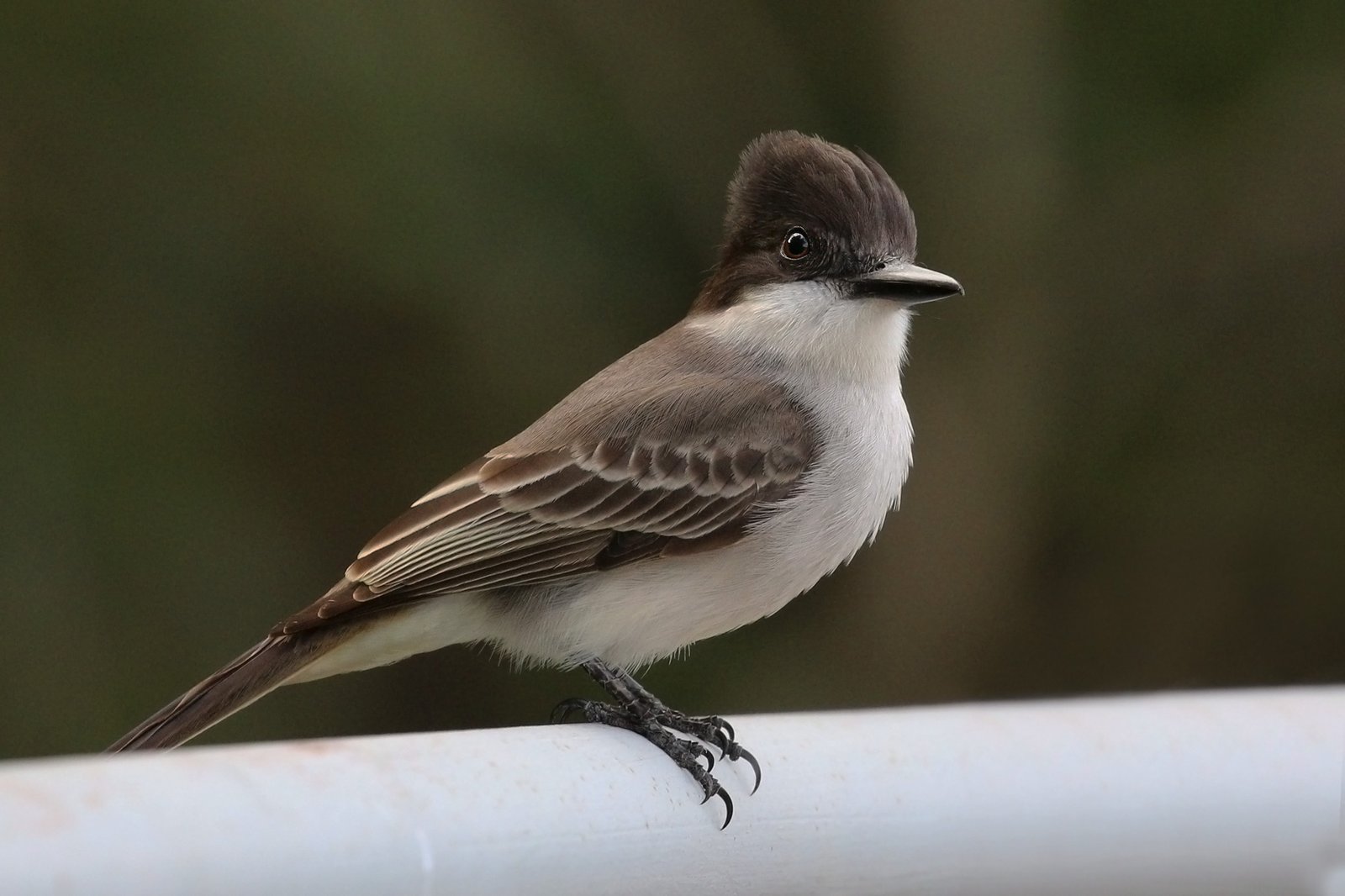
La Sagra's Flycatcher is the Myiarchus of Cuba, the Bahamas and Grand Cayman, named after the Spanish naturalist Ramón de la Sagra. It is a slim, pale species that often hunts low in the forest. In Cuba it is called bobito grande. The Bahamas hold the subspecies lucaysiensis, which differs in voice from Cuban birds.
Voice
A short whistled wheep and a squeaky wit-wit; the dawn song is a repeated series of such notes. Bahamian birds sound different from Cuban ones.
Recording: FREDERIC Lionel — CC BY-NC-SA 4.0 · converted to mono · xeno-canto
Identification
19–22 cm, slim, with a flatter crown than other Myiarchus species. Crown and upperparts are smoky brown to olive-brown, the face ashy grey. The wings are brown, with rufous edges to the primaries; the tail is brown with some rufous on the inner webs. The underparts are pale ashy grey to whitish, at most with a hint of yellow on the lower belly. The sexes are alike.
Confusion species
Great Crested Flycatcher Myiarchus crinitus, a passage migrant and winter visitor, is larger and has a darker grey throat and breast, a bright yellow belly and much rufous in the tail. Cuban Pewee Contopus caribaeus is smaller, without crest or rufous, with a white crescent behind the eye. Loggerhead Kingbird Tyrannus caudifasciatus and Grey Kingbird Tyrannus dominicensis are larger, heavier-billed and perch in the open.
Habitat
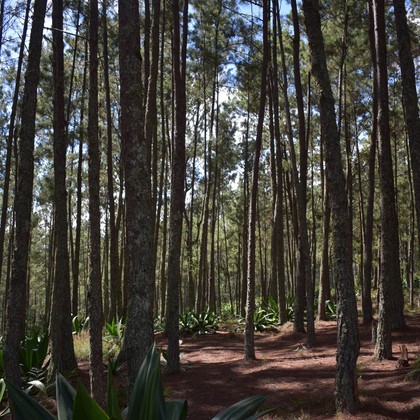
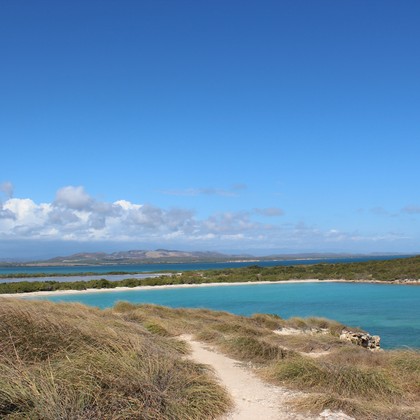
Pine forest, dry and semi-deciduous woodland, limestone forest, mixed woodland, mangroves and coastal scrub, from sea level to about 1,500 m. It hunts in the lower storey, sallying from a perch and taking insects and fruit in a brief hover. It breeds from April to July in tree cavities or hollow bamboo stems.
Where the bird is most at home, classified by the vegetation types of the Caribbean.




Range and movements
Cuba and the Isla de la Juventud with surrounding cays, and Grand Cayman (subspecies sagrae); the Bahamas, mainly the northern and central islands with pine and broadleaf forest (subspecies lucaysiensis). A rare vagrant to southern Florida.
- Resident
- dark = core range, pale = thinly spread
How and when to look
In Cuba in almost any woodland, including the Zapata Peninsula and the Sierra del Rosario; in the Bahamas in the pine forest of Grand Bahama, Abaco and Andros. The pale underparts separate it from the yellow-bellied Great Crested Flycatcher in winter.
Conservation status
Not threatened, but numbers are probably declining. The species is sensitive to habitat loss through hurricanes and forest clearance.
Scientific name
Myiarchus sagrae | (Gundlach, 1852)
Gundlach described the species in 1852 as Muscicapa sagrae; because it was later moved to another genus, the author and year stand in brackets. The genus Myiarchus was introduced in 1844 by Cabanis. Myiarchus is Greek, from muia 'fly' and arkhos 'ruler': 'fly-ruler'. sagrae honours the Spanish naturalist Ramón de la Sagra (1798–1871), who worked in Cuba. The specimen the first description was based on came from Cuba.