All species › Passerines › Tyrant flycatchers › Puerto Rican Flycatcher
Puerto Rican Flycatcher | Myiarchus antillarum
Puerto Ricaanse tiran | Juí
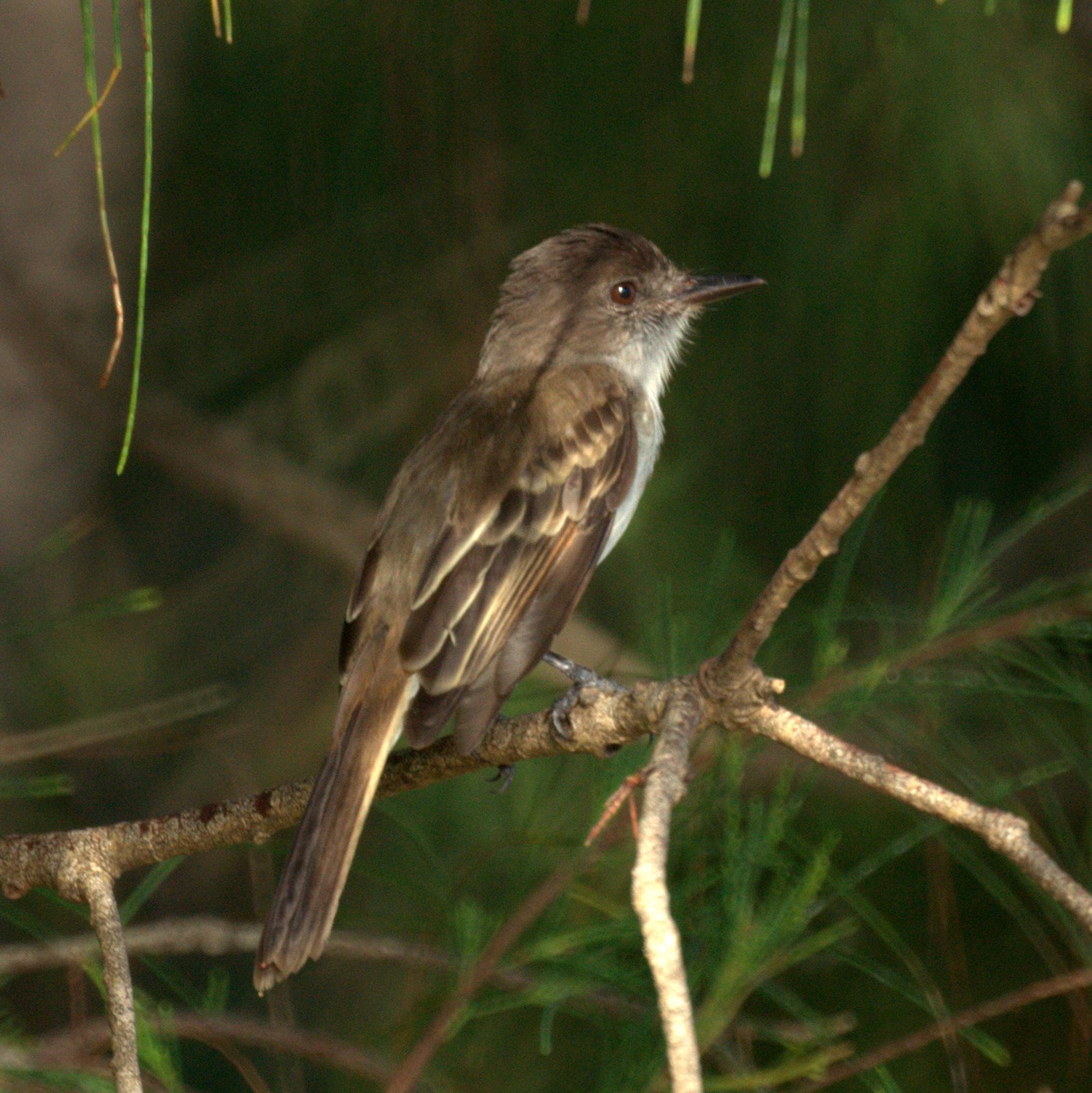
The Puerto Rican Flycatcher is the only Myiarchus of Puerto Rico and the Virgin Islands. In Puerto Rico it is called juí, after its plaintive call. It is a fairly small, pale species with little yellow, often hunting low in dry woodland and scrub.
Voice
A plaintive whistled whee, which gives the bird its local name juí, and a longer whee-a-wit-whee.
Recording: Ross Gallardy — CC BY-NC-SA 4.0 · converted to mono · xeno-canto
Identification
18–20 cm, with a small crest. The crown is dark sooty brown, the face slightly paler, the upperparts olive-brown. The wings are brown, with pale edges to the secondaries and coverts and little rufous. Throat and breast are pale grey, the belly whitish with at most a hint of yellow on the flanks and undertail. Bill and legs are black. The sexes are alike.
Confusion species
Grey Kingbird Tyrannus dominicensis and Loggerhead Kingbird Tyrannus caudifasciatus are larger, heavier-billed and crestless, and perch in the open on wires and bare branches. Lesser Antillean Pewee Contopus latirostris is smaller, with buff-brown underparts. Great Crested Flycatcher Myiarchus crinitus, a vagrant here, is larger, with a bright yellow belly and much rufous in the tail.
Habitat
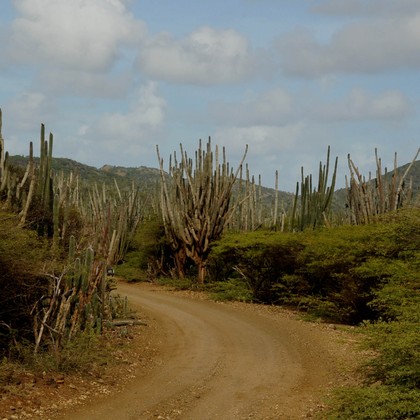
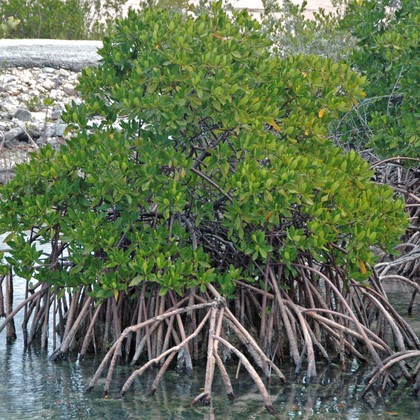
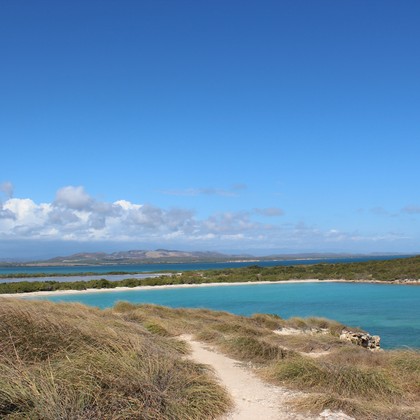
Dry coastal woodland and scrub, mangroves, semi-deciduous forest, coffee plantations and trees in farmland and built-up areas, from sea level to about 800 m; commonest in the dry south-west of Puerto Rico. It hunts insects from a perch in the lower and middle storey and also eats fruit. It nests in tree cavities and sometimes other holes.
Where the bird is most at home, classified by the vegetation types of the Caribbean.




Range and movements
Puerto Rico with Vieques and Culebra; in the US Virgin Islands on St Thomas and St John, and in the British Virgin Islands on Tortola and Virgin Gorda. Common on Puerto Rico, scarce to rare in the Virgin Islands. It occurs nowhere else.
- Resident
- dark = core range, pale = thinly spread
How and when to look
In the dry forest of Guánica and elsewhere in south-western Puerto Rico, best early in the morning when the birds are calling. In the Virgin Islands mainly in the dry woodland of St John.
Conservation status
Not threatened. Common on Puerto Rico and tolerant of settlements and farming, but numbers seem to be declining.
Scientific name
Myiarchus antillarum | (Bryant, 1866)
Bryant described the species in 1866 as Tyrannus antillarum; because it was later moved to another genus, the author and year stand in brackets. The genus Myiarchus was introduced in 1844 by Cabanis. Myiarchus is Greek, from muia 'fly' and arkhos 'ruler': 'fly-ruler'. antillarum is Latin for 'of the Antilles'. The specimen the first description was based on came from Puerto Rico.