All species › Passerines › Tyrant flycatchers › Southern Tropical Pewee
Southern Tropical Pewee | Contopus cinereus
Tropische piewie | Pibí tropical sureño
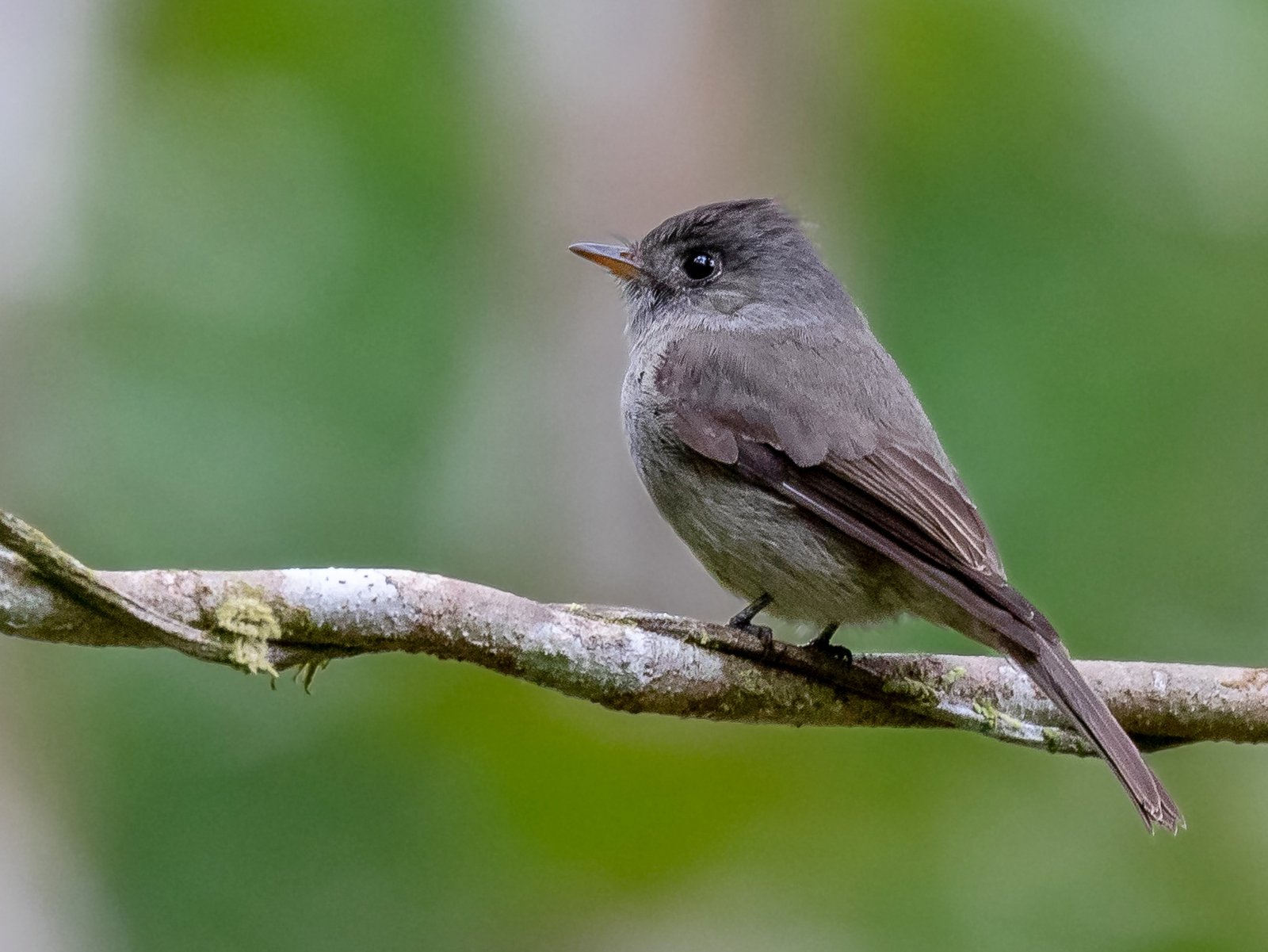
The Tropical Pewee is a small, grey pewee of semi-open woodland in Central and South America which, in the Caribbean, occurs only in Trinidad. The species was split in 2022–2023; the birds of Trinidad belong to Northern Tropical Pewee Contopus bogotensis, whereas Contopus cinereus in the strict sense lives only in central and southern South America. This guide follows the older, broader concept.
Voice
Short, high pip notes, often given a few times in succession, and trills. The dawn song is a long series of short, clear whistles delivered at a leisurely pace, a few seconds apart.
Recording: JAYRSON ARAUJO DE OLIVEIRA — CC BY-NC-SA 4.0 · converted to mono · xeno-canto
Identification
12–14 cm, small, with a slight crest and a rather short primary projection. The crown is dark blackish grey and contrasts with the slightly paler, greyish-olive back. The lores are pale grey to whitish and there is sometimes a narrow pale eye-ring. Throat white, breast grey, belly white to yellowish white. The wings show two faint greyish wing bars. The upper mandible is black, the lower yellow to orange. Juveniles are browner, with cinnamon feather edges.
Confusion species
Eastern Wood-Pewee Contopus virens, a passage migrant in Trinidad, is slightly larger, with dark lores, more distinct wing bars and a much longer primary projection. Olive-sided Flycatcher Contopus cooperi is much larger, with dark, streaked flanks. Euler's Flycatcher Lathrotriccus euleri has an eye-ring, buff wing bars and a yellowish belly. Fuscous Flycatcher Cnemotriccus fuscatus is browner, with a pale supercilium and a longer tail.
Habitat
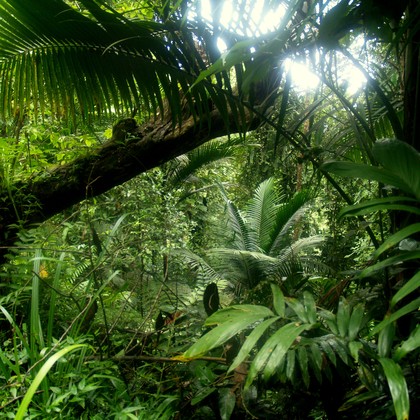
Forest edges, light and secondary woodland, clearings with scattered trees, shaded cacao and coffee plantations, gardens and mangroves, mainly in the lowlands and on the lower slopes. It perches on a low to mid-level open branch, sallies after insects and often returns to the same perch, quivering its tail.
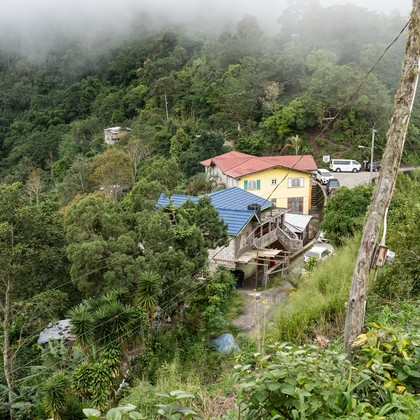
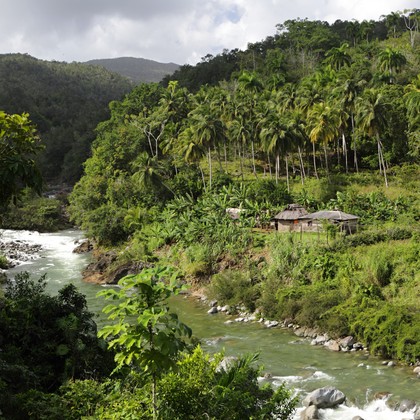
Where the bird is most at home, classified by the vegetation types of the Caribbean.


Range and movements
Resident in Trinidad, where it is fairly common in forest edges and plantations in the lowlands and the lower parts of the Northern Range. There are no records from the other islands in the region. Outside the region, in the broad sense, from southern Mexico through Central America and across much of South America to north-eastern Argentina.
- Resident
- Summer visitor (c. Oct–Mar)
- Winter visitor (c. Apr–Sep)
- Passage (Mar–Apr, Oct–Nov)
- dark = core range, pale = thinly spread
How and when to look
Plantations and forest edges in the Northern Range and the lowlands of Trinidad are good places, for example around the Arima Valley. A small pewee on a low branch with pale lores and short wings is this species; a pewee with dark lores and long wings during migration is more likely an Eastern Wood-Pewee.
Conservation status
Not threatened. The species tolerates secondary woodland, plantations and gardens and is common over much of its range.
Scientific name
Contopus cinereus | (Spix, 1825)
Spix described the species in 1825 as Platyrhynchus cinereus; because it was later moved to another genus, the author and year stand in brackets. The genus Contopus was introduced in 1855 by Cabanis. Contopus is Greek, from kontos 'pole, shaft' and pous 'foot', after the short legs. cinereus is Latin for 'ash-grey', after the grey plumage. The specimen the first description was based on came from Rio de Janeiro, Brazil.