All species › Passerines › Tyrant flycatchers › Jamaican Pewee
Jamaican Pewee | Contopus pallidus
Jamaicapiewie | Pibí jamaicano
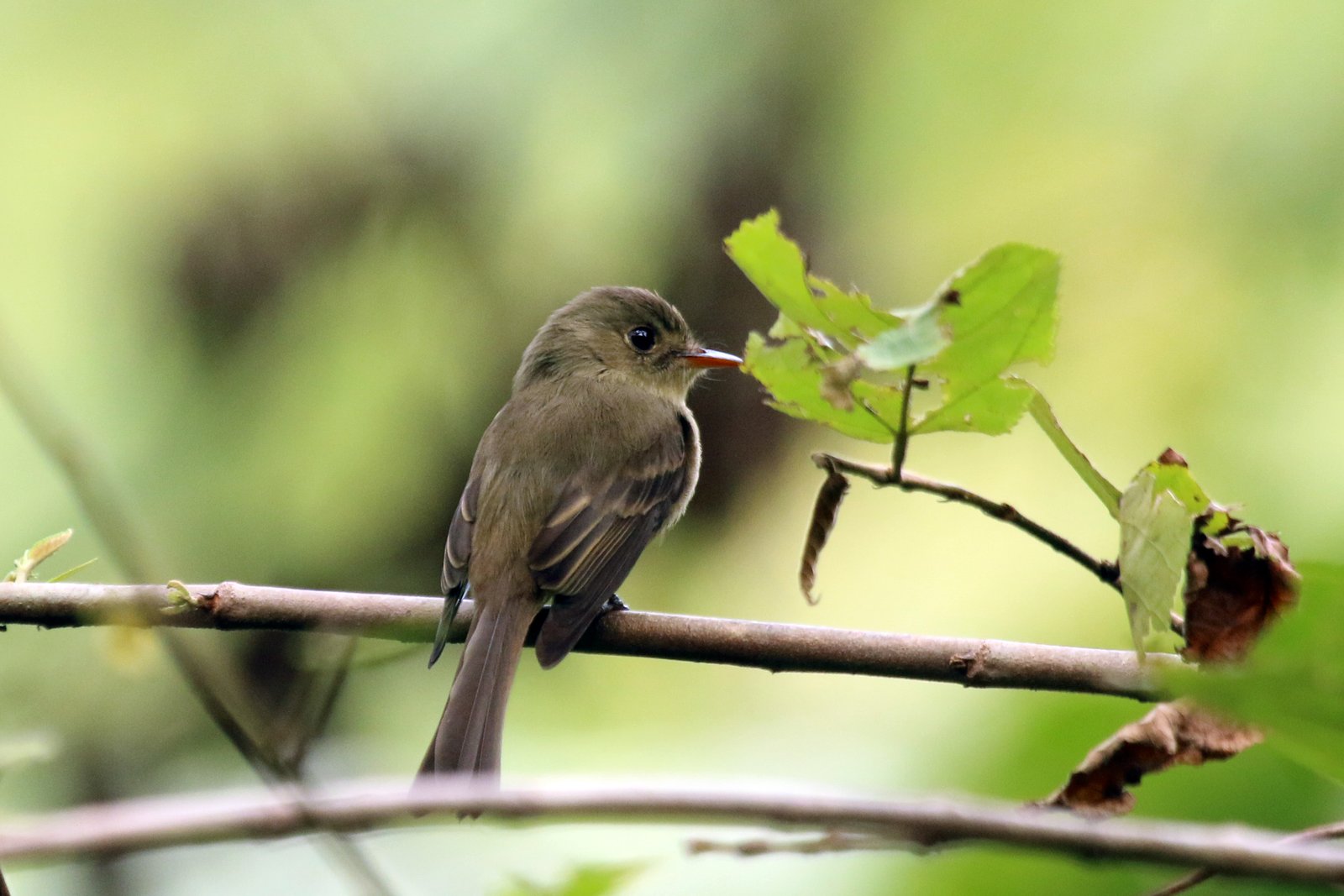
The Jamaican Pewee is a small, dark pewee found only in Jamaica. It used to be lumped with the pewees of Cuba, the Bahamas and Hispaniola as a single species, Greater Antillean Pewee; these are now treated as separate species. It is a bird of forest edges and clearings in the hills and mountains.
Voice
A rising wee-wee, the second note louder, and an uh-weee-oo with a whistled middle section.
Recording: Nick Komar — CC BY-NC-SA 4.0 · converted to mono · xeno-canto
Identification
15 cm, small, with a slight crest and a relatively broad bill. The upperparts are dark olive-grey, the wings and tail darker. The underparts are paler, greyish with an olive wash across the breast and a paler, often yellowish-tinged belly. The wing bars are indistinct. The upper mandible is dark, the lower orange. Juveniles are greyer above and paler below, with a paler bill.
Confusion species
Sad Flycatcher Myiarchus barbirostris is about the same size but has a yellow belly, rufous edges to the wings and tail and an all-black bill. Rufous-tailed Flycatcher Myiarchus validus is much larger and shows a lot of rufous. Eastern Wood-Pewee Contopus virens, which passes through Jamaica on migration, is greyer, with distinct white wing bars and longer wings. Jamaican Elaenia Myiopagis cotta is greener, with a dark crown and a yellow crown patch.
Habitat
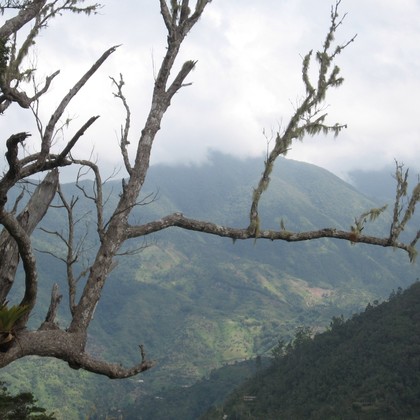
Edges, clearings and trails in moist forest in the hills and mountains, also shade-coffee plantations and forest on limestone; locally up to about 2000 m. Outside the breeding season some birds move to lower elevations. It perches upright on a clear, open perch, sallies after insects and quivers its tail on landing. The nest is a small cup of fine plant fibres in a tree fork; breeding takes place from April to June.
Where the bird is most at home, classified by the vegetation types of the Caribbean.




Range and movements
Only in Jamaica, scattered through the hilly and mountainous parts of the island, including the Blue Mountains, the John Crow Mountains and Cockpit Country. It does not occur outside Jamaica.
- Resident
- dark = core range, pale = thinly spread
How and when to look
Most likely along mountain roads and forest trails in the Blue Mountains, such as around Hardwar Gap, where birds sit on branches beside forest clearings. A small, dark flycatcher with an orange lower mandible that returns to the same perch after each sally is almost certainly this species.
Conservation status
Not threatened, but the population appears to be declining through the loss and fragmentation of forest in Jamaica.
Scientific name
Contopus pallidus | (Gosse, 1847)
Gosse described the species in 1847 as Myiobius pallidus; because it was later moved to another genus, the author and year stand in brackets. The genus Contopus was introduced in 1855 by Cabanis. Contopus is Greek, from kontos 'pole, shaft' and pous 'foot', after the short legs. pallidus is Latin for 'pale', after the rather dull plumage. The specimen the first description was based on came from Jamaica.