All species › Pigeons and doves › Pigeons and doves › Scaled Dove
Scaled Dove | Columbina squammata
Schubduif | Tortolita escamosa
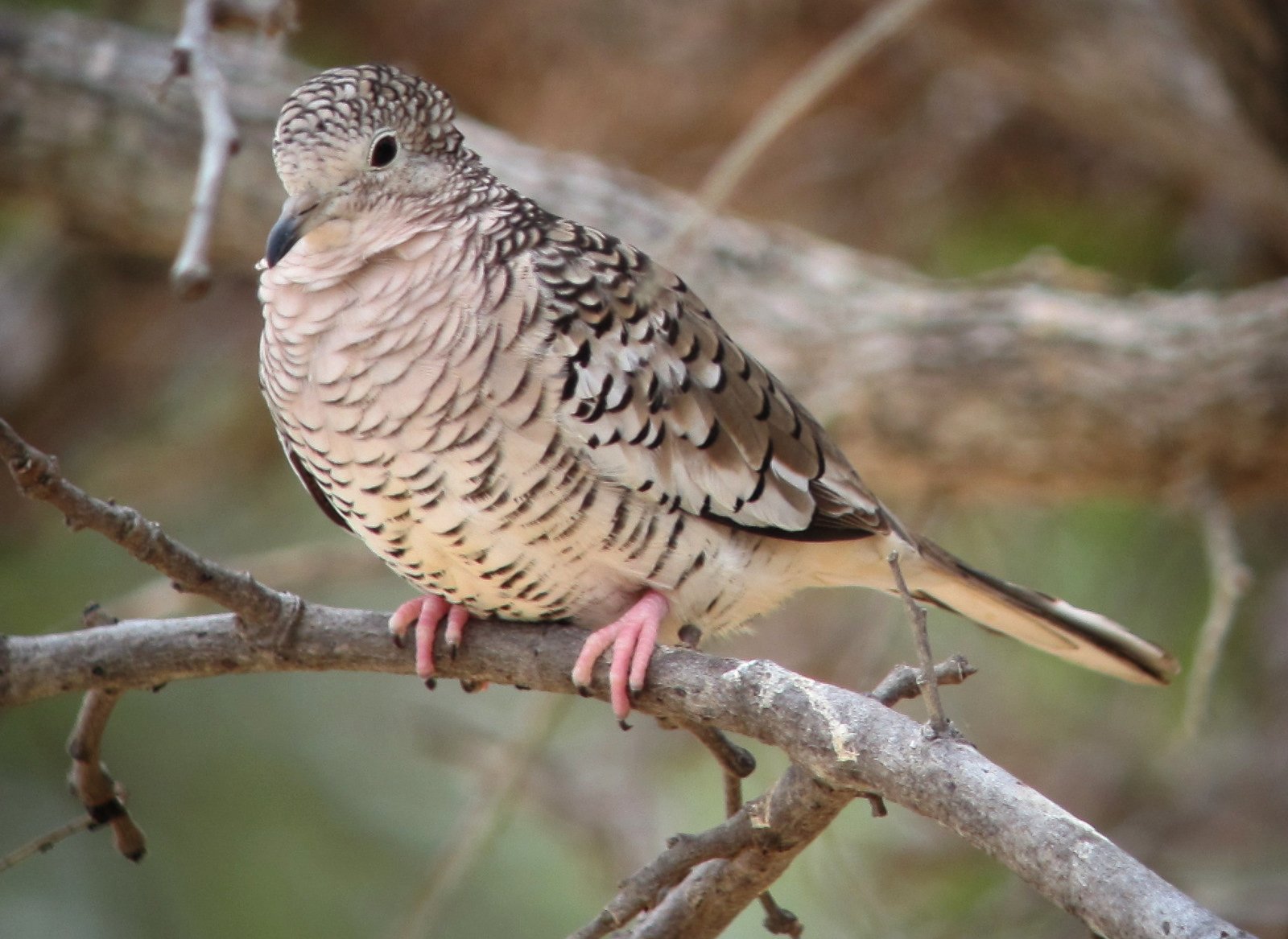
The Scaled Dove is a small, long-tailed ground dove of open, dry country in South America, finely scaled over the whole body. Within the Caribbean it is known only from Trinidad, where it is rare. On the mainland it draws attention mainly through its rhythmic, endlessly repeated call; in Brazil it is named fogo-apagou, 'the fire is out', after that call.
Voice
A rhythmic call of three short cooing notes, the last slightly higher or more emphatic, coo-coo-cooo, repeated endlessly from a hidden perch; head and body bob as the bird calls. On take-off the wings make a distinct rattling or whirring sound.
Recording: JAYRSON ARAUJO DE OLIVEIRA — CC BY-NC-SA 4.0 · converted to mono · xeno-canto
Identification
18–22 cm, slightly larger than Ruddy Ground Dove and clearly longer-tailed. The plumage is grey-brown to sandy above and paler, almost white to pinkish buff below, and scaled everywhere, back and belly included, by dark feather edges. The tail is long and graduated, with dark central feathers and white tips to the outer feathers, which together form a white edge that shows well in flight. In flight the rufous primaries also stand out, along with a white band at the base of the wing. The sexes are almost alike. Of the two subspecies, ridgwayi, from Colombia to Venezuela, shows more black at the feather tips than the nominate form of eastern South America.
Confusion species
Common Ground Dove Columbina passerina is smaller and short-tailed, and scaled only on head, neck and breast; its back is plain and its tail lacks white sides. Ruddy Ground Dove Columbina talpacoti and Plain-breasted Ground Dove Columbina minuta have a plain, unscaled breast and a short tail. Eared Dove Zenaida auriculata is much larger, with black spots on the wing and black marks on the cheek, and lacks the scaling. The combination of long tail and scaling distinguishes the Scaled Dove from these species within the region.
Habitat
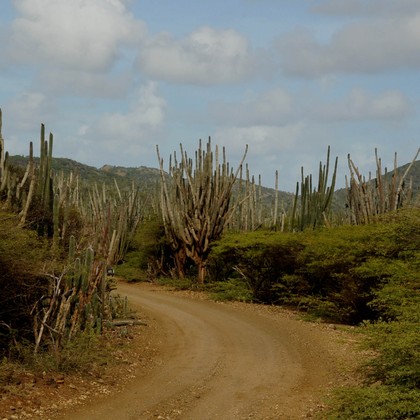
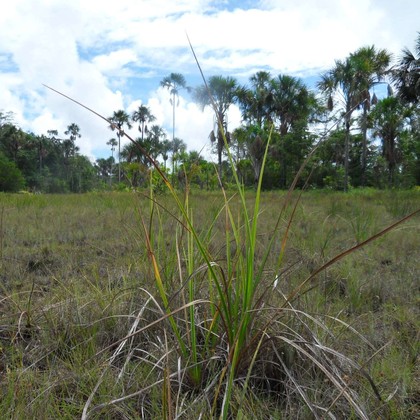
Open, dry country with scattered trees and shrubs: dry scrub, savanna, pastures, field margins, road verges and village edges; on the mainland also gardens and urban areas. It forages on the ground, singly or in pairs, on seeds, and in between sits in trees or on wires. The nest is a cup of twigs, usually one to two metres up in a shrub or small tree and sometimes on the ground, with two white eggs.
Where the bird is most at home, classified by the vegetation types of the Caribbean.


Range and movements
Within the region only in Trinidad, where it is rare and seldom reported; whether a small established population exists or birds come over regularly from the nearby mainland has not been clearly established. It does not occur in Tobago or on the other islands. Beyond the region in South America: from northern Colombia through Venezuela and the Guianas, and in eastern and central Brazil to Bolivia, Paraguay and north-eastern Argentina.
- Resident
- dark = core range, pale = thinly spread
How and when to look
In Trinidad a species to search for deliberately in dry, open country with shrubs and scattered trees. The rhythm of the three-part call is the best lead, and a small dove that flushes with a rattling wing noise, showing white tail sides and rufous wings, is almost certainly this species. Records in Trinidad are worth reporting.
Conservation status
Not threatened. On the South American mainland the species is common and is locally expanding with deforestation and the spread of open country. In Trinidad it is rare; no data on numbers or trends on the island are known.
Scientific name
Columbina squammata | (Lesson, 1831)
Lesson described the species in 1831 as Columba squammata; because it was later moved to another genus, the author and year stand in brackets. The genus Columbina was introduced in 1825 by Spix. Columbina is Latin for 'little dove', a diminutive of columba 'dove'. squammata is Latin for 'scaly', after the scaly pattern of the plumage. The specimen the first description was based on came from Bahia, Brazil.