All species › Cranes, rails and allies › Cranes › Sandhill Crane
Sandhill Crane | Antigone canadensis
Canadese kraanvogel | Grulla canadiense
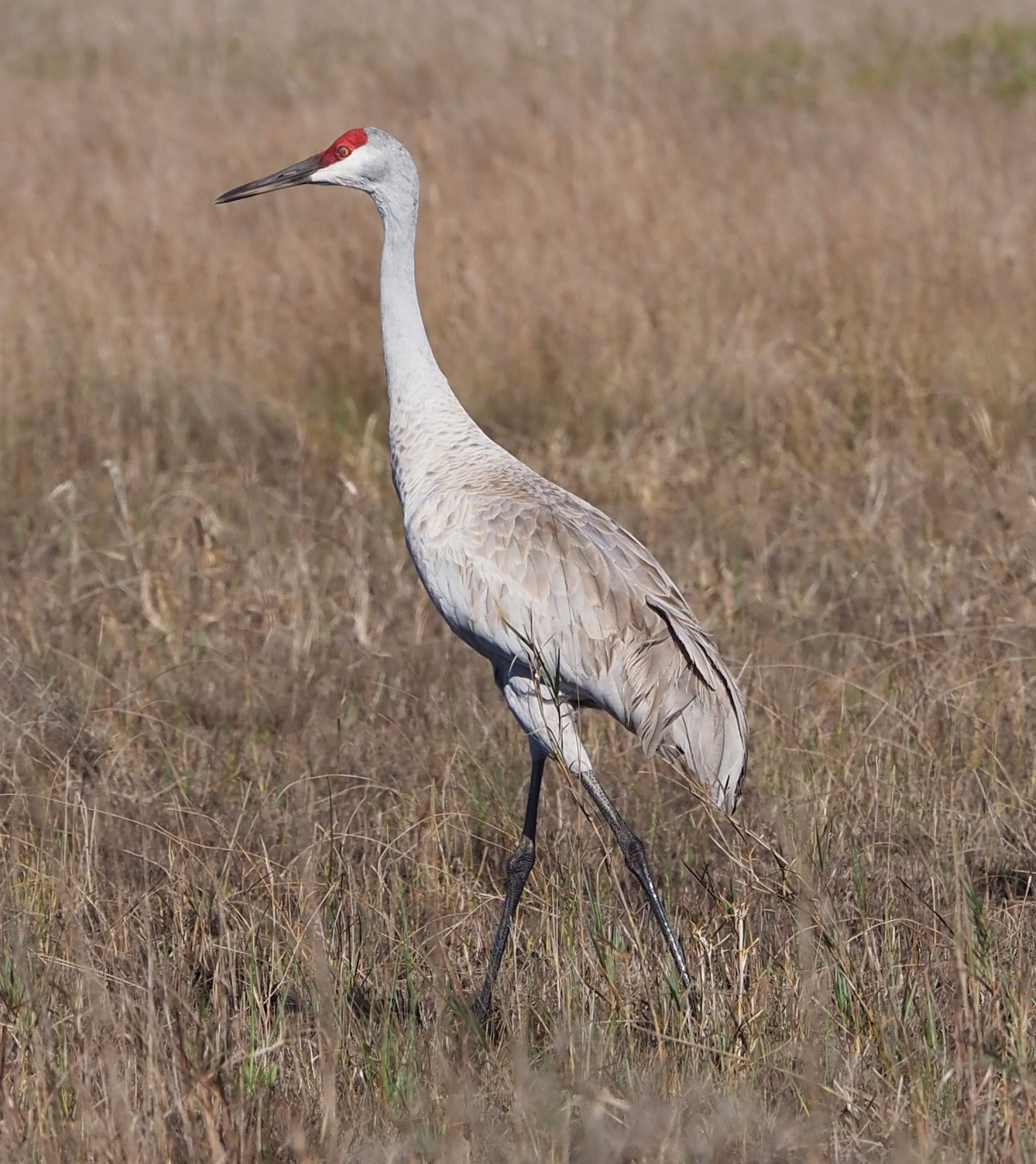
The Sandhill Crane is a large grey crane with a red crown. The Caribbean has its own non-migratory subspecies, Antigone canadensis nesiotes, found only in Cuba. This Cuban population numbers a few hundred birds, spread over a series of separate areas, with its stronghold on the Isla de la Juventud. In Cuba it is called grulla.
Voice
A loud, rolling trumpeting, garroo-oo-oo, with a strongly rolled r, carrying for kilometres. Pairs call in duet, the female giving two notes to every one of the male. Young birds give a high, whistled peeping.
Recording: Don Profota — CC BY-NC-SA 4.0 · converted to mono · xeno-canto
Identification
86–122 cm; Cuban birds belong to the smaller forms. Tall, slender and long-legged, with a long neck and a straight, dark bill. The plumage is plain grey; the adult has a bare red crown and whitish cheeks and throat. Feathers may be stained rusty brown by iron-rich mud that the birds apply while preening. The inner secondaries form a drooping ‘bustle’ over the tail. Juveniles lack the red crown and are browner on the head, neck and upperparts. It flies with neck and legs outstretched, on slow beats with a quick, short upstroke.
Confusion species
Great Blue Heron Ardea herodias is about as tall, but flies with the neck retracted, has a yellow, dagger-shaped bill and a black head stripe. Wood Stork Mycteria americana is white with black flight feathers and a bare dark head with a thick, curved bill. No other cranes occur in the region.
Habitat
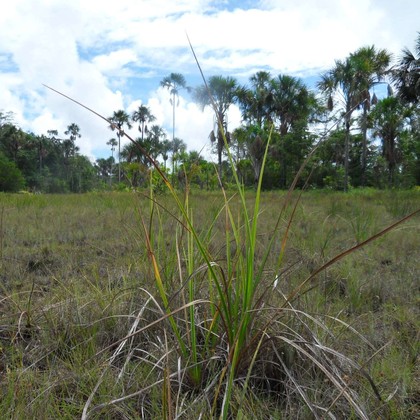
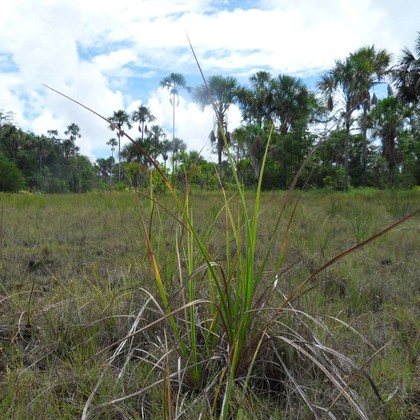
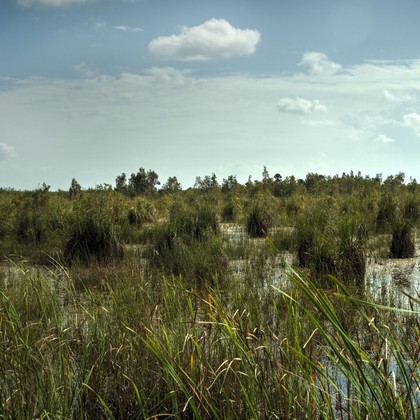
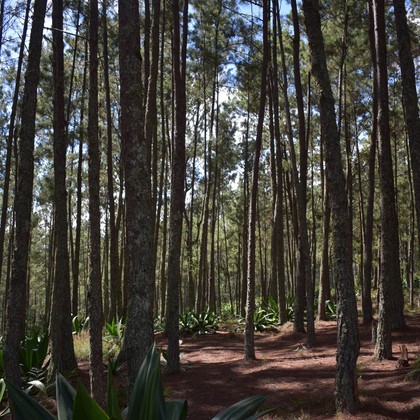
Dry and seasonally flooded grasslands and savannas, often with scattered palms or pines, and nearby marshes. On the Isla de la Juventud also open pine savanna on white sand. It forages on foot for tubers, seeds, insects, small reptiles and other small animals. It breeds from late February into June in a nest of grass and plant material on the ground or in shallow water.
Where the bird is most at home, classified by the vegetation types of the Caribbean.
Range and movements
Within the region only in Cuba: on the Isla de la Juventud and at a series of scattered sites on the main island, from Pinar del Río to the east, including populations in the Zapata Swamp and in the savannas of Camagüey. A few isolated records are known from the northern Bahamas, presumably vagrants from Florida. Beyond the region it breeds in North America, from north-eastern Siberia and Alaska to the Great Lakes, with resident populations in Florida, Mississippi and southern Georgia; northern birds winter in the southern United States and northern Mexico.
- Resident
- Winter visitor (c. Apr–Sep)
- dark = core range, pale = thinly spread
How and when to look
The Isla de la Juventud offers the best chances, in the open savannas in the north of the island. On the main island the birds are shy and are often first noticed by their call. The birds are vulnerable to disturbance, especially in the breeding season, and are best watched from a distance.
Conservation status
Not globally threatened. The Cuban subspecies is small and fragmented and is regarded as threatened. Threats are the loss of savanna to agriculture and to encroaching woodland, hunting and egg collecting. In Cuba research on breeding success and distribution, habitat management with prescribed burning and public education are under way.
Scientific name
Antigone canadensis | (Linnaeus, 1758) (GBIF: Grus canadensis)
Linnaeus described the species in 1758 as Ardea canadensis; because it was later moved to another genus, the author and year stand in brackets. The genus Antigone was introduced in 1853 by Reichenbach. Antigone comes from Greek myth: Antigone, daughter of King Laomedon of Troy, compared her beauty with Hera's and was turned into a stork. Linnaeus seems to have confused her with Gerana, queen of the pygmies, who for the same offence was changed into a crane. canadensis is modern Latin for 'from Canada'. The specimen the first description was based on came from Hudson Bay.