All species › Hummingbirds and swifts › Hummingbirds › Puerto Rican Mango
Puerto Rican Mango | Anthracothorax aurulentus
Puerto Ricaanse mango | Zumbador de Puerto Rico
The Puerto Rican Mango is the large hummingbird of the Puerto Rican lowlands, known locally as zumbador dorado. For a long time it was combined with the Hispaniola birds as Antillean Mango; since 2022 it has been treated almost everywhere as a separate species. The name Antillean Mango has thus lapsed; the Hispaniola species is now called Hispaniolan Mango Anthracothorax dominicus.
Voice
Mostly silent; no song has been described. Calls include a repeated short tsip and a high, liquid trill.
No recording with a suitable Creative Commons licence is available for this species yet.
Identification
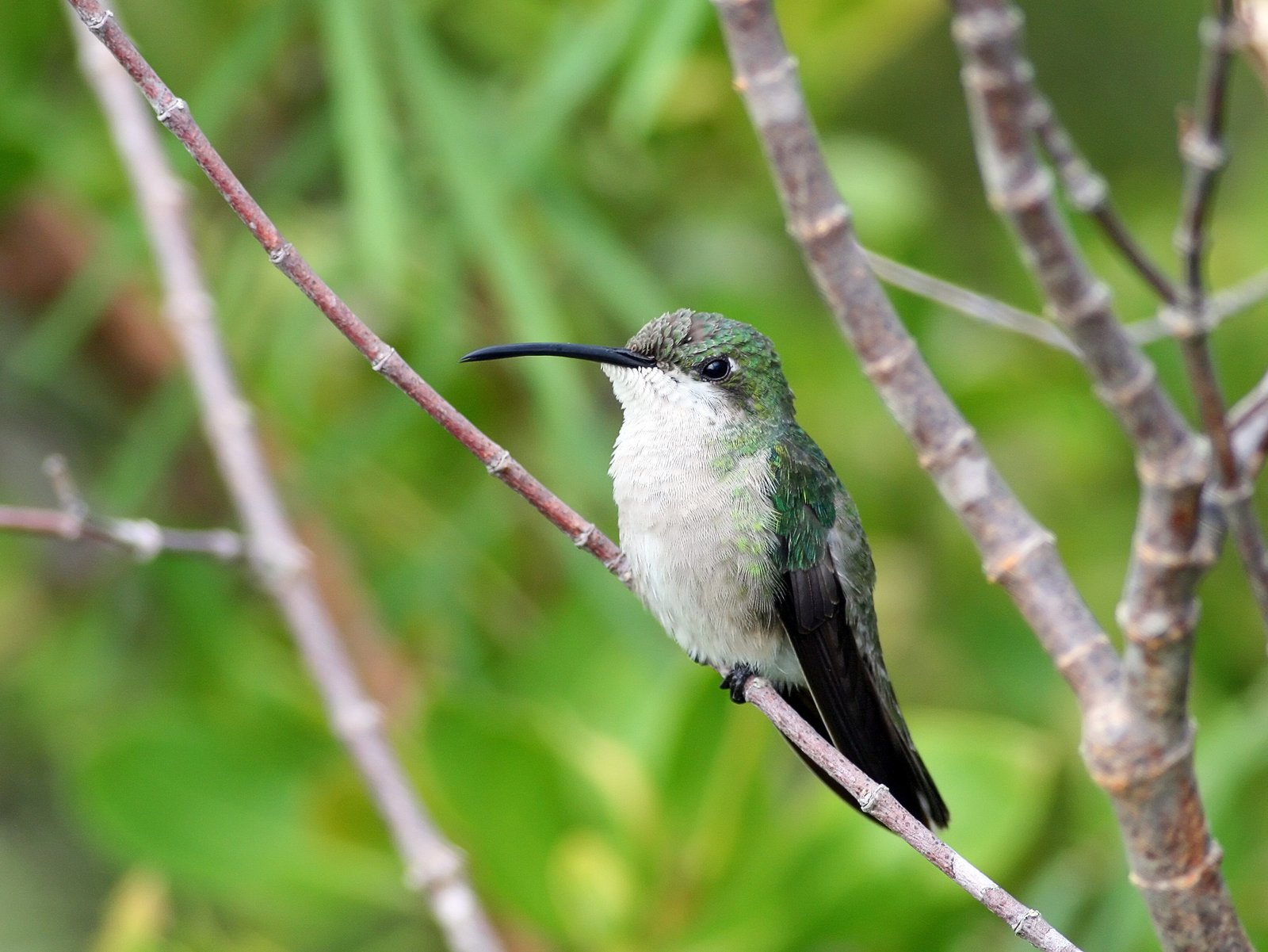
11–12.5 cm, with a slightly curved black bill. The male is bronze-green to golden-green above, with a glittering green throat, a black band across the upper breast and green flanks; the rest of the underparts varies from dark grey to blackish brown. The tail is chestnut to purplish red with dark tips. The female is also green above and pale grey below, becoming whitish on the belly; the outer tail feathers are grey-brown with a dark band and narrow white tips. Young males have a dark central stripe down otherwise grey underparts.
Confusion species
Green Mango Anthracothorax viridis has entirely green underparts and a blue-black tail, and lives mainly in montane forest, where Puerto Rican Mango is scarce. Green-throated Carib Eulampis holosericeus has a blue breast patch and a straighter bill. Puerto Rican Emerald Riccordia maugaeus and Antillean Crested Hummingbird Orthorhyncus cristatus are much smaller. Hispaniolan Mango is almost identical but occurs only on Hispaniola.
Habitat
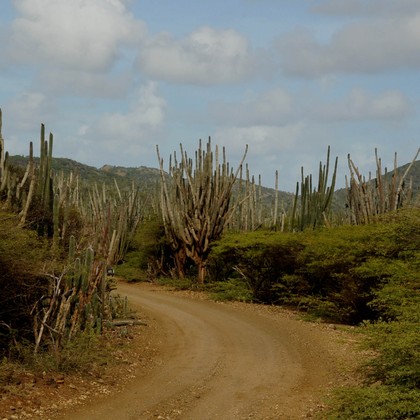
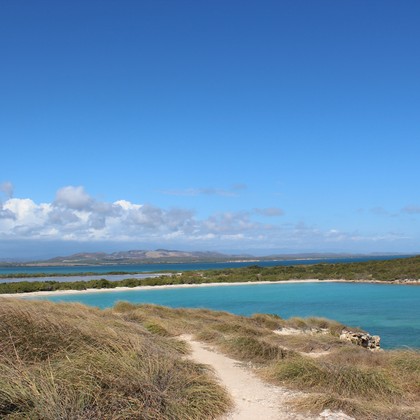
Mainly lowlands and coast, mostly below 250 m: dry forest, forest edges, coastal woodland and scrub, open country with scattered trees, gardens and parks. It avoids true rainforest. It visits flowering trees and shrubs, and on Puerto Rico also nests on power lines, antennas and fences.
Where the bird is most at home, classified by the vegetation types of the Caribbean.




Range and movements
Puerto Rico, mainly in the lowlands and along the coast, with Culebra and the US and British Virgin Islands. It appears to have disappeared from Vieques, and in the Virgin Islands it has vanished from several small islands and become scarce elsewhere.
- Resident
- dark = core range, pale = thinly spread
How and when to look
On Puerto Rico in coastal gardens and parks and in the dry southwest, for example around Guánica, at flowering trees and shrubs. Inland the same kind of site often produces Green Mango; the colour of the underparts settles it.
Conservation status
Least Concern. Common in coastal Puerto Rico. The population has not been counted and is thought to be declining; it has disappeared from some small offshore islands.
Scientific name
Anthracothorax aurulentus | (Audebert & Vieillot, 1801) (GBIF: Anthracothorax dominicus)
Audebert & Vieillot described the species in 1801 as Trochilus aurulentus; because it was later moved to another genus, the author and year stand in brackets. The genus Anthracothorax was introduced in 1831 by Boie. Anthracothorax is Greek, from anthrax 'coal' (i.e. 'black') and thōrax 'chest', after the black central stripe on breast and belly. aurulentus is Latin for 'golden', after the golden-green sheen of the plumage. The specimen the first description was based on came from Puerto Rico.