All species › Hummingbirds and swifts › Hummingbirds › Hispaniolan Mango
Hispaniolan Mango | Anthracothorax dominicus
Hispaniolamango | Zumbador grande
The Hispaniolan Mango is the large, common hummingbird of Hispaniola, known in the Dominican Republic as zumbador grande. For a long time the population of Puerto Rico and the Virgin Islands was included in the same species; since 2022 it has been treated almost everywhere as a separate species, Puerto Rican Mango (Anthracothorax aurulentus). This account covers the birds of Hispaniola.
Voice
A repeated short tsip, and a high, liquid trill.
Recording: Oscar Humberto Marin-Gomez — CC BY-NC-SA 4.0 · converted to mono · xeno-canto
Identification
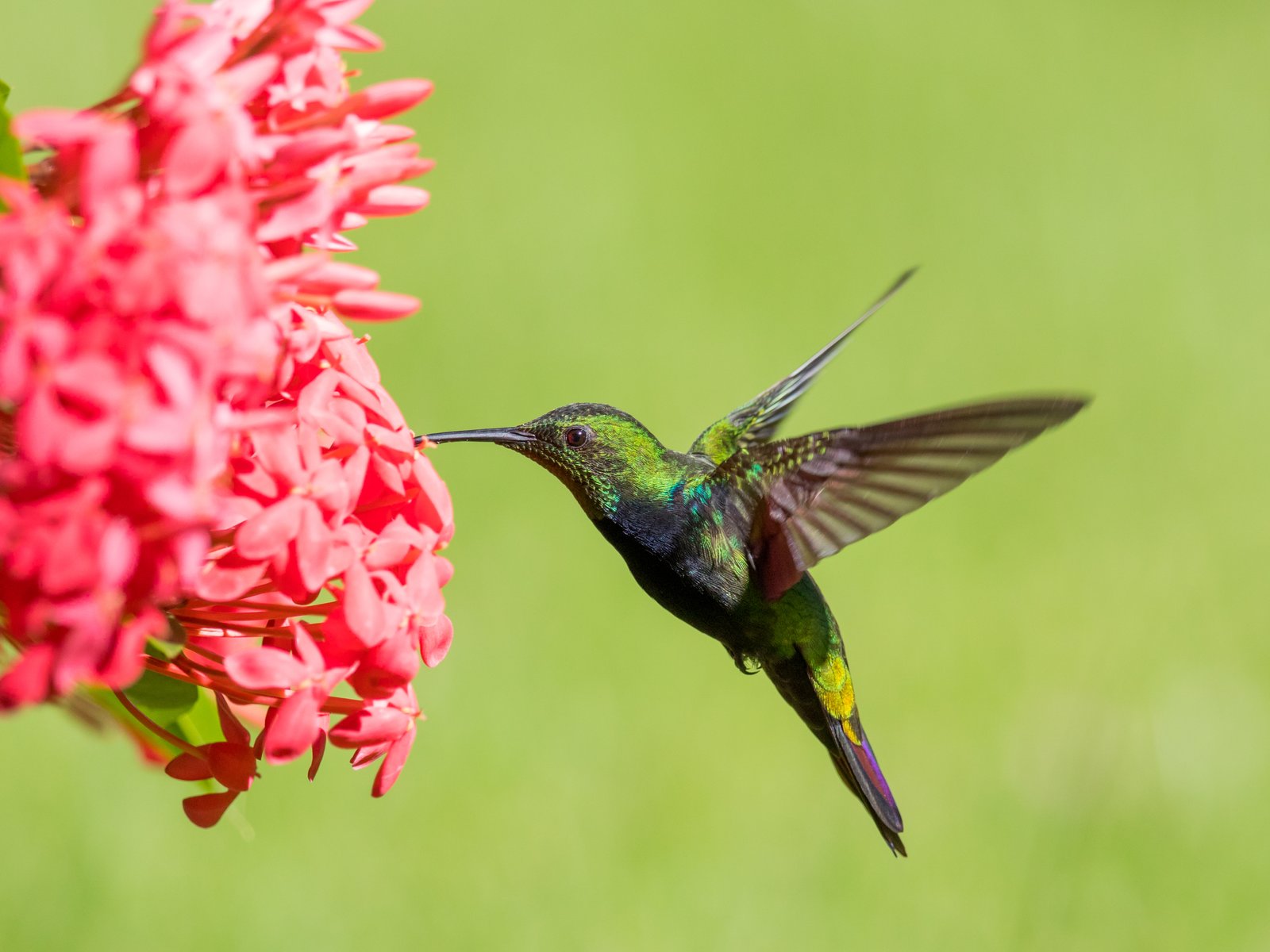
11–13 cm, with a slightly curved black bill. The male is glossy bronze-green above, with a metallic green chin and throat; the rest of the underparts is velvety black with a bluish tinge. The tail is purplish red to chestnut with a dark terminal band. The female is also bronze-green above but grey to dull white below, palest on the belly; the outer tail feathers have a dark band and white tips.
Confusion species
Hispaniolan Emerald Riccordia swainsonii is smaller, with a straight bill and, in the male, a green breast with a black patch; it lives mainly in montane forest. Vervain Hummingbird Mellisuga minima is much smaller, with a short straight bill. Puerto Rican Mango of Puerto Rico and the Virgin Islands is almost identical; there, Green Mango Anthracothorax viridis differs by its green underparts and Green-throated Carib Eulampis holosericeus by its blue breast patch.
Habitat
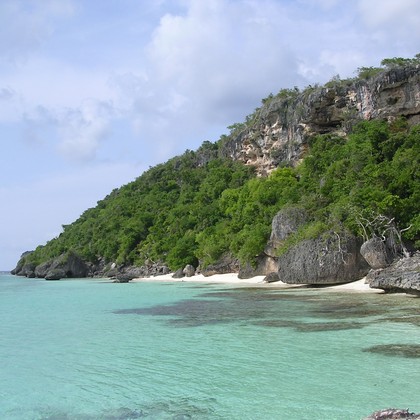
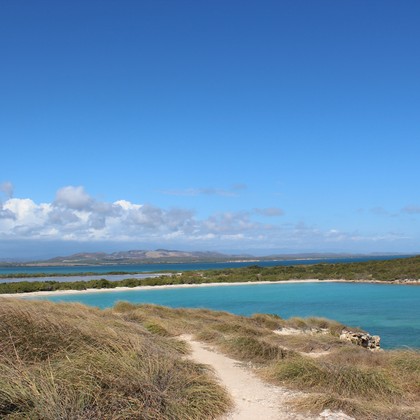
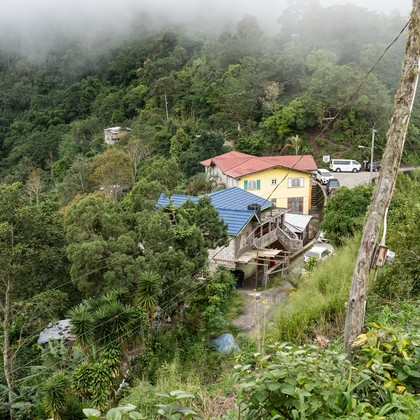
A wide range of moist and dry country: forest clearings, secondary forest, dry forest and coastal scrub, shaded coffee plantations, gardens and parks. Mainly in the lowlands and at middle elevations, less in the high mountains. Seeks out flowering trees and shrubs, including in villages and towns.
Where the bird is most at home, classified by the vegetation types of the Caribbean.



Range and movements
Only on Hispaniola, in both Haiti and the Dominican Republic, where it is a common resident. The GBIF map also shows Puerto Rico and the Virgin Islands; those records belong to Puerto Rican Mango, which occurs on Puerto Rico, Culebra and the US and British Virgin Islands and appears to have disappeared from Vieques. Isolated reports from Dominica and the Cayman Islands are unconfirmed.
- Resident
- dark = core range, pale = thinly spread
How and when to look
In the Dominican Republic in almost any garden with flowering shrubs and in coffee-growing areas, including in Santo Domingo. Males stand out by their black underparts; against the light the green throat shows only on closer view.
Conservation status
Not threatened. The species is common and adapts well to gardens, plantations and secondary growth.
Scientific name
Anthracothorax dominicus | (Linnaeus, 1766)
Linnaeus described the species in 1766 as Trochilus dominicus; because it was later moved to another genus, the author and year stand in brackets. The genus Anthracothorax was introduced in 1831 by Boie. Anthracothorax is Greek, from anthrax 'coal' (i.e. 'black') and thōrax 'chest', after the black central stripe on breast and belly. dominicus refers to Santo Domingo, the old name for Hispaniola, not to the island of Dominica. The specimen the first description was based on came from Hispaniola.