All species › Passerines › Vireos › Jamaican Vireo
Jamaican Vireo | Vireo modestus
Jamaicaanse vireo | Vireo jamaicano
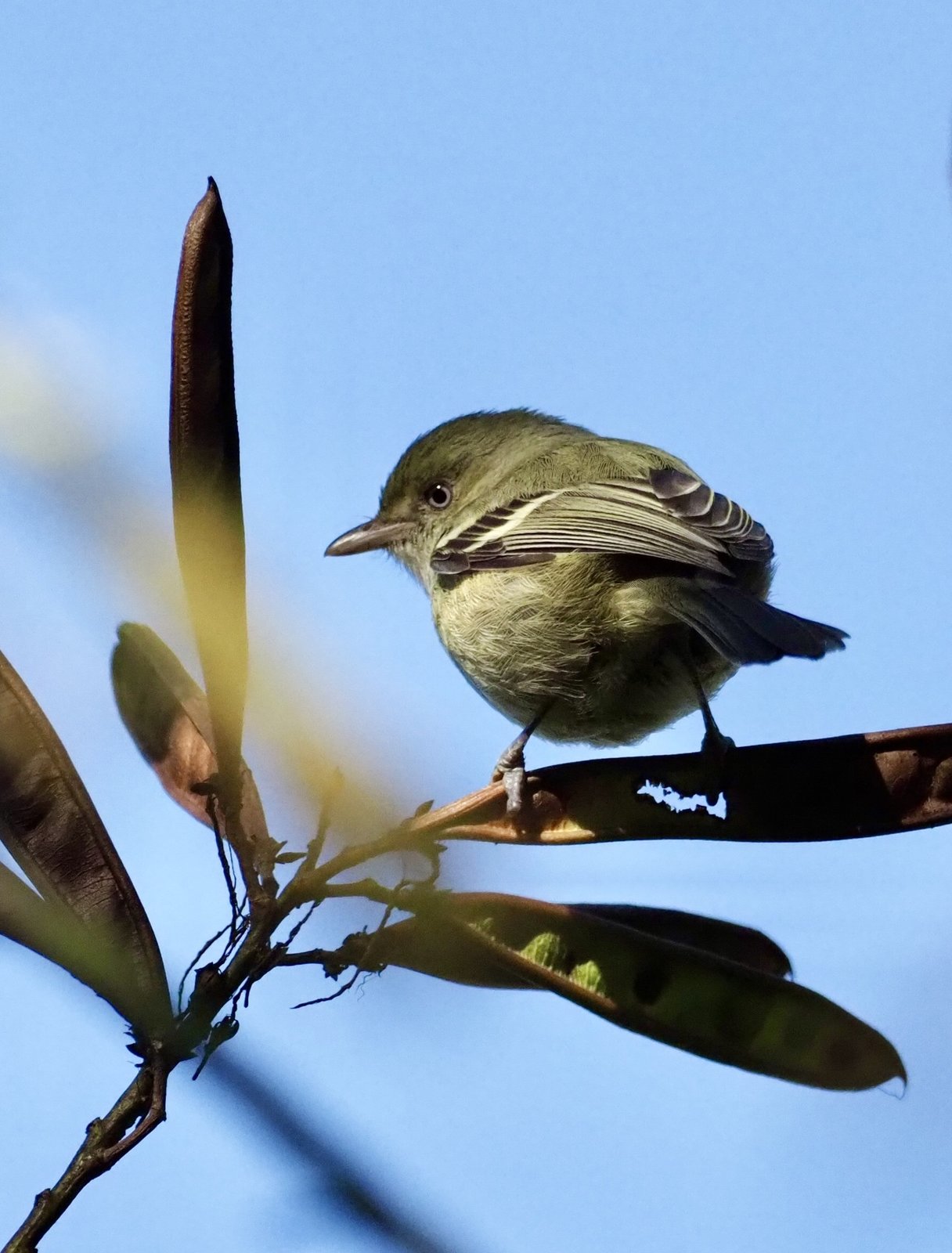
The Jamaican Vireo is a small greenish-grey vireo found only in Jamaica, where it is common and widespread. On the island it is called sewi-sewi after its song. It is one of Jamaica's two endemic vireos, alongside the larger and less common Blue Mountain Vireo of montane forest.
Voice
The song is rapid, high-pitched and highly variable: a phrase is repeated for several minutes and then replaced by another. Typical are a rapid sewi-sewi, the source of the local name, and phrases such as twee-weet-wuu or pee-eu, ranging from a slow series to a fast trill. Also scolding sounds.
Recording: Peter de Rouw — CC BY-NC-SA 4.0 · converted to mono · xeno-canto
Identification
About 12.5 cm. Head and upperparts are greyish green to greyish olive, the rump slightly brighter. Lores, chin and throat are yellowish to whitish, the breast yellowish grey, the belly brighter yellow and the flanks pale olive. The wing has two distinct whitish wing bars and pale edges to the flight feathers. Adults have a pale blue-grey to white iris; juveniles have a dark iris, a greyer head, browner olive upperparts and buffier underparts. The sexes are alike.
Confusion species
Blue Mountain Vireo Vireo osburni is larger and plain dark greyish olive, with a heavy bill, a dark iris and no wing bars; it lives mainly in montane forest. Black-whiskered Vireo Vireo altiloquus, common in summer, is larger, without wing bars, with a red iris, a white supercilium and a dark whisker. White-eyed Vireo Vireo griseus, a rare winter visitor, has yellow spectacles, a white throat and belly and yellow flanks.
Habitat
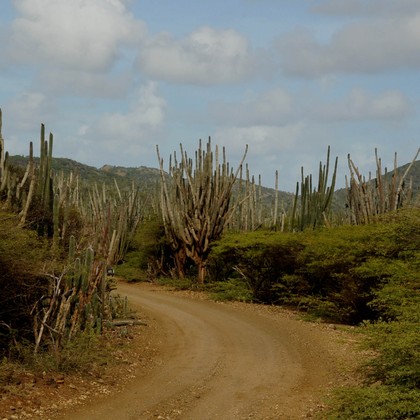
Moist and dry deciduous forest, dry lowland forest and thickets in the arid lowlands, limestone karst forest, forest edges, secondary forest and evergreen montane forest, from sea level high into the mountains. Usually absent from mangroves and marshes. It forages in the lower and middle storeys for insects. The nest is a suspended cup of fern leaves, moss and fibres, camouflaged with lichens; the breeding season runs from April to June.
Where the bird is most at home, classified by the vegetation types of the Caribbean.





Range and movements
Only in Jamaica, across the whole island wherever there is forest or scrub. The species does not occur outside Jamaica.
- Resident
- dark = core range, pale = thinly spread
How and when to look
In almost any forest or scrub in Jamaica, both in the dry lowlands, such as the Hellshire Hills, and in the moister interior, such as the Cockpit Country. The repeated, ever-changing song is the best lead. The wing bars and, in adults, the pale iris separate it from the island's other vireos.
Conservation status
Not threatened. The species is common and also occurs in secondary forest and scrub.
Scientific name
Vireo modestus | Sclater, 1861
Sclater described the species in 1861 and placed it straight away in the genus where it still stands. The genus Vireo was introduced in 1808 by Vieillot. Vireo was used by Latin authors for a small, green, migratory bird, probably the Eurasian golden oriole, though the European greenfinch has also been suggested. modestus is Latin for 'modest, unassuming', after the plain, inconspicuous plumage. The specimen the first description was based on came from Jamaica.