All species › Passerines › Vireos › Puerto Rican Vireo
Puerto Rican Vireo | Vireo latimeri
Puerto Ricaanse vireo | Vireo puertorriqueño
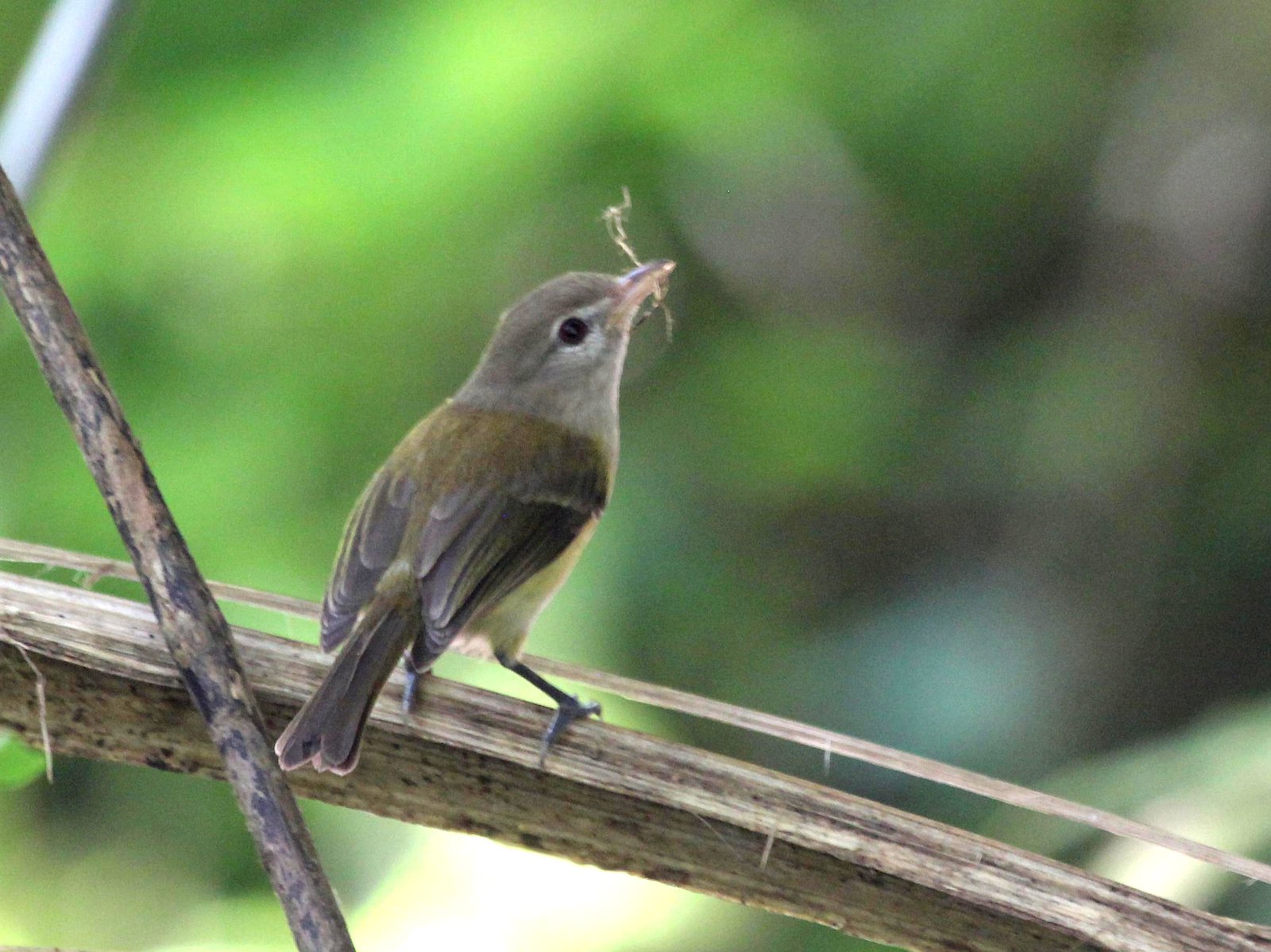
The Puerto Rican Vireo is a small, grey-headed vireo found only in Puerto Rico, mainly in the west and centre of the island. Locally it is called bien-te-veo after its song, a name used elsewhere for the unrelated Great Kiskadee. In the dry forest of Guánica the species declined sharply through brood parasitism by Shiny Cowbird.
Voice
The song is a melodious whistled motif of three or four syllables, repeated endlessly and rendered as bien-te-veo. Also a rattling chur-chur-churr during courtship and a soft tup tup tup contact call.
Recording: Orlando A. Acevedo-Charry — CC BY-NC-SA 4.0 · converted to mono · xeno-canto
Identification
About 12 cm. Crown and nape are grey to greenish grey, duller than the back. A whitish eye-ring and a pale area above the lores form incomplete spectacles. The upperparts are greenish grey, the flight feathers dark grey with yellow-green edges. Chin and throat are greyish white, the breast yellowish grey and the belly yellowish, paler in the centre. Adults lack distinct wing bars; juveniles show two brownish ones. The iris is brown to reddish brown, the upper mandible dark horn-brown and the lower mandible paler. The sexes are alike.
Confusion species
Black-whiskered Vireo Vireo altiloquus, a summer visitor, is larger and greener above, with a red iris, a white supercilium below a grey crown and a dark whisker. Red-eyed Vireo Vireo olivaceus, a passage migrant, resembles Black-whiskered but lacks the whisker. White-eyed Vireo Vireo griseus, a vagrant here, has yellow spectacles and two clear white wing bars. Adelaide's Warbler Setophaga adelaidae is blue-grey with a bright yellow throat, white wing bars and a thinner bill.
Habitat
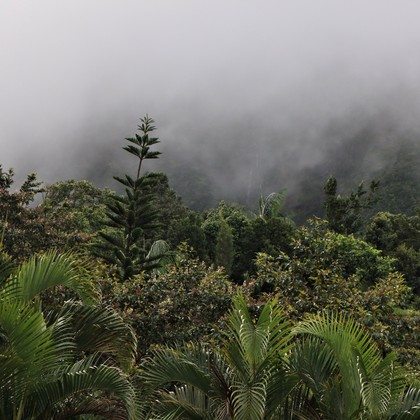
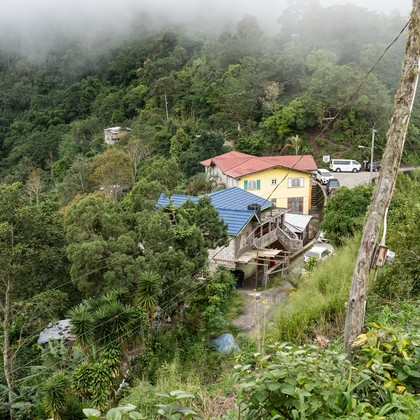
Mainly the forest of the limestone hills in the north-west, also moist montane forest, dry coastal forest and scrub, shade-coffee plantations and locally mangroves, from sea level to about 900 m. It keeps to dense undergrowth and the middle storey and avoids open country. It gleans insects and other invertebrates from leaves and twigs. The nest is a deep cup in a shrub or small tree; the breeding season runs roughly from March to June.
Where the bird is most at home, classified by the vegetation types of the Caribbean.




Range and movements
Only in Puerto Rico, mainly in the west and centre of the island: the karst hills of the north-west, the central uplands around Maricao and the dry south-west around Guánica. Scarce or absent in the east. The species does not occur outside Puerto Rico.
- Resident
- dark = core range, pale = thinly spread
How and when to look
The forests of the karst hills, such as Río Abajo and Cambalache, and the montane forests of Maricao and Susúa are good places, especially in the morning. The constantly repeated whistled song gives the bird away long before it can be seen in the dense vegetation.
Conservation status
Not threatened, but locally declined. In the Guánica forest most nests were parasitised by Shiny Cowbird Molothrus bonariensis between the 1970s and 1990s, sharply reducing the number of fledged young. Predation by mongooses and cats, deforestation and the loss of shade coffee also play a part.
Scientific name
Vireo latimeri | Baird, 1866
Baird described the species in 1866 and placed it straight away in the genus where it still stands. The genus Vireo was introduced in 1808 by Vieillot. Vireo was used by Latin authors for a small, green, migratory bird, probably the Eurasian golden oriole, though the European greenfinch has also been suggested. latimeri honours George Latimer, an American merchant based in Puerto Rico who collected birds there for the Smithsonian. The specimen the first description was based on came from north coast of Puerto Rico.