All species › Birds of prey › Hawks, eagles and kites › Hen Harrier
Hen Harrier | Circus cyaneus
Blauwe kiekendief | Aguilucho pálido
The Hen Harrier is a slim raptor of open country that hunts low and tilting over grass and marsh. The birds wintering in the Caribbean come from North America and belong to the American form, now usually treated as a separate species, Northern Harrier Circus hudsonius; this guide lists them under the older, broader concept.
Voice
Almost always silent in winter quarters. When alarmed, a rapid series kek-kek-kek.
Recording: Jorge Leitão — CC BY-NC-SA 4.0 · converted to mono · xeno-canto
Identification
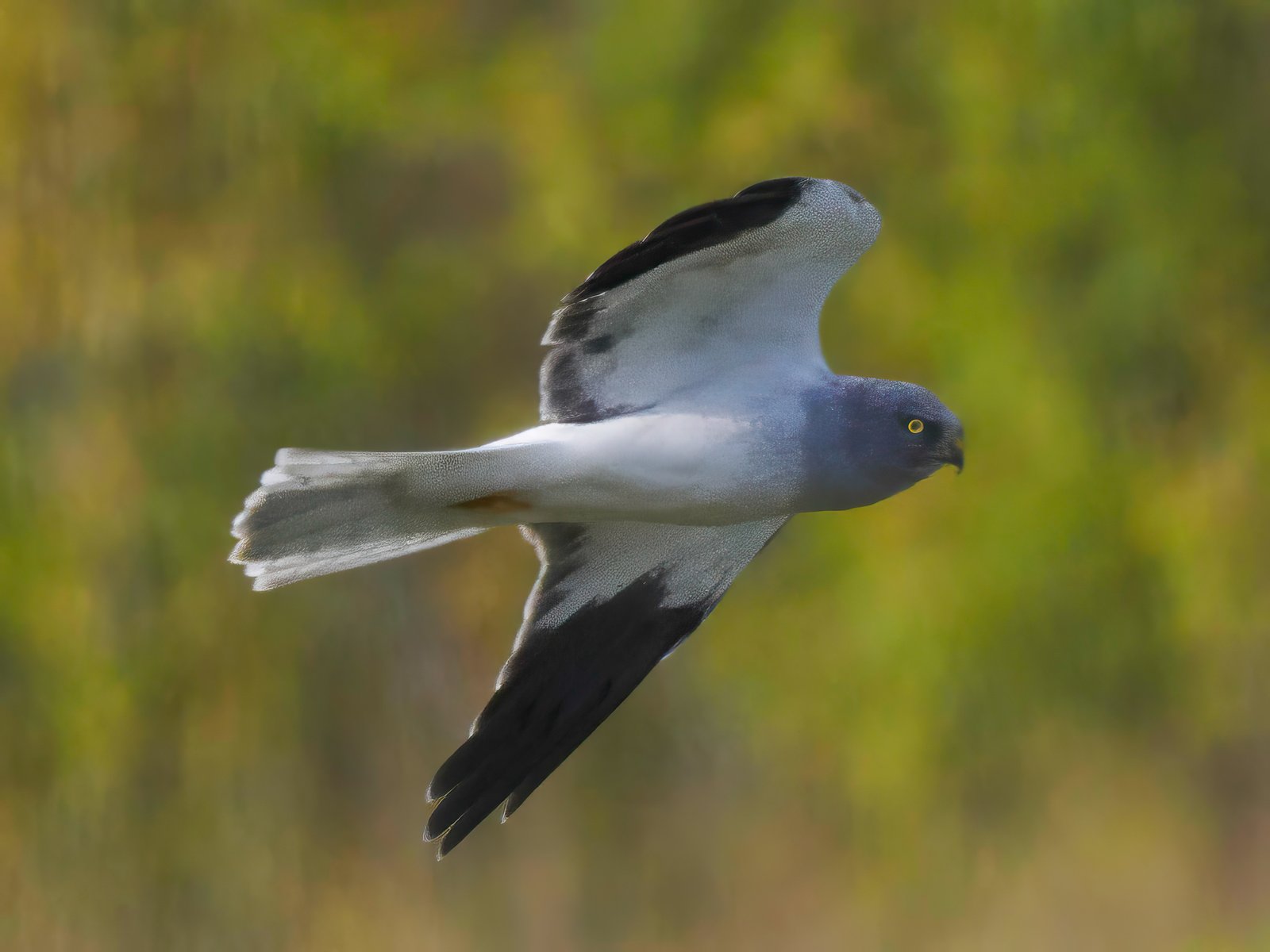
41–52 cm, with long, narrow wings held in a shallow V when gliding, a long tail and a distinctive white rump. The face has an owl-like disc. The adult male is grey above, white below with fine rusty spots, with black wingtips and a dark trailing edge to the wing. The female is larger, brown above and buffish below with dark streaks; the tail is banded. Immatures resemble the female, but are plain cinnamon below.
Confusion species
Long-winged Harrier Circus buffoni, found only on Trinidad, is larger, with even longer wings and a dark or black-and-white plumage. Western Marsh Harrier Circus aeruginosus lacks the white rump. Short-eared Owl Asio flammeus hunts in the same way over grassland, but has a large round head and a short tail.
Habitat
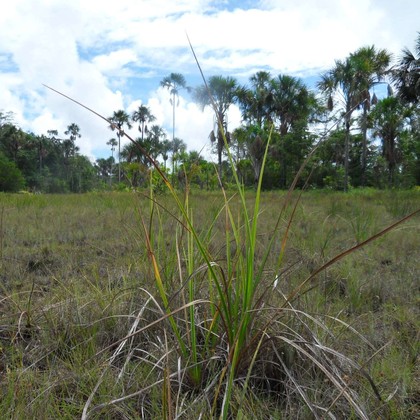
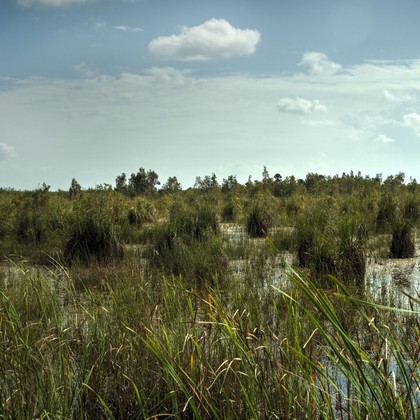
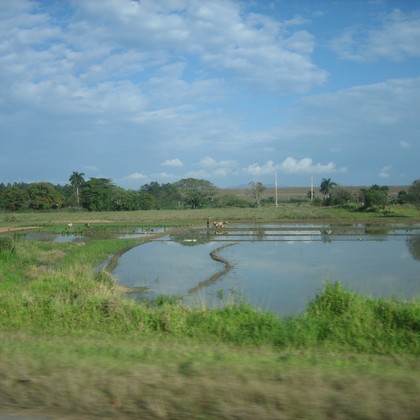
Savanna, pasture, reed marshes, flooded grassland, rice fields and sugar cane, also salt flats and open coastal marshes. It flies low and slowly over the vegetation with short glides, dropping suddenly onto mice, rats, small birds and large insects. It rests and roosts on the ground.
Where the bird is most at home, classified by the vegetation types of the Caribbean.


Range and movements
Scarce winter visitor to the Bahamas, the Turks and Caicos Islands, Cuba, Hispaniola (Haiti and the Dominican Republic) and Puerto Rico; rarer in the Cayman Islands, Jamaica and the Virgin Islands. Rare to vagrant in the Lesser Antilles. Small numbers pass through western Cuba in autumn. Outside the region the American form breeds in Canada and the northern United States and winters south to Central America and northern South America.
- Winter visitor (c. Apr–Sep)
- Passage (Mar–Apr, Oct–Nov)
- dark = core range, pale = thinly spread
How and when to look
Best in late afternoon over large open marshes, rice fields and grasslands in Cuba, Hispaniola and Puerto Rico. A slim raptor flying low and rocking over the reeds and showing a white rump is almost certainly a harrier.
Conservation status
Not threatened. In North America the species is declining locally through the loss of grasslands and marshes, the breeding grounds of the wintering birds.
Scientific name
Circus cyaneus | (Linnaeus, 1766)
Linnaeus described the species in 1766 as Falco cyaneus; because it was later moved to another genus, the author and year stand in brackets. The genus Circus was introduced in 1799 by De Lacépède. Circus is from the Ancient Greek kirkos, a bird of prey named for its circling flight. cyaneus is Latin for 'dark blue', after the blue-grey plumage of the male. The specimen the first description was based on came from the area around London.