All species › Birds of prey › Hawks, eagles and kites › Gundlach's Hawk
Gundlach's Hawk | Astur gundlachi
Gundlachs havik | Gavilán de Gundlach
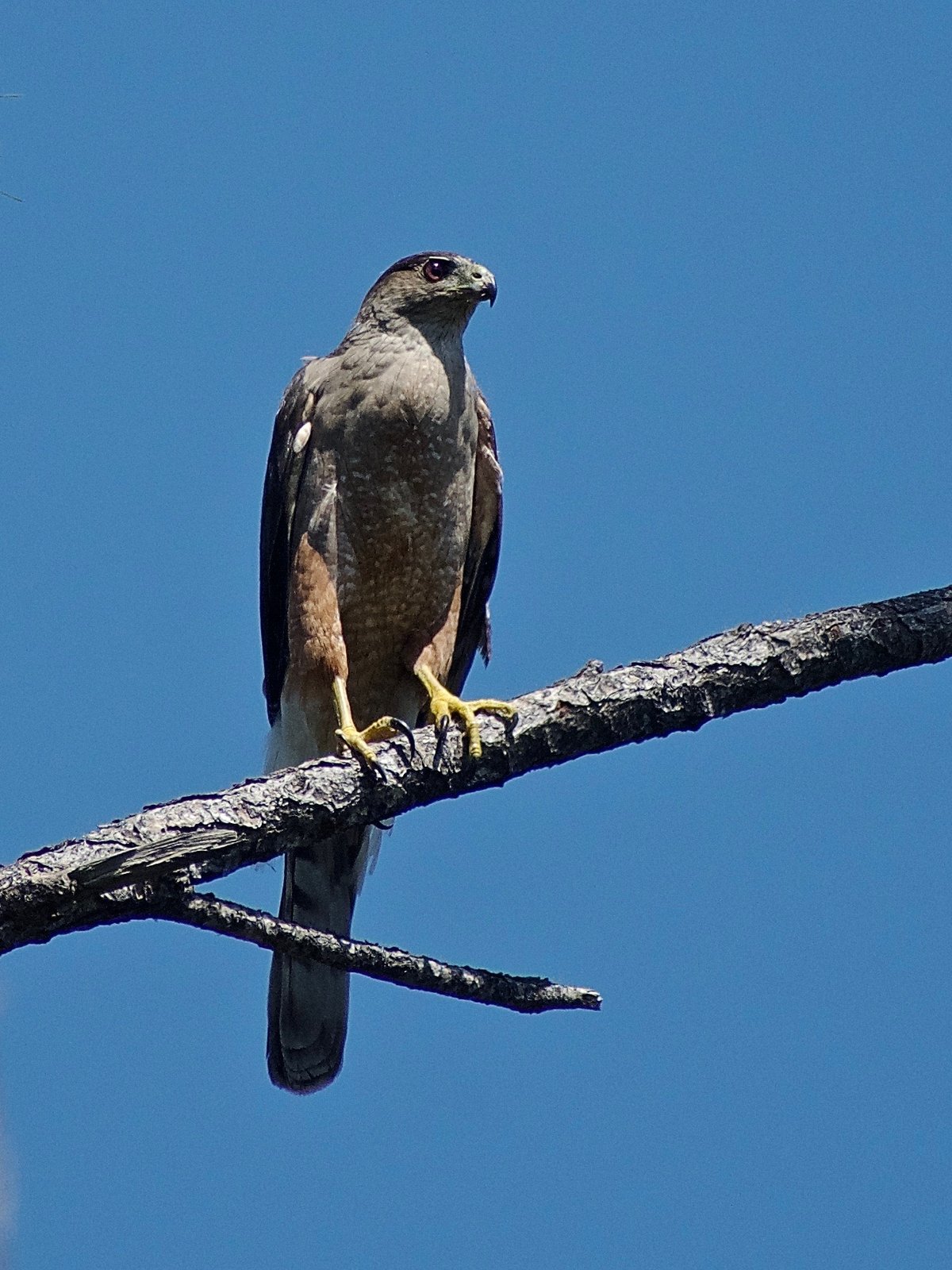
Gundlach's Hawk is the only endemic hawk of the Caribbean and one of the rarest raptors in Cuba. It is a powerful forest hunter that takes almost nothing but birds, from pigeons and parrots to farmyard chickens, which makes it unpopular with farmers. Two subspecies are recognised: A. g. gundlachi in the west and centre and A. g. wileyi in the east of the island. The species was long placed in the genus Accipiter.
Voice
Mostly silent, but noisy around the nest. The usual call is a harsh, cackling series kek-kek-kek-kek; there is also a drawn-out, wailing keeeeeh. The male calls higher and clearer than the female.
Recording: Tim Burr — CC BY-NC-SA 3.0 · converted to mono · xeno-canto
Identification
43–51 cm, a medium-sized, compact hawk with short, rounded wings and a long tail rounded at the tip. The female is clearly larger than the male. Adults are dark slate grey above with a blackish crown and grey cheeks. The underparts are finely barred grey and rusty pink, the undertail coverts white. The tail has broad dark bands. The eye is orange to red, the legs yellow. Immatures are brown above and pale buff below with heavy dark streaks. The flight is a few rapid wingbeats alternating with short glides; it sometimes circles over the forest on rounded wings.
Confusion species
Sharp-shinned Hawk Accipiter striatus has the same build but is much smaller, with a more square-ended tail and a lighter head. Broad-winged Hawk Buteo platypterus has broader wings and a shorter tail with broad white bands, and more often perches for long periods on an open lookout. Immature Gundlach's Hawks resemble immature Sharp-shinned Hawks, but are larger and more heavily built.
Habitat
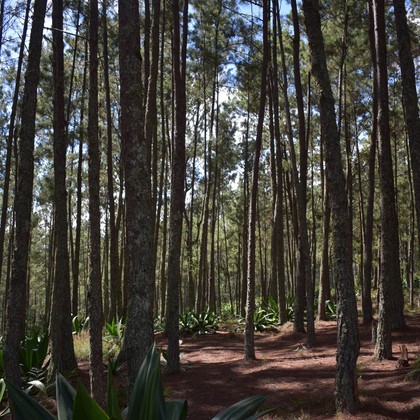
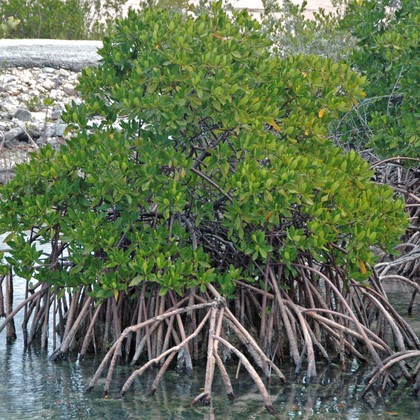
Forest edges and clearings in dry, semi-evergreen and moist broadleaf forest, pine forest, coastal forest and mangroves, from the coast to about 800 m; also in mosaic country with woodlots and farmyards. It hunts from cover with a short, fast attack, mainly on pigeons, quail-doves, parrots and parakeets, and also on poultry. The nest is a stick platform high in a tree.
Where the bird is most at home, classified by the vegetation types of the Caribbean.



Range and movements
Only in Cuba, scattered across a number of separate core areas, with most birds in the eastern half of the island; also in coastal areas and on some of the larger cays. Scarce everywhere. The species does not occur outside Cuba.
- Resident
- dark = core range, pale = thinly spread
How and when to look
The best chances are in extensive coastal and lowland forest in eastern Cuba and in the Zapata wetlands. The bird usually sits hidden in the canopy; sudden alarm among pigeons or parrots often betrays its presence. In mid-morning it is sometimes seen circling over the forest edge.
Conservation status
Endangered. The world population is estimated at a few hundred mature birds. The main threats are deforestation and logging, and shooting by farmers protecting their poultry.
Scientific name
Astur gundlachi | (Lawrence, 1861)
Lawrence described the species in 1861 as Accipiter Gundlachi; because it was later moved to another genus, the author and year stand in brackets. The genus Astur was introduced in 1799 by De Lacépède. Astur is Late Latin for 'hawk'. gundlachi honours the German-Cuban naturalist Juan (Johannes) Gundlach (1810–1896), who studied Cuba's fauna for decades. The specimen the first description was based on came from Hanábana, Cuba.