All species › Waders, gulls and terns › Sandpipers and snipes › Greater Yellowlegs
Greater Yellowlegs | Tringa melanoleuca
Grote geelpootruiter | Archibebe patigualdo grande
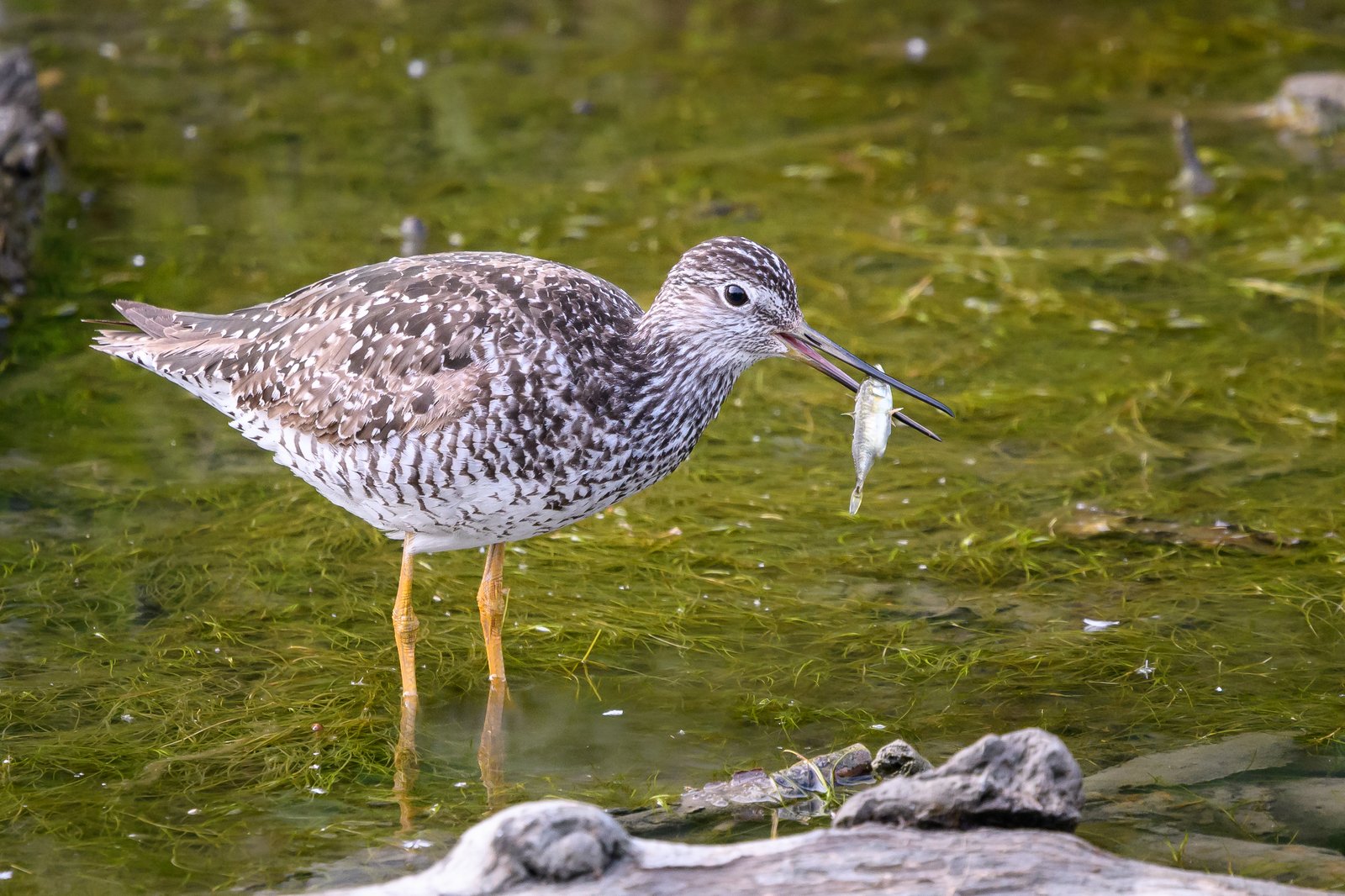
The Greater Yellowlegs is a large, noisy sandpiper with long yellow legs, often the first to sound the alarm when a flock of waders is disturbed. In the Caribbean it is a common winter visitor and passage migrant on salt ponds, lagoons and flooded land, usually in smaller numbers than Lesser Yellowlegs.
Voice
A loud, clear, descending tew-tew-tew in a series of three or four notes, more urgent than in Lesser Yellowlegs; often given on take-off. In spring also a repeated, rolling toowee-toowee.
Recording: Don Profota — CC BY-NC-SA 4.0 · converted to mono · xeno-canto
Identification
29–33 cm, sturdy and long-legged, with bright yellow legs and a long bill about one and a half times the head length, often slightly upturned and greyish at the base in winter. In non-breeding plumage grey above with white spots and fringes, white below with a finely streaked neck and breast and a white eye-ring. In breeding plumage the upperparts are chequered black, grey and white and the breast and flanks are heavily streaked and spotted black. In flight dark wings without a wing bar, a square white rump and a barred tail.
Confusion species
Lesser Yellowlegs Tringa flavipes is smaller and finer, with a straight, thin, uniformly dark bill the length of the head and a softer call of one or two notes. Willet Tringa semipalmata is greyer and heavier, with grey legs, a thick straight bill and a black-and-white wing pattern in flight. Marbled Godwit Limosa fedoa is cinnamon-brown, with a long, two-toned, upturned bill.
Habitat
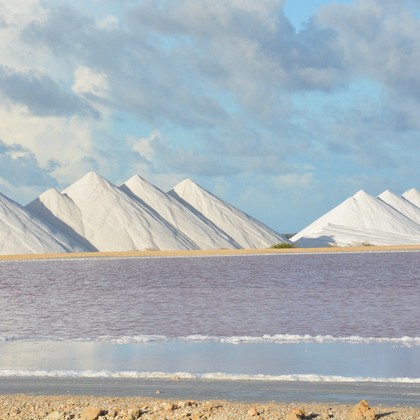
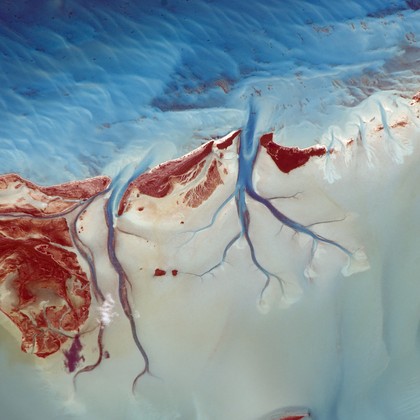
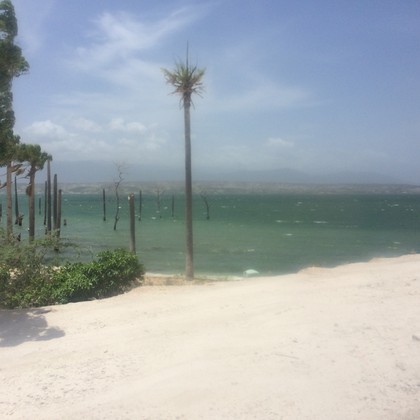
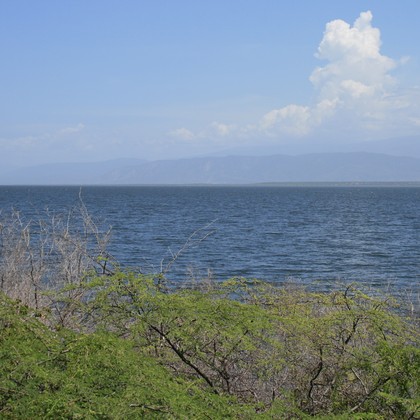
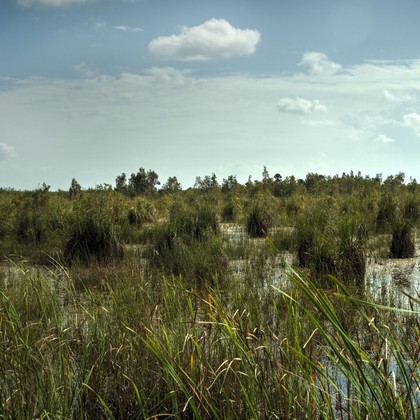
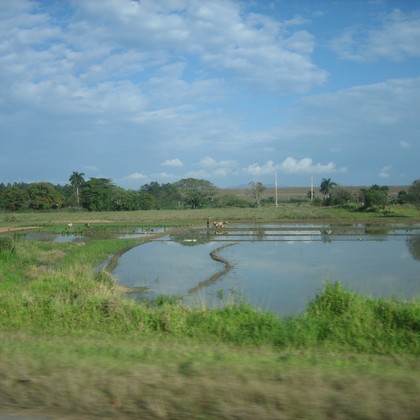
Salt ponds, brackish lagoons, tidal mudflats, mangrove edges, ponds, flooded pastures, rice fields and sewage ponds. It feeds in deeper water than most waders, often running after small fish, and also takes crustaceans and insects.
Where the bird is most at home, classified by the vegetation types of the Caribbean.

Range and movements
Winter visitor and passage migrant throughout the region: the Bahamas, the Turks and Caicos Islands, the Greater Antilles, the Cayman Islands, the Virgin Islands, the Lesser Antilles, the ABC Islands, San Andrés and Trinidad and Tobago, fairly common on most islands. The first birds arrive in July, numbers are highest during autumn migration and in winter, and the last leave in April and May. A few birds stay through the summer. Outside the region it breeds in the boreal muskeg of Alaska and Canada and winters from the coasts of the United States to southern South America.
- Resident
- Summer visitor (c. Oct–Mar)
- Winter visitor (c. Apr–Sep)
- Passage (Mar–Apr, Oct–Nov)
- dark = core range, pale = thinly spread
How and when to look
On salt ponds and lagoons where waders roost; the loud series on take-off usually gives the bird away before it is seen. In mixed flocks with Lesser Yellowlegs it pays to compare birds standing side by side for size and bill shape.
Conservation status
Near Threatened. The IUCN reports a decline, in which loss of stopover sites and shorebird hunting in the Caribbean and northern South America play a part; on Barbados and the French Antilles this species too is shot during autumn migration.
Scientific name
Tringa melanoleuca | (Gmelin, 1789)
Gmelin described the species in 1789 as Scolopax melanoleuca; because it was later moved to another genus, the author and year stand in brackets. The genus Tringa was introduced in 1758 by Linnaeus. Tringa is the Neo-Latin name Aldrovandi gave to the green sandpiper, after Ancient Greek trungas, a thrush-sized, white-rumped, tail-bobbing wading bird mentioned by Aristotle. melanoleuca is Greek, from melas 'black' and leukos 'white', after the black-and-white patterned plumage. The specimen the first description was based on came from Château Bay, Labrador.