All species › Passerines › New World blackbirds › Great-tailed Grackle
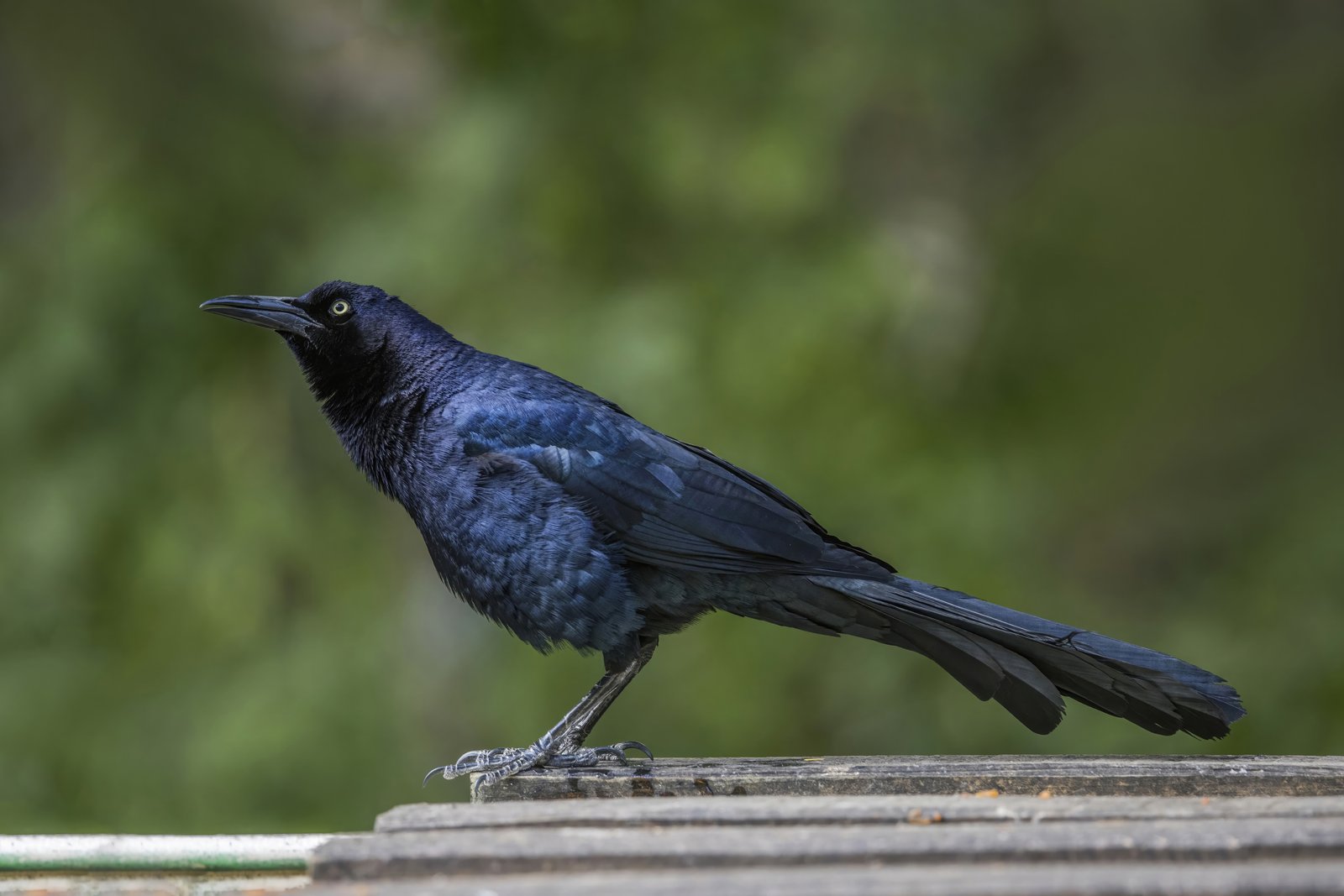
Great-tailed Grackle | Quiscalus mexicanus
Langstaarttroepiaal | Zanate mexicano
The Great-tailed Grackle is one of the fastest-spreading birds in the Americas. From Mexico and Central America it has spread across the United States and northern South America, and over the last twenty years across a series of Caribbean islands as well. This guide treats it as introduced: on most islands it has been present only briefly, and whether the birds arrived on their own or by ship is not always clear.
Voice
Very varied: clear, rising whistles, loud chack clucks, grating sounds like a rusty hinge and rattling series. Males sing with fluffed plumage and the bill pointed upward.
Recording: Manuel Grosselet — CC BY-NC-SA 4.0 · shortened to the first 60 s, mono · xeno-canto
Identification
33–46 cm; males are much larger than females. Long, heavy, pointed bill, a rather flat crown and a very long, keel-shaped tail, in the male almost as long as the body and held in a V. The male is glossy black with a purple-blue sheen. The female is brown, with a pale throat and supercilium, a buffy breast and darker wings and tail. Adults have a bright yellow iris; juveniles have a dark iris and resemble the female, with faint streaks on the breast.
Confusion species
Greater Antillean Grackle Quiscalus niger and Carib Grackle Quiscalus lugubris also have a yellow iris and a keel-shaped tail, but are much smaller (25–30 cm), with a shorter tail; female Greater Antillean Grackles are black, not brown. Boat-tailed Grackle Quiscalus major has a rounder head and, in Florida and the Bahamas, a dark iris. Giant Cowbird Molothrus oryzivorus has a small head, a shorter tail and a red eye.
Habitat
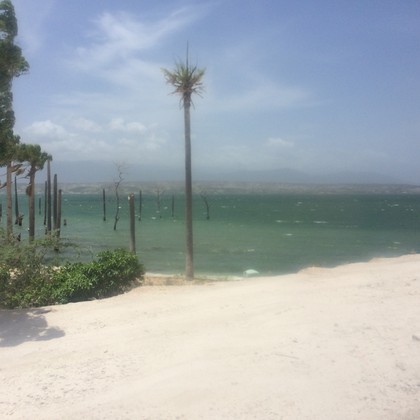
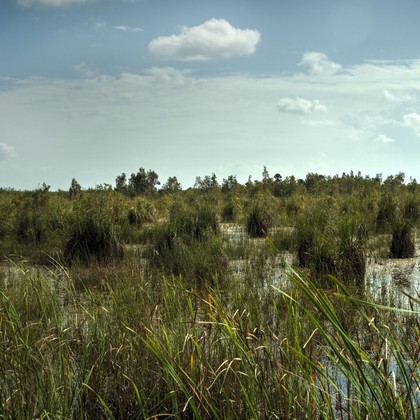
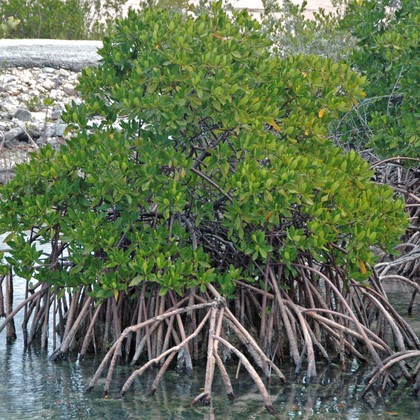
Towns, villages, harbours, airports, parks, pastures and the shores of lakes, ponds and mangroves. It eats almost anything, from insects, small animals and eggs to seeds, fruit and scraps. It nests in colonies in trees, palms and reeds, often near water, and roosts in large numbers in trees in town centres.
Where the bird is most at home, classified by the vegetation types of the Caribbean.



Range and movements
San Andrés: present since at least the 1960s and increasing sharply since 2015. Jamaica: first seen in 2005 and since spread across the island. Hispaniola: reported since 2009, mainly in San Cristóbal province, Dominican Republic. Puerto Rico: since 2015 at Cataño and Arecibo. Aruba and Curaçao: annual since about 2014 and in growing numbers. Single records in Havana, Cuba, and in Trinidad. Native from the south-western United States through Mexico and Central America to north-western South America.
- Resident
- dark = core range, pale = thinly spread
How and when to look
Best looked for in harbours, on seafronts and in town parks on the islands where it is established. The male is identified by its size and long tail; females are told from native grackles by their brown colour and pale throat.
Conservation status
Not threatened. Common within its range and spreading, helped by agriculture, irrigation and settlement. On the Caribbean islands its effect on native grackles and on other birds, whose eggs and young it may eat, is not yet clear.
Scientific name
Quiscalus mexicanus | (Gmelin, 1788)
Gmelin described the species in 1788 as C[orvus] mexicanus; because it was later moved to another genus, the author and year stand in brackets. The genus Quiscalus was introduced in 1816 by Vieillot. Quiscalus goes back to Linnaeus's species name Gracula quiscula; where he got the word is uncertain, possibly from Taíno quisqueya, a name for Hispaniola. mexicanus means 'of Mexico', after the origin of the type specimen. The specimen the first description was based on came from vicinity of Veracruz, Mexico.