All species › Pigeons and doves › Pigeons and doves › Crested Quail-Dove
Crested Quail-Dove | Geotrygon versicolor
Kuifkwartelduif | Paloma perdiz jamaicana
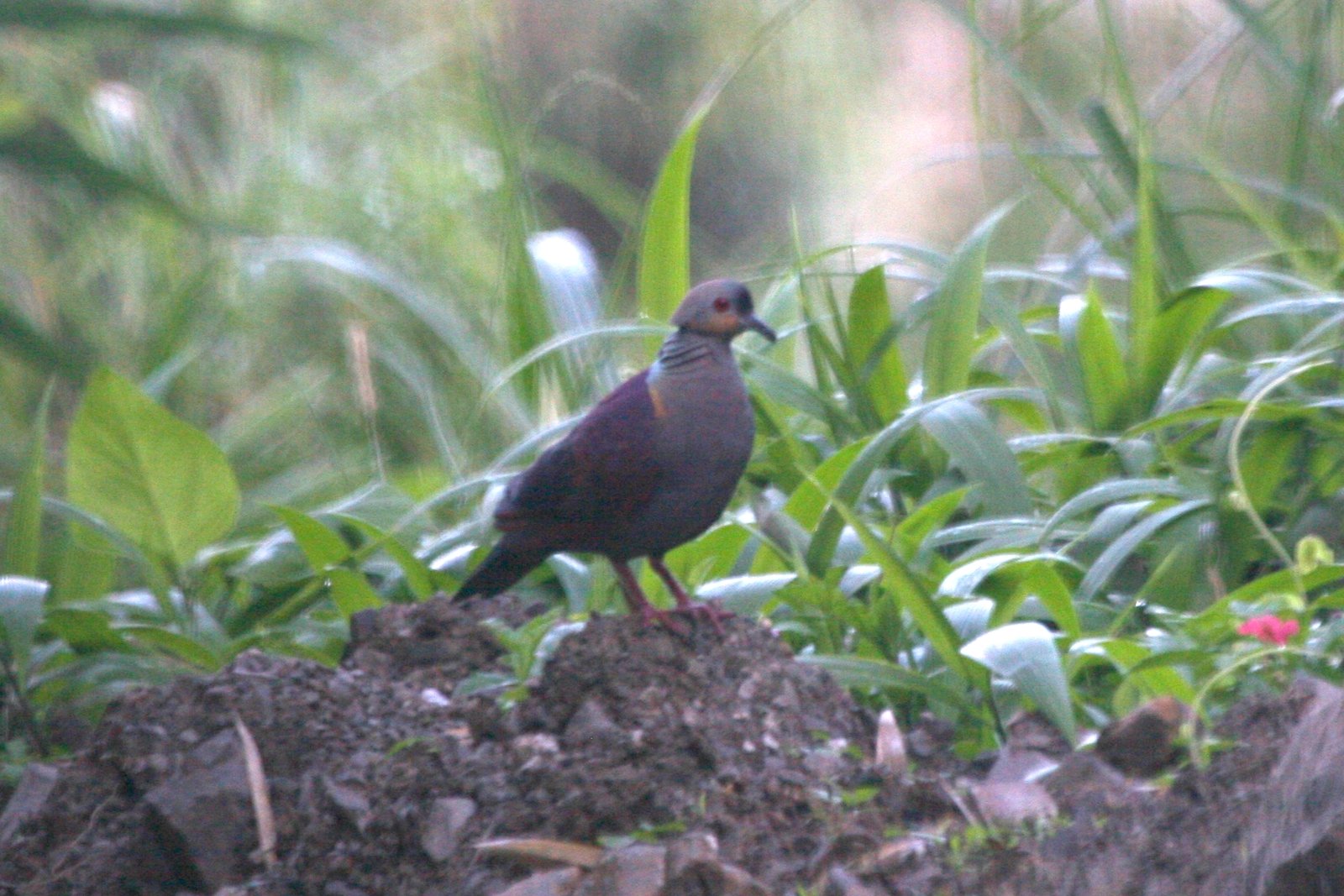
The Crested Quail-Dove is a colourful ground dove found only in Jamaica, in the humid forest of the hills and mountains. It owes its name to the elongated feathers on the nape, which form a short crest. In Jamaica it is called mountain witch, after its hidden life and its ghostly call; the names blue dove and blue partridge are also in use.
Voice
The call is a short phrase of usually two cooing notes, repeated at intervals; low and soft, and in the forest its direction is often unclear. Often the call is the only sign that the species is present.
No recording with a suitable Creative Commons licence is available for this species yet.
Identification
27–31 cm, compact and short-tailed, with fairly long legs; males average slightly larger than females. In the male the forehead is black and the crown grey-brown; the nape is grey, and the elongated nape feathers form a short, rounded crest. The mantle is glossed purple and bronze-green, the back, wings and rump warm chestnut. The breast is grey, the belly and undertail coverts warm ochre-buff. The female resembles the male but is duller and less glossy. In flight the rufous wings stand out. When walking it nods its head and bobs its tail.
Confusion species
In Jamaica Ruddy Quail-Dove Geotrygon montana is the only other quail-dove. It is smaller, mainly rufous with a pale stripe below the eye, and has no grey head, no crest and no purple gloss on the mantle. Caribbean Dove Leptotila jamaicensis also walks on the forest floor, but is slimmer, with pale, almost white underparts, a pink gloss on the neck and white tail tips. No other dove in Jamaica combines a grey breast with chestnut wings.
Habitat
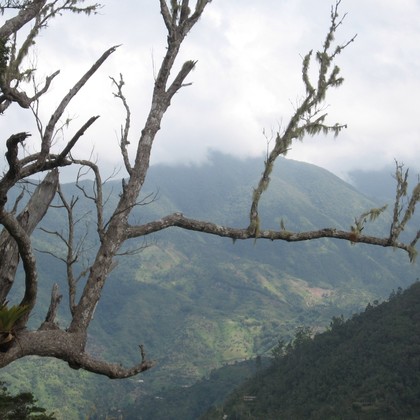
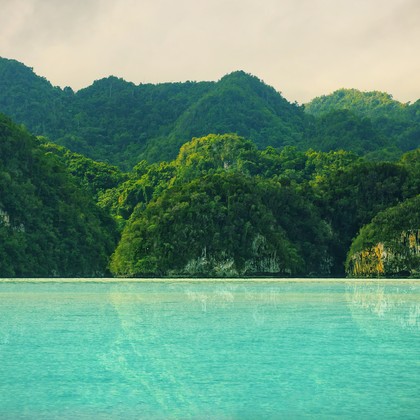
Humid mid-elevation and montane forest, from about 100 metres in the Cockpit Country up to 1,800 metres elsewhere, in the montane rainforest and cloud forest of the Blue Mountains and in the limestone forest of the karst. It lives on the forest floor, where it searches for seeds, fruit and invertebrates. The breeding season runs from March to June; the nest, a structure of twigs, is placed low near the ground in the vegetation.
Where the bird is most at home, classified by the vegetation types of the Caribbean.


Range and movements
Only in Jamaica, with strongholds in the Blue and John Crow Mountains in the east, the Mount Diablo area in the centre and the Cockpit Country in the west. The species does not occur outside Jamaica.
- Resident
- dark = core range, pale = thinly spread
How and when to look
The forest trails in the Blue Mountains and the Cockpit Country, early in the morning, when the birds feed on or beside the track. Waiting quietly by an open stretch of forest floor pays off better than walking on; the birds slip away as soon as they hear anything. The call is a good lead, but its direction is often unclear.
Conservation status
Near Threatened. The population is probably declining as forest gives way to agriculture and building. Part of the habitat lies within the Blue and John Crow Mountains National Park and the Cockpit Country, which are of great importance for the survival of the species.
Scientific name
Geotrygon versicolor | (de Lafresnaye, 1846)
De Lafresnaye described the species in 1846 as Columbigallina versicolor; because it was later moved to another genus, the author and year stand in brackets. The genus Geotrygon was introduced in 1847 by Gosse. Geotrygon is Greek, from gē 'earth, ground' and trugōn 'turtle dove': 'ground dove'. versicolor is Latin for 'changing colour, variegated', after the iridescent, many-coloured tints. The specimen the first description was based on came from Jamaica.