All species › Passerines › Mockingbirds and thrashers › Brown Trembler
Brown Trembler | Cinclocerthia ruficauda
Bruine sidderspotlijster | Cocobino pardo
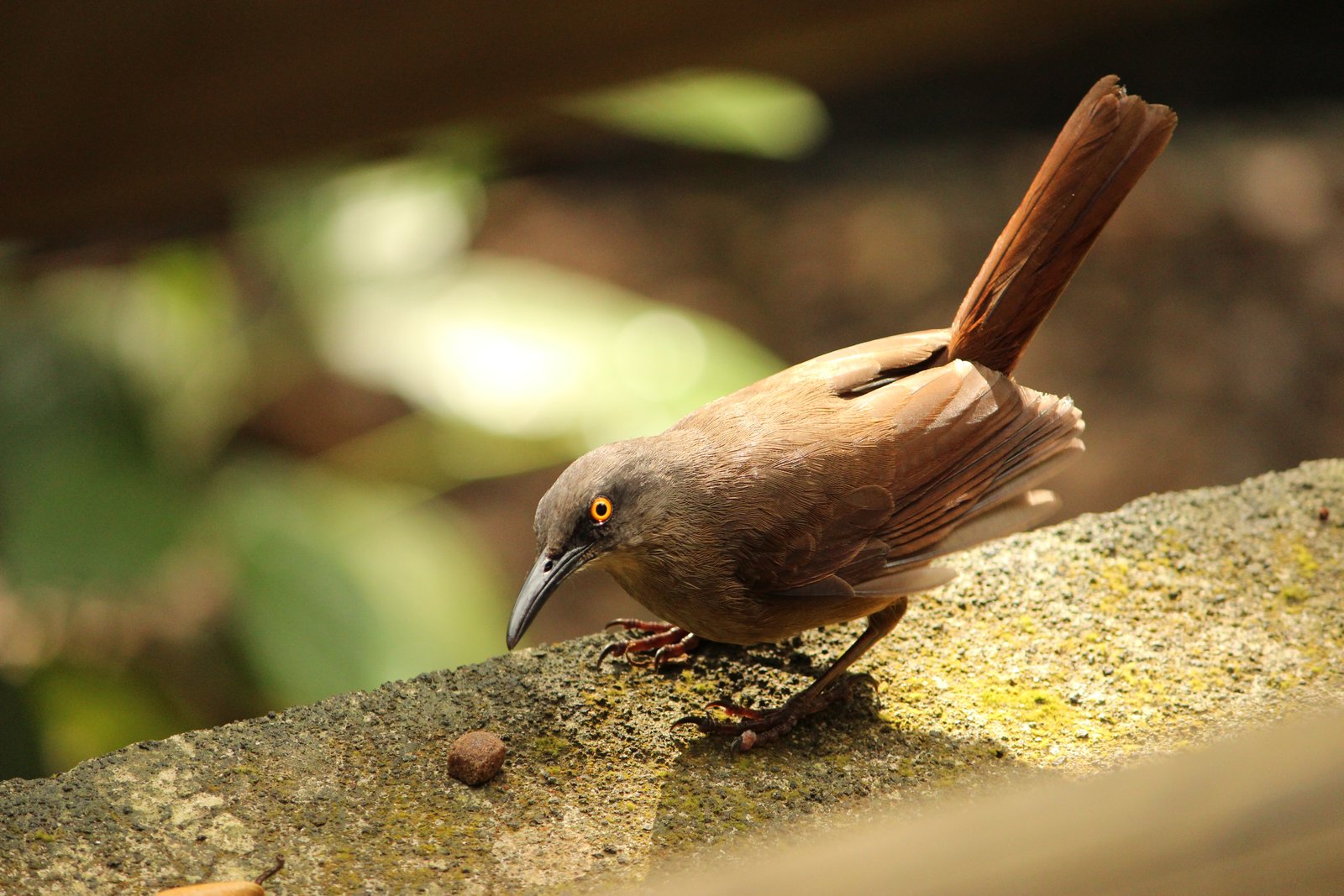
The Brown Trembler is the more widespread of the two tremblers, a genus found only in the Lesser Antilles. As the name suggests, it often quivers its half-open, drooped wings. With its long, slightly curved bill it probes leaf clusters and epiphytes, behaving more like a creeper than a thrasher. It lives on the islands from Saba to Dominica and on Saint Vincent.
Voice
The song consists of separate, variable phrases with long pauses, some harsh, some rich and warbled, some high and squeaky. The call is a nasal, rasping yeeeah, often repeated many times.
Recording: Étienne Leroy — CC BY-NC-SA 4.0 · converted to mono · xeno-canto
Identification
23–26 cm, with a long, slightly curved, dark bill and a tail often held cocked. The upperparts are dark olive-brown with a rufous tone, strongest on rump and tail. The underparts are grey-brown to buffy brown, unspotted and paler on the throat. The iris is yellow. The sexes are alike, but females have a noticeably longer bill. The four subspecies differ in the tone of upper- and underparts; birds on Saint Vincent are the darkest.
Confusion species
Grey Trembler Cinclocerthia gutturalis of Martinique and Saint Lucia is greyer, with a pale throat and breast; the two species do not overlap. Scaly-breasted Thrasher Allenia fusca and Pearly-eyed Thrasher Margarops fuscatus have shorter, heavier bills and spotted or scaled underparts. Forest Thrush Turdus lherminieri has a yellow bill, yellow legs and a yellow eye-ring.
Habitat
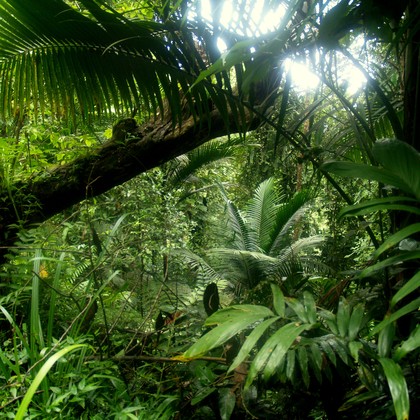
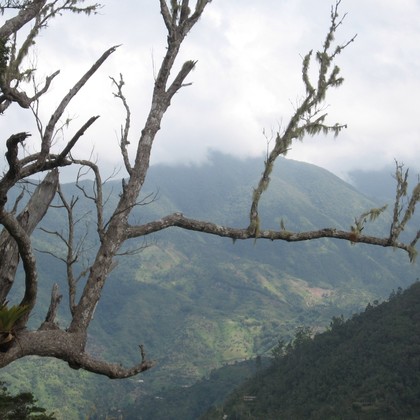
Moist evergreen forest, also older secondary forest and plantations with shade trees, from sea level to about 900 m. It forages on the ground and at all levels of the forest, probing its bill into epiphytes, leaf clusters, moss and dead leaves. It eats mainly invertebrates, also small fruits and occasionally small lizards and frogs.
Where the bird is most at home, classified by the vegetation types of the Caribbean.



Range and movements
Resident on Saba, Sint Eustatius, Saint Kitts, Nevis and Montserrat (subspecies pavida), Guadeloupe (tremula), Dominica (nominate) and Saint Vincent (tenebrosa). On Martinique and Saint Lucia it is replaced by Grey Trembler. No populations are known from flat, dry islands such as Antigua, Barbuda and Anguilla. It does not occur outside the Lesser Antilles.
- Resident
- dark = core range, pale = thinly spread
How and when to look
Best along forest trails in the moist interior, such as Morne Trois Pitons National Park on Dominica, the Centre Hills on Montserrat and the forest of the Quill on Sint Eustatius. The rasping call often gives the bird away before it is seen; a bird with cocked tail and quivering wings is certainly a trembler.
Conservation status
Not threatened; the population trend is unknown. The species is locally common, but depends on moist forest on small islands and is therefore vulnerable to deforestation and hurricane damage. On Montserrat part of its habitat was lost to the volcanic eruptions since 1995.
Scientific name
Cinclocerthia ruficauda | (Gould, 1836)
Gould described the species in 1836 as Stenorhynchus ruficauda; because it was later moved to another genus, the author and year stand in brackets. The genus Cinclocerthia was introduced in 1840 by Gray. Cinclocerthia combines Cinclus (from Greek kinklos 'thrush') and Certhia 'treecreeper': a thrush-like bird that clambers about trunks like a treecreeper. ruficauda is Latin, from rufus 'red' and cauda 'tail', after the rufous-brown tail. The specimen the first description was based on came from Dominica (restricted; originally not stated).