All species › Passerines › Mockingbirds and thrashers › Bahama Mockingbird
Bahama Mockingbird | Mimus gundlachii
Bahamaspotlijster | Sinsonte de las Bahamas
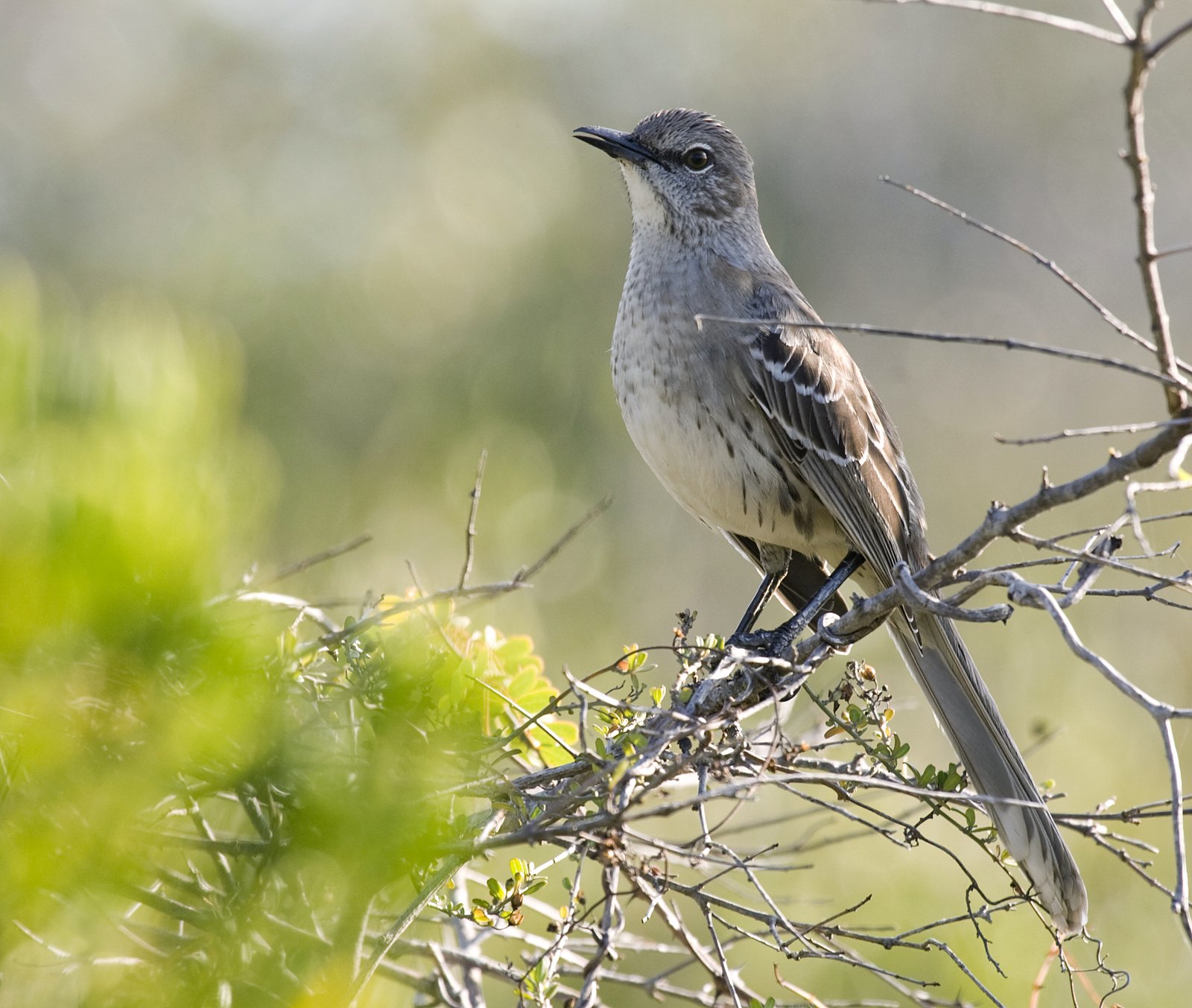
The Bahama Mockingbird is a large, brownish-grey mockingbird with a restricted range: the Bahamas, the Turks and Caicos Islands, the cays off Cuba's north coast and two dry hill areas in southern Jamaica. It is shyer than Northern Mockingbird, often sings from cover and does not imitate other birds.
Voice
A loud song of abrupt, varied notes and phrases, each repeated a few times, slower and less varied than that of Northern Mockingbird and without imitations. It often sings from a hidden perch or from a palm. The call is a dry, short chek.
Recording: PT xiao — CC BY-NC-SA 4.0 · converted to mono · xeno-canto
Identification
28 cm, large, with a long tail and a sturdy, slightly curved black bill. The upperparts are brownish grey with dark streaks on the back. The head shows a pale supercilium, a dark eye-stripe and a dark malar stripe. The underparts are off-white, with dark streaks on the breast sides and flanks. The wings show two thin pale wing bars but no white patch. The tail is dark with white tips to the outer feathers. The Jamaican subspecies hillii is more heavily streaked on the back and has larger white tail tips. The sexes are alike.
Confusion species
Northern Mockingbird Mimus polyglottos is smaller and purer grey, with unstreaked underparts, a large white wing patch and white outer tail feathers. Grey Catbird Dumetella carolinensis is uniformly dark grey with a black cap and rufous undertail coverts. Grey Kingbird Tyrannus dominicensis has a dark mask and a shorter, notched tail and perches upright on wires.
Habitat
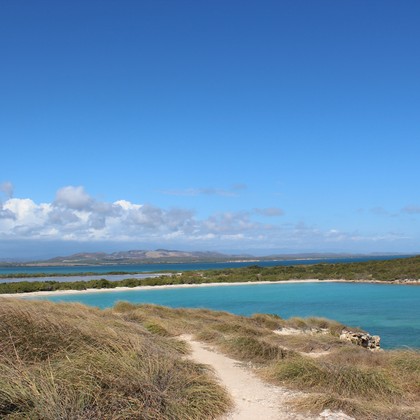
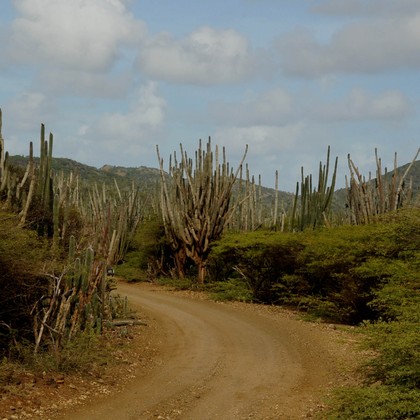
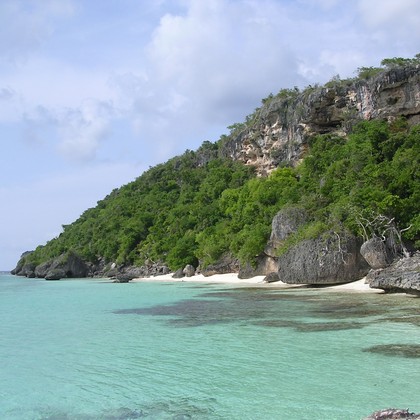
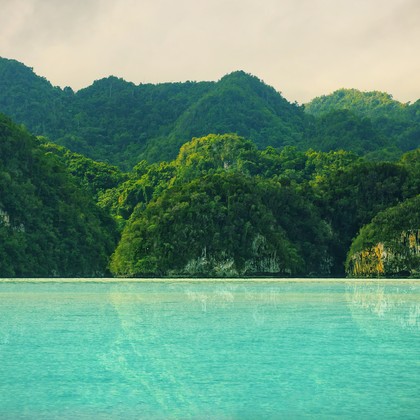
Coastal scrub with scattered trees, especially small palms, dry scrub, open woodland and limestone forest; in the Bahamas also plantations and gardens on the edge of settlements. In Jamaica only in dry scrubby woodland on limestone hills. It chooses taller and denser vegetation than Northern Mockingbird. It forages mainly on the ground for insects, fruit and berries. It breeds from February to June in an open cup nest in a shrub.
Where the bird is most at home, classified by the vegetation types of the Caribbean.


Range and movements
Resident on nearly all islands of the Bahamas and the Turks and Caicos Islands, more local in the northern Bahamas than in the south. In Cuba only on the cays of the Sabana-Camagüey archipelago, including Cayo Coco, Cayo Guillermo and Cayo Paredón Grande. In Jamaica (hillii) confined to the Hellshire Hills and Portland Ridge in the south. Vagrant to Florida.
- Resident
- dark = core range, pale = thinly spread
How and when to look
In Cuba found mainly on Cayo Coco and Cayo Guillermo, in the Bahamas in coastal scrub on islands such as Andros, Exuma and Long Island. In Jamaica best early in the morning in the Hellshire Hills. The streaked flanks, the lack of a white wing patch and the white tail tips are the best features.
Conservation status
Not threatened and common in most of its range. In Jamaica the population is small, and the dry limestone forest of the Hellshire Hills is threatened by logging, charcoal burning and development. In the Bahamas Northern Mockingbird is spreading, which may lead to competition.
Scientific name
Mimus gundlachii | Cabanis, 1855
Cabanis described the species in 1855 and placed it straight away in the genus where it still stands. The genus Mimus was introduced in 1826 by Boie. Mimus is Latin for 'mimic', after the habit of imitating other sounds. gundlachii honours the German-Cuban naturalist Juan (Johannes) Gundlach (1810–1896), who studied Cuba's fauna for decades. The specimen the first description was based on came from Cuba.