All species › Passerines › Typical antbirds › Barred Antshrike
Barred Antshrike | Thamnophilus doliatus
Gebandeerde mierklauwier | Batará barrado
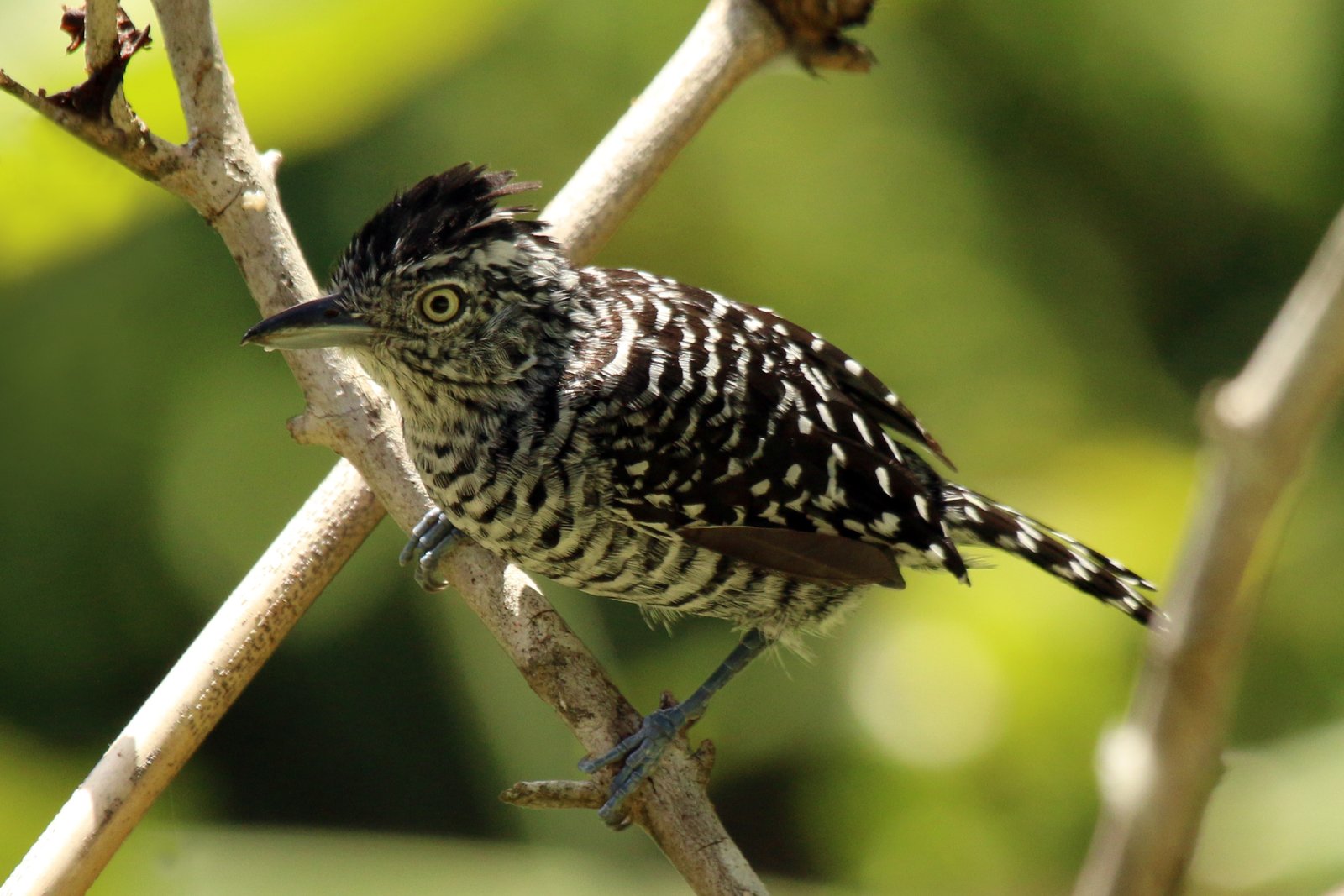
The Barred Antshrike is the commonest and best-known antbird of Trinidad and Tobago. It lives not in the forest interior but in thickets, scrub, forest edge and gardens, and gives itself away with its loud, chuckling song. Tobago has its own subspecies.
Voice
A long series of loud chuckling notes that rises quickly and gains in intensity, then descends and ends in an emphatic final note. Both sexes sing, stretching the neck, bowing forward and pumping the tail; pairs often sing in turn. Also a crow-like caw, growls and nasal calls.
Recording: Edgar Romero — CC BY-NC-SA 4.0 · converted to mono · xeno-canto
Identification
15–17 cm, with a bushy crest, a heavy hooked bill and a pale yellow iris. The male is barred black and white almost all over, with broader black bars above and narrower ones below; throat and face are finely streaked black and white and the crest is black with white feather bases. The female is rufous above, with a rufous crest, black-and-white or buffy-white streaked sides to the head and neck and plain ochre-buff underparts. The upper mandible is black, the lower blue-grey.
Confusion species
The male has no similar species in the region. The female Black-crested Antshrike Sakesphorus canadensis has a dark iris, a cinnamon-brown back and a streaked breast. The female Great Antshrike Taraba major is larger, with a red iris and white underparts.
Habitat
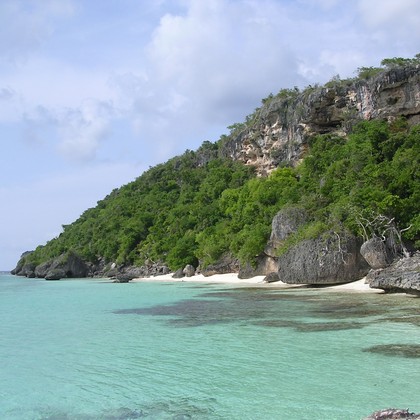
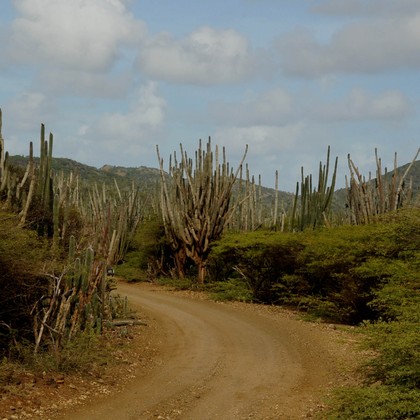
Dense undergrowth in scrub, especially secondary thickets, riverside thickets, forest edge, young secondary forest, plantations, yards and gardens with dense shrubs; avoids the interior of tall forest. It forages in pairs from the ground to about 3 metres, sometimes higher, for large insects and other invertebrates.
Where the bird is most at home, classified by the vegetation types of the Caribbean.





Range and movements
A common resident in Trinidad and Tobago, from sea level into the hills; unknown elsewhere in the region. Outside the region from north-eastern Mexico through Central America to northern Argentina, also on Isla Margarita; one accepted record from southern Texas.
- Resident
- dark = core range, pale = thinly spread
How and when to look
In almost any overgrown forest edge, shrubby garden or plantation on both islands, including around the Asa Wright Nature Centre and in the Tobago lowlands. It is best to track the song first and then look for the bird low in the bushes.
Conservation status
Not threatened. The species has a very large range and benefits from open, man-modified landscapes with thickets and scrub.
Scientific name
Thamnophilus doliatus | (Linnaeus, 1764)
Linnaeus described the species in 1764 as Lanius doliatus; because it was later moved to another genus, the author and year stand in brackets. The genus Thamnophilus was introduced in 1816 by Vieillot. Thamnophilus is Greek, from thamnos 'bush' and philos 'loving': 'bush-lover'. doliatus is Latin, from dolium 'barrel', 'hooped like a barrel', after the black-and-white barring. The specimen the first description was based on came from Suriname (designated later).