All species › Passerines › Typical antbirds › Black-crested Antshrike
Black-crested Antshrike | Sakesphorus canadensis
Zwartkuifmierklauwier | Batará crestinegro
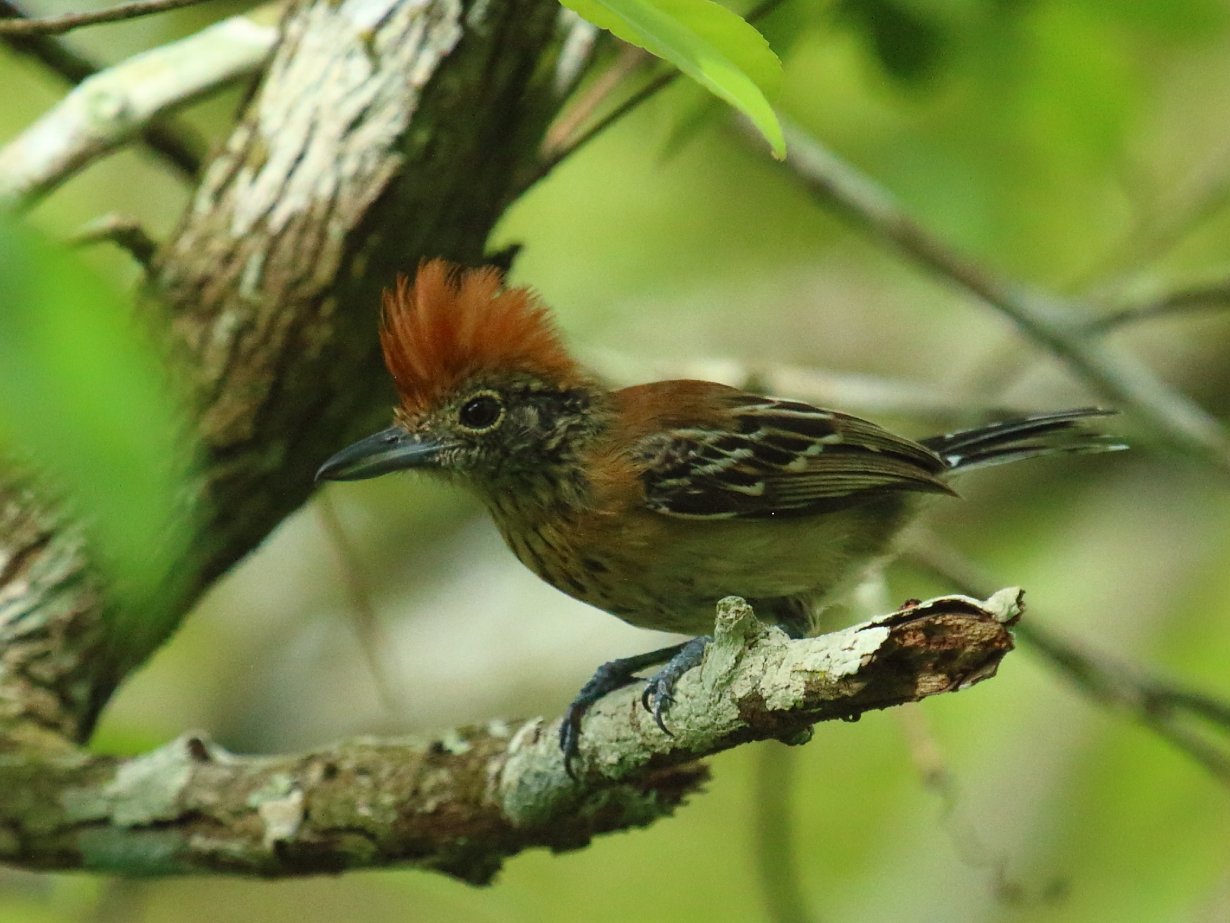
The Black-crested Antshrike is a medium-sized antshrike with a distinctive, often raised crest, found in the region only in Trinidad. It is a bird of mangroves, dry woodland and bushy lowlands, and is less tied to dense forest than most of its relatives.
Voice
The song is a series of 10 to 15 notes, at first level and complaining, then rising and accelerating rapidly. Also a squeezed, downslurred call, repeated short chup notes and a rattle introduced by a long clear note.
Recording: João Capurucho — CC BY-NC-SA 4.0 · converted to mono · xeno-canto
Identification
15–17 cm, with a pointed crest and a heavy hooked bill. The male has a black head and crest, a black throat and a black centre to the breast; the upperparts are cinnamon-brown. Wings and tail are black with white feather edges and white tail tips. The sides of the breast and the belly are greyish white, the flanks darker grey. The female has a rufous crest, a greyish face with fine pale streaks and a cinnamon nape; the back is cinnamon-brown, the throat whitish, the breast cinnamon with blackish streaks and the belly buffy white.
Confusion species
Barred Antshrike Thamnophilus doliatus has a yellow iris; the male is barred black and white all over, the female rufous with an unstreaked buff breast. Great Antshrike Taraba major is much larger, with a red iris and clean white underparts.
Habitat
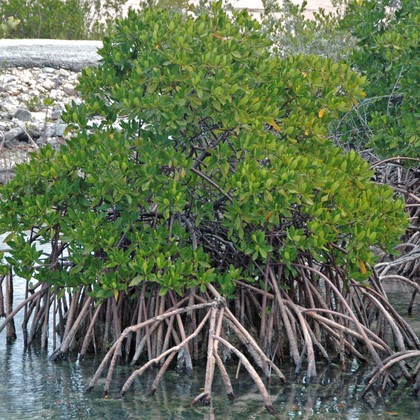
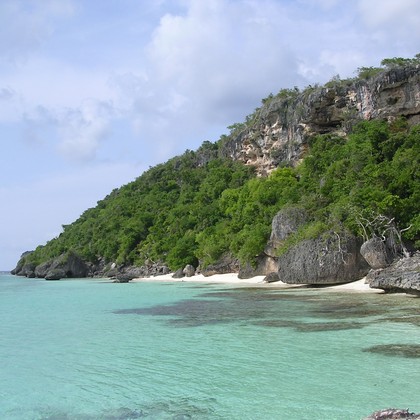
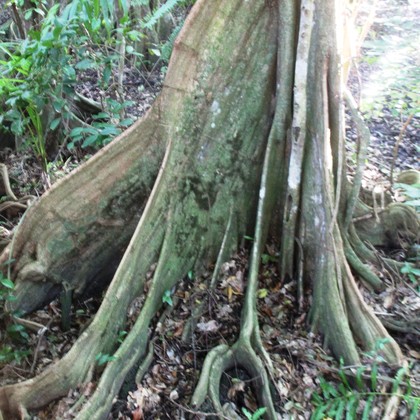
Mangroves, dry deciduous and savanna woodland, coastal woodland and bushy edges of swamp forest, in the lower and middle storeys. It forages in pairs for insects and other invertebrates picked from twigs and leaves.
Where the bird is most at home, classified by the vegetation types of the Caribbean.


Range and movements
In Trinidad a resident of the lowlands, especially in and around mangroves such as Caroni Swamp, and in bushy woodland in the north-east and centre of the island; absent from Tobago. Outside the region in northern Colombia, Venezuela, the Guianas and northern Brazil.
- Resident
- dark = core range, pale = thinly spread
How and when to look
In Trinidad in the mangroves of Caroni Swamp and in the scrub around the former Wallerfield airbase, where Barred Antshrike also occurs. Birds often respond to each other's song and can then be seen at the edge of the vegetation.
Conservation status
Not threatened. The species has a large range and tolerates secondary growth; in Trinidad it depends on mangroves and other lowland woodland, which are under local pressure.
Scientific name
Sakesphorus canadensis | (Linnaeus, 1766)
Linnaeus described the species in 1766 as Lanius canadensis; because it was later moved to another genus, the author and year stand in brackets. The genus Sakesphorus was introduced in 1918 by Chubb. Sakesphorus is Greek, from sakesphoros 'shield-bearing' (sakos 'shield', -phoros 'bearing'). canadensis means 'of Canada', an error in the original description; the species lives in northern South America. The specimen the first description was based on came from Cayenne, French Guiana (originally given in error as 'Canada').