All species › Passerines › New World blackbirds › Bahama Oriole
Bahama Oriole | Icterus northropi
Bahamatroepiaal | Turpial de las Bahamas
The Bahama Oriole is a black and yellow oriole now found only on Andros and is among the rarest orioles in the world. Until 2010 it was regarded as a subspecies of the Greater Antillean Oriole. It formerly also lived on Abaco, but has disappeared from there since the 1990s.
Voice
The call is a short, sharp check. There are also contact and alarm calls. The song, a series of clear whistles, is heard mainly shortly after dawn, but not often.
Recording: Jesse Fagan — CC BY-NC-SA 4.0 · shortened to the first 60 s, mono · xeno-canto
Identification
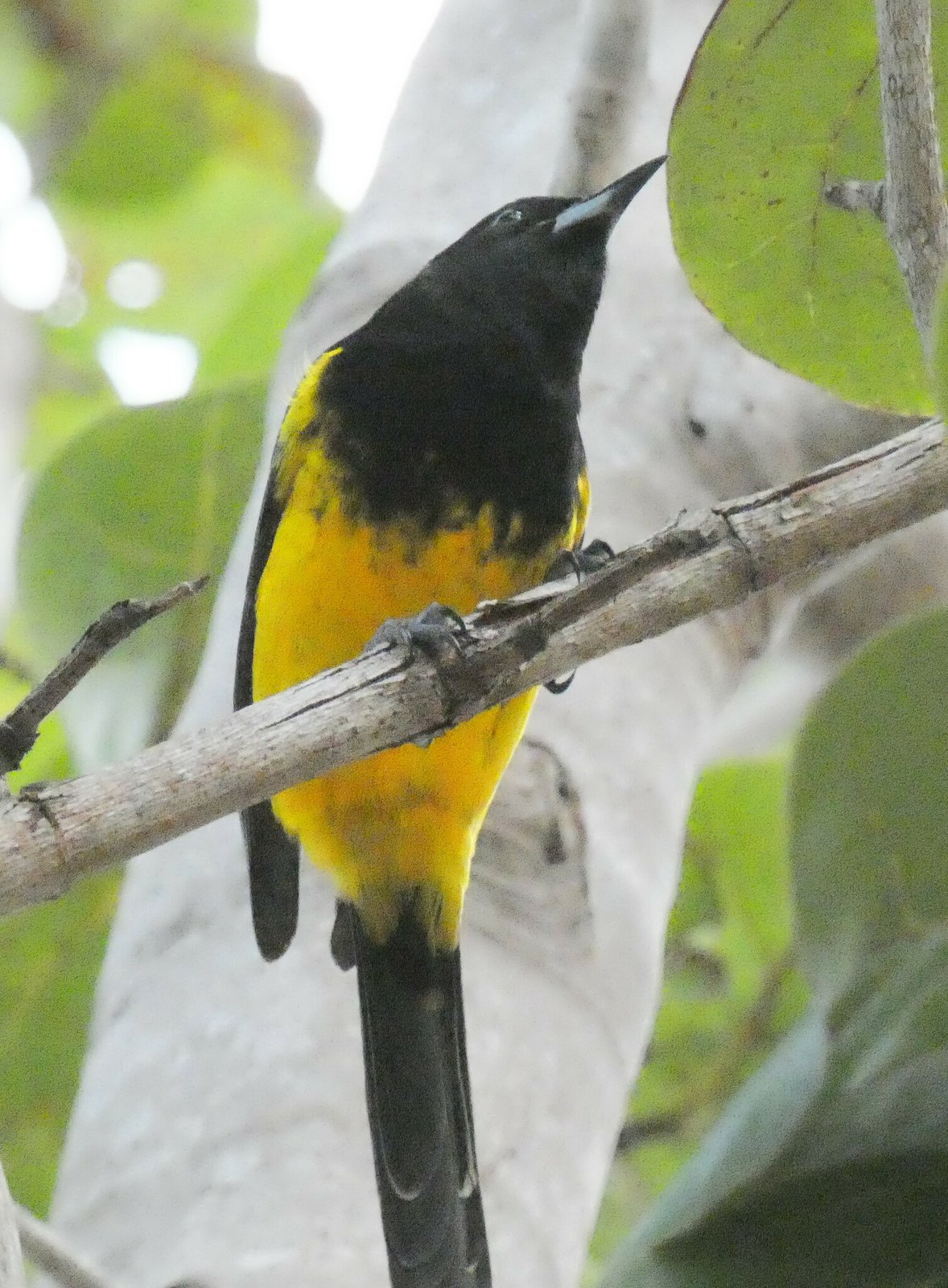
20–22 cm, slender, with a long tail and a pointed black bill. Head, back, throat and upper breast are black; from mid-breast to the undertail the bird is yellow, as are the thighs, rump, lower back and shoulder. The greater coverts and primaries have narrow white edges and the outer tail feathers small white tips. The underwing is yellow, the legs blue-grey. The yellow on the underparts reaches further forward than in the related species of Hispaniola, Cuba and Puerto Rico. The sexes are alike or nearly so. Juveniles are olive-grey with a yellowish head.
Confusion species
No other resident oriole occurs on Andros. Baltimore Oriole Icterus galbula and Orchard Oriole Icterus spurius are scarce winter visitors: the male of the former is orange and black, that of the latter chestnut and black, and females and young birds are olive-yellow with clear white wing bars. Brown-headed Cowbird Molothrus ater and Shiny Cowbird Molothrus bonariensis show no yellow.
Habitat
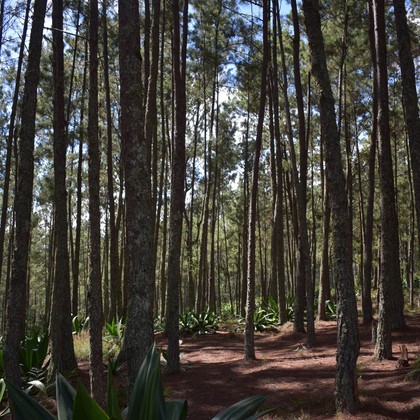
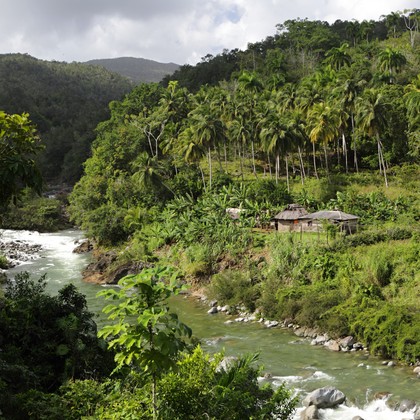
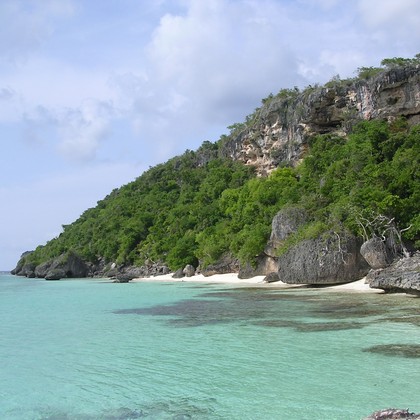
Coconut palms in and around settlements, gardens and yards with palms and bananas, and Caribbean pine forest with an understorey of palms; also broadleaf and coastal woodland. For a long time the species was thought to depend almost entirely on coconut palms near villages for nesting; later research showed that it also breeds in the pine forest, in native palms, pines and understorey shrubs. The nest is a hanging pouch under a palm frond.
Where the bird is most at home, classified by the vegetation types of the Caribbean.


Range and movements
Only on Andros: North Andros, Mangrove Cay and South Andros. On Abaco, where it formerly occurred, it has not been seen since the 1990s. The species occurs nowhere else.
- Resident
- dark = core range, pale = thinly spread
How and when to look
In the settlements along the east coast of North and South Andros, around groups of coconut palms and in gardens, early in the morning when the birds call and sing. Local guides often know where pairs are. Disturbance at nest palms should be avoided.
Conservation status
Endangered (EN). The population is small; in 2011 it was estimated at no more than a few hundred birds, although later work in the pine forest suggests more birds than assumed then. Threats are brood parasitism by Shiny Cowbird, which reached the Bahamas in the mid-1990s, the death of coconut palms from lethal yellowing disease, habitat loss, introduced predators and hurricanes.
Scientific name
Icterus northropi | Allen, 1890
Allen described the species in 1890 and placed it straight away in the genus where it still stands. The genus Icterus was introduced in 1760 by Brisson. Icterus is from Ancient Greek ikteros, a yellow bird usually taken to be the golden oriole, the sight of which was thought to cure jaundice. northropi honours the American zoologist John Isaiah Northrop (1861–1891), who collected in the Bahamas in 1890. The specimen the first description was based on came from Andros, Bahamas.