All species › Passerines › New World blackbirds › Cuban Oriole
Cuban Oriole | Icterus melanopsis
Cubaanse troepiaal | Turpial cubano
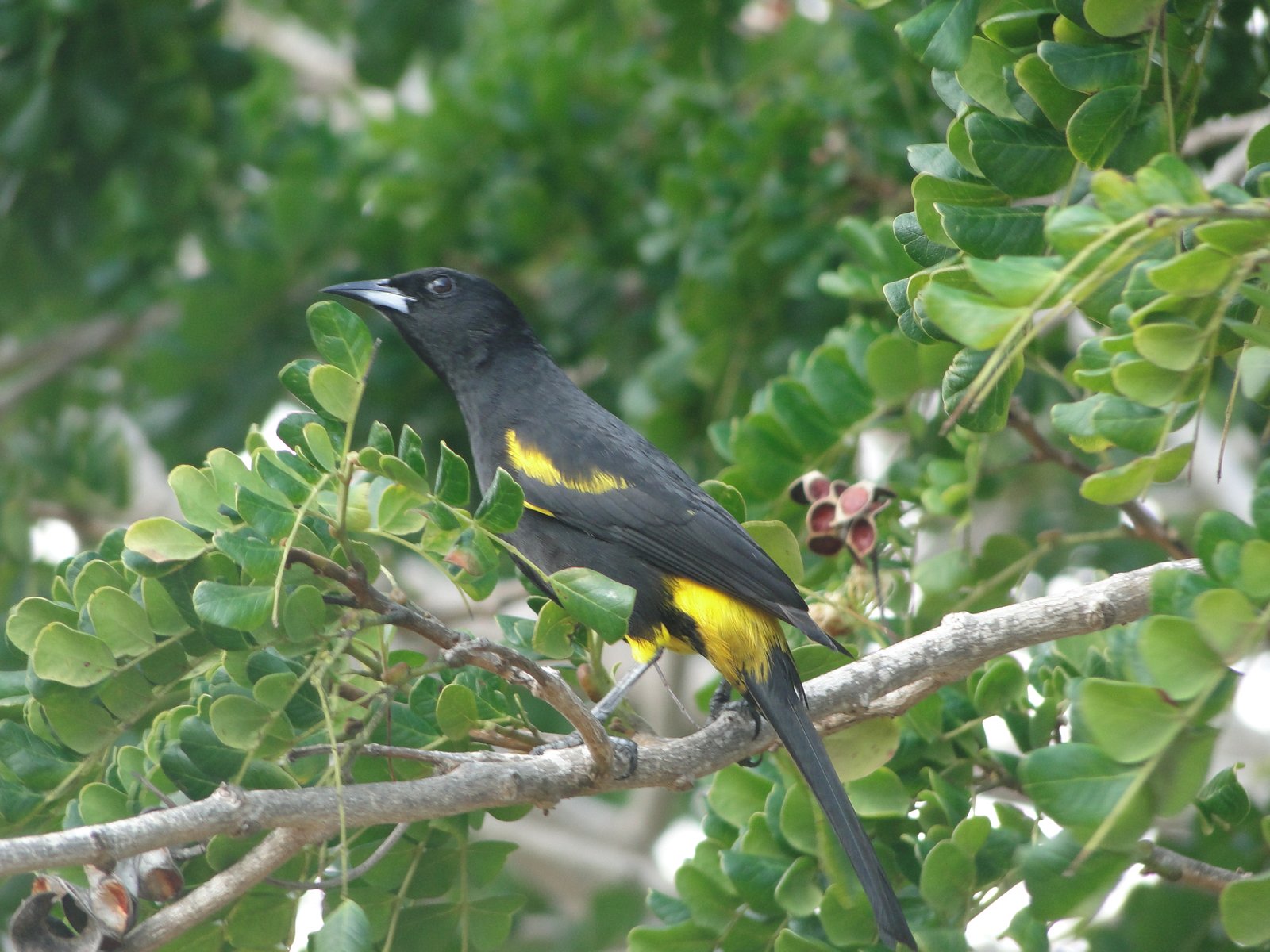
The Cuban Oriole is the black and yellow oriole of Cuba. Until 2010 it was combined with the orioles of Hispaniola, Puerto Rico and the Bahamas as one species, the Greater Antillean Oriole; since then the four forms have been treated as separate species on the basis of DNA, plumage and song. Its closest relative is the Bahama Oriole. It should not be confused with Cuban Blackbird Ptiloxena atroviolacea, an all-black icterid.
Voice
The call is a sharp chip and a nasal wheenk. The song is a series of about ten to twelve clear, descending whistles lasting two to three seconds, lower than that of Puerto Rican Oriole, with a shorter variant of five or six notes. It sings mainly shortly after dawn.
Recording: Wayne Fidler — CC BY-NC-SA 4.0 · converted to mono · xeno-canto
Identification
20–22 cm, slender, with a long tail and a pointed, slightly decurved black bill with a blue-grey patch at the base of the lower mandible. The darkest of the Antillean orioles: almost entirely black, with yellow only on the shoulder, rump, thighs and part of the undertail coverts; belly and uppertail coverts are black. The sexes cannot be told apart in the field. Juveniles are olive, greenish below with a yellower vent, and have blackish wings with olive-green edges. Adult plumage is acquired late: immatures still resemble juveniles but already show a black chin, throat and lores.
Confusion species
Cuban Blackbird Ptiloxena atroviolacea and Greater Antillean Grackle Quiscalus niger are larger and all black; the latter has a yellow iris and a keeled tail. Tawny-shouldered Blackbird Agelaius humeralis has only a tawny shoulder patch and no yellow on rump or thighs. Baltimore Oriole Icterus galbula and Orchard Oriole Icterus spurius are winter visitors with white wing bars; their females and young are olive-yellow but differ from young Cuban Orioles in those wing bars. Hispaniolan Oriole Icterus dominicensis does not occur on Cuba.
Habitat
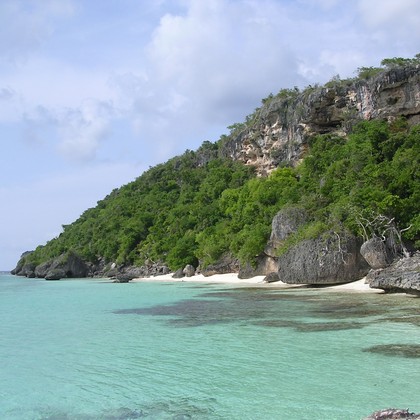
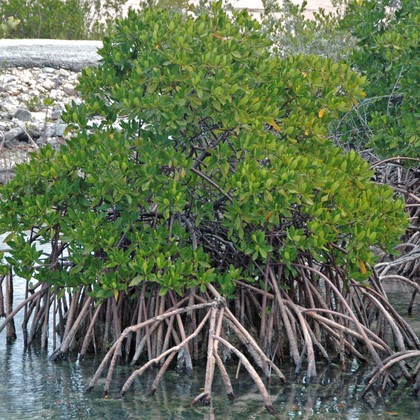
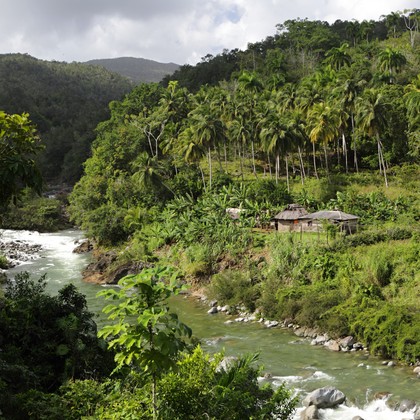
Moist and dry lowland forest, forest edges, mangroves, plantations and gardens, also villages and town parks with palms and bananas. It eats mainly insects, as well as fruit and nectar from bananas, citrus and coral trees Erythrina, sometimes piercing the base of a flower to rob nectar. The nest is a hanging pouch of fibres from palm and banana leaves, attached under a palm frond. Pairs hold territories year-round.
Where the bird is most at home, classified by the vegetation types of the Caribbean.



Range and movements
Only on Cuba: throughout the main island, locally fairly common, and on the Isla de la Juventud and some cays off the north coast, such as Cayo Coco, Cayo Guillermo and Cayo Paredón Grande. A single record from India in the map database is a data error. The species does not occur outside Cuba.
- Resident
- dark = core range, pale = thinly spread
How and when to look
In parks, gardens, hotel grounds and village edges with palms, for example around Playa Larga on the Zapata Peninsula and on Cayo Coco. The birds often forage on the underside of palm fronds and in flowering coral trees; the sharp chip usually gives them away before the plumage does.
Conservation status
Not threatened; widespread on Cuba and also found in gardens and plantations. Brood parasitism by Shiny Cowbird Molothrus bonariensis, which became established on Cuba in the 1980s, may reduce breeding success.
Scientific name
Icterus melanopsis | (Wagler, 1829) (GBIF: Icterus dominicensis)
Wagler described the species in 1829 as Ps[arocolius] melanopsis; because it was later moved to another genus, the author and year stand in brackets. The genus Icterus was introduced in 1760 by Brisson. Icterus is from Ancient Greek ikteros, a yellow bird usually taken to be the golden oriole, the sight of which was thought to cure jaundice. melanopsis is Greek, from melas 'black' and opsis 'appearance': 'black-looking', after the almost wholly black plumage. The specimen the first description was based on came from near Havana, Cuba.