All species › Passerines › New World warblers › Palm Warbler
Palm Warbler | Setophaga palmarum
Palmzanger | Reinita palmera
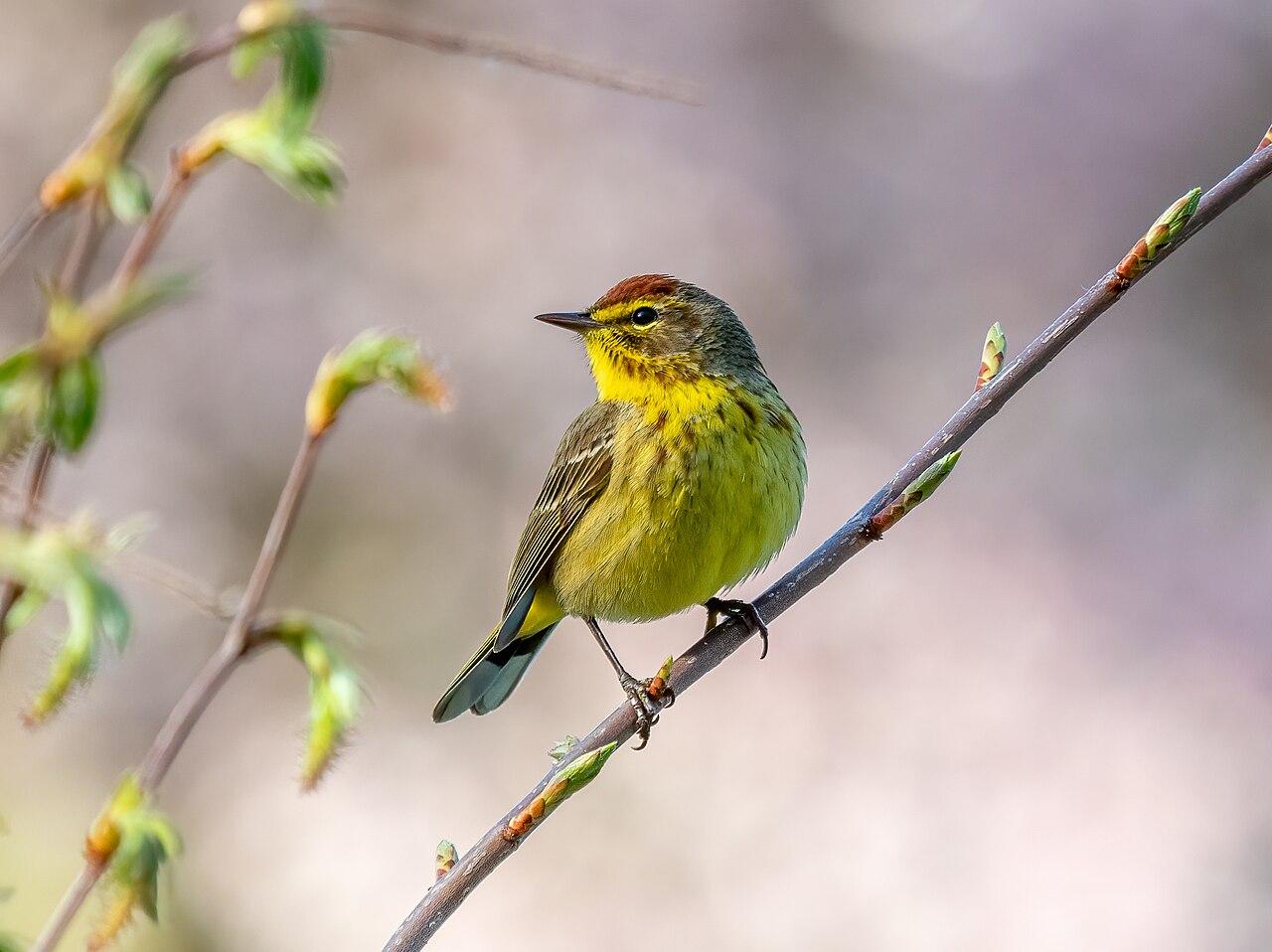
The Palm Warbler breeds in the peat bogs of the boreal forest but outside the breeding season is seen mostly on the ground, on road verges, field edges and along the beach. It pumps its tail up and down without pause, a movement that separates it from every other warbler at a distance.
Voice
The song is a flat, slightly buzzy trill of about two seconds, without a clear beginning or end, somewhat lower and looser than that of Pine Warbler. The call is a sharp, dry chek, often given from the ground or from low bushes. The nocturnal flight call is a high, slightly rising note. It rarely sings outside the breeding season.
Recording: Stanislas Wroza — CC BY-NC-SA 4.0 · Bécancour Regional County Municipality (near Bécancour), Centre-du-Québec, Quebec, Canada · xeno-canto
Identification
A slim, long-tailed warbler with a chestnut crown in breeding plumage, a yellow supercilium, yellow undertail coverts and chestnut streaking across the breast. The undertail coverts stay yellow all year, even on birds that are otherwise greyish brown — a reliable mark in autumn. The tail pumping is almost continuous. The eastern form hypochrysea is yellow from throat to tail; the western form palmarum is dull white below with only the undertail coverts yellow, and a greyish brown back.
Confusion species
Yellow-rumped Warbler has an obvious yellow rump and yellow flank patches and does not pump its tail. Prairie Warbler and Louisiana Waterthrush do pump the tail: Prairie Warbler has a yellow face with a black arc below the eye and black flank streaks, and the waterthrush has pink legs, a streaked breast band and a different habitat. Ground-feeding Palm Warblers are also taken for pipits; the yellow undertail coverts and the short, thin bill rule that out.
Habitat
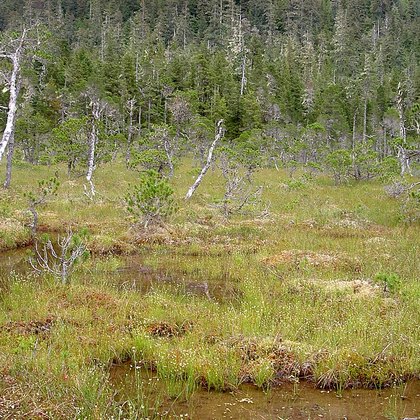
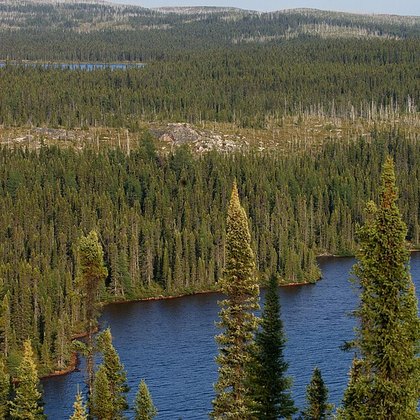
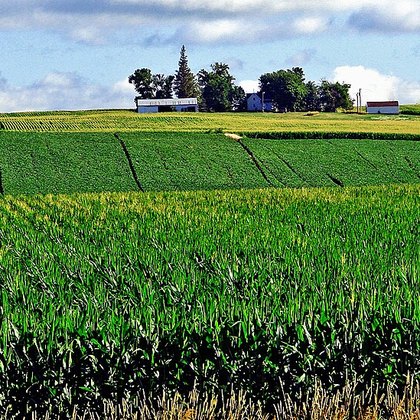
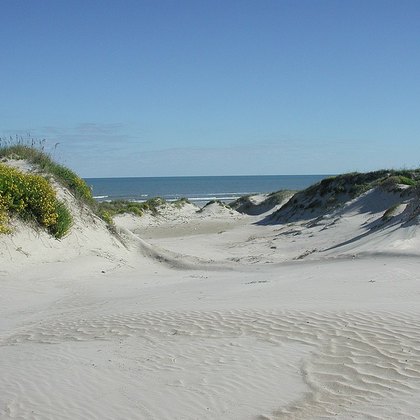
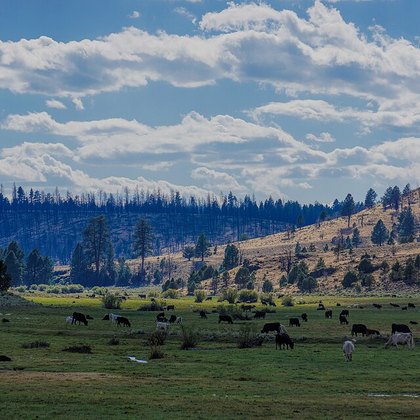
Breeds in open bog and muskeg (boggy spruce peatland typical of boreal Canada) with scattered black spruce and larch, the nest on the ground in sphagnum at the foot of a small tree. Outside the breeding season it is instead in open, low terrain: weedy fields, verges, field edges, hedgerows, pasture, dunes and wrack on the beach, and on the wintering islands in gardens and around palms. Closed forest it then avoids entirely.
Where the bird is most often found, arranged by the USNVC — the vegetation classification of the United States and Canada — and CMECS for sea and coast.

Range and movements
Breeds east of the Continental Divide, from northeastern British Columbia and the southern Northwest Territories through the prairie provinces, Ontario and Quebec to Newfoundland and the Maritimes, and south into northern Minnesota, Wisconsin, Michigan, Maine and New Hampshire. Migration runs through the east and centre of the continent, peaking in April and in October; it is one of the first warblers back in spring. It winters in the southeastern United States, along the Gulf Coast, in Florida, on the Caribbean islands, on the Yucatán Peninsula and south to eastern Nicaragua. The western form winters mainly along the Atlantic coast, the eastern form mainly along the Gulf Coast.
- Resident
- Breeding (summer)
- Winter
- Passage
- dark = core range, pale = thinly spread
Where and when to look
In October an open verge or a coastal dune gives the best chance: watch the ground rather than the treetops, and look for the bird that pumps its tail between bouts of walking. If a bird looks wholly greyish brown in winter, get a side or rear view of the undertail coverts — they stay yellow.
Conservation
The species is listed as Least Concern (LC); Partners in Flight puts the breeding population at about 13 million birds, with a score of 9 out of 20 on the Continental Concern Score. Between 1966 and 2019 numbers remained fairly stable. The breeding range lies largely in thinly settled boreal peatland, where drainage and peat extraction cause local losses. During nocturnal migration birds are killed at lit towers and buildings; that is the best-documented source of mortality away from the breeding grounds.
Scientific name
Setophaga palmarum | (Gmelin, 1789)
Gmelin described the species in 1789 as Motacilla palmarum; because it was later moved to another genus, author and year stand in parentheses. The genus Setophaga was introduced in 1827 by William Swainson, from Greek sēs, sētos 'moth' and -phagos 'eating'. The species name palmarum is Latin for 'of the palms' and refers to the type locality on Hispaniola, where the described specimen was found among palms in winter; it has nothing to do with the breeding range in boreal peatland. The English name follows the Latin.