All species › Passerines › New World warblers › Cape May Warbler
Cape May Warbler | Setophaga tigrina
Tijgerzanger | Reinita atigrada
The Cape May Warbler breeds in the tops of old spruces in the boreal forest and follows outbreaks of spruce budworm there: in a peak year it lays up to nine eggs, the largest clutch of any American warbler. It is the only warbler with a tubular, curled tongue, with which it takes nectar and fruit juice in winter.
Voice
The song is a high, thin series of four to six identical tsee notes on one pitch, so thin that at any distance it merges with the sound of the spruce tops. The call is a fine, sharp sip. The nocturnal flight call is a high, slightly falling note. Song is given almost only on the breeding ground and in the first days after arrival.
Recording: Stanislas Wroza — CC BY-NC-SA 4.0 · Charlevoix (near Saint-Joseph-de-la-Rive), Capitale-Nationale, Québec, Canada · xeno-canto
Identification
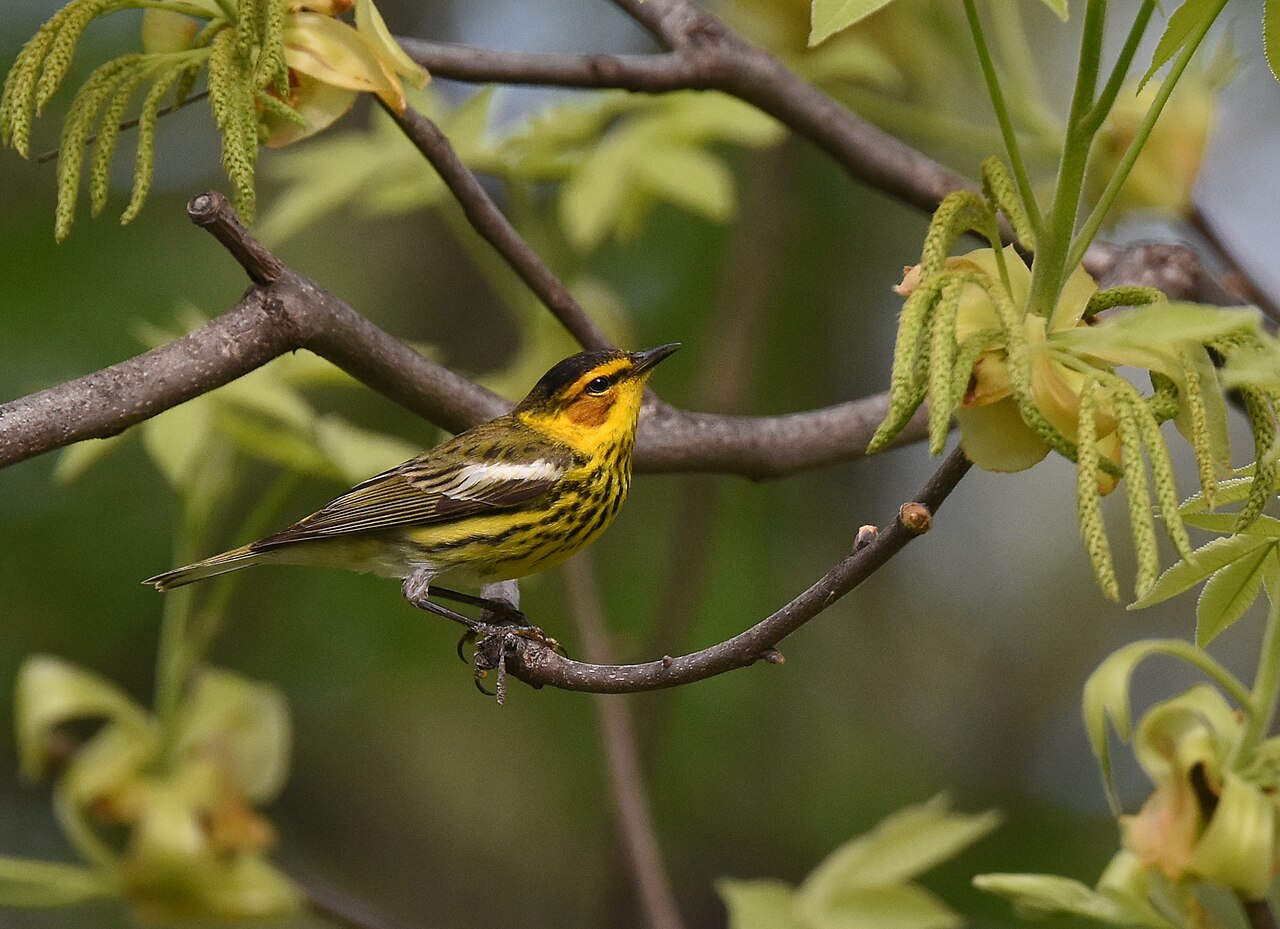
The breeding male has a chestnut ear patch in a yellow face, a black crown, a yellow neck side and a yellow rump, and heavily black-streaked yellow underparts. A broad white patch runs across the wing instead of two narrow bars. The bill is fine and slightly decurved, the tail short. Females and autumn birds are far duller: greyish green above, pale yellow to greyish white below with fine streaking, but the yellow rump and a dull yellow patch behind the ear remain visible.
Confusion species
Yellow-rumped Warbler has a yellow rump but also yellow flank patches, a white throat or chin and no chestnut ear patch. Autumn female Cape Mays resemble dull Yellow-rumped and Pine Warblers; then watch for the fine bill, the short tail, the greyish green upperparts without contrast and the vague yellow neck side. Yellow-throated Warbler has a clean white belly and a sharply black-and-white head pattern without chestnut.
Habitat
Mature spruce forest of twenty-five to seventy-five years old, with black and white spruce and balsam fir, preferably where spruce budworm occurs. The nest sits high against the trunk in dense needles. Outside the breeding season it occupies shrubby gardens, coffee plantations, coastal woodland and palms in the Bahamas and the Greater Antilles, where it clings to flowers and fruit and also comes to hummingbird feeders.
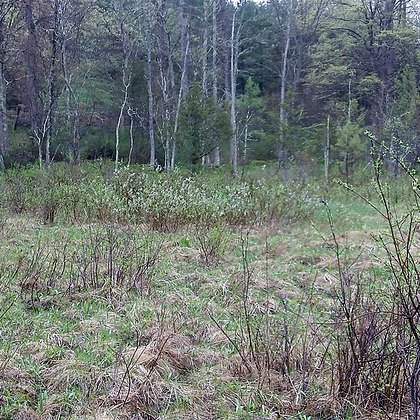
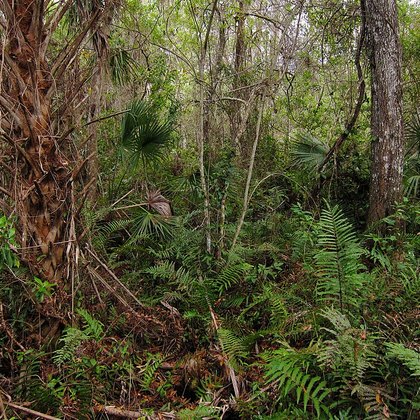
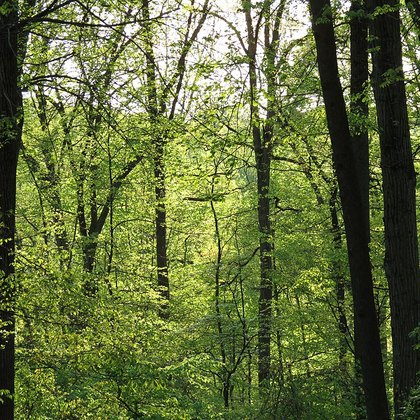
Where the bird is most often found, arranged by the USNVC — the vegetation classification of the United States and Canada — and CMECS for sea and coast.


Range and movements
Breeds through the boreal belt from northeastern British Columbia and the southern Northwest Territories east across the prairie provinces, Ontario and Quebec to the Maritimes and Newfoundland, and south into northern Minnesota, Wisconsin, Michigan, New England and northern New York. Migration runs almost entirely through the east of the continent, peaking in May and in September. It winters in the West Indies: the Bahamas, Cuba, Jamaica, Hispaniola, Puerto Rico, the Cayman Islands and the Turks and Caicos, with small numbers in southern Florida and along the Caribbean coastal region. It has been recorded a few times as a vagrant in western Europe.
- Resident
- Breeding (summer)
- Winter
- Passage
- dark = core range, pale = thinly spread
Where and when to look
In May, flowering trees along the Great Lakes give the best chance: the bird then hangs low in the blossom to take nectar, far lower than it sits on the breeding ground. If you hear a high series of identical notes in boreal forest, look in the top two metres of the spruce; it hardly ever sings lower.
Conservation
The species is listed as Least Concern (LC). Partners in Flight puts the breeding population at about 7 million birds, with a score of 12 out of 20 on the Continental Concern Score. Between 1966 and 2015 numbers fell by roughly seventy per cent. Numbers swing strongly with spruce budworm outbreaks: in a peak year density rises tenfold, and it falls again once an outbreak collapses. Insecticide control of the budworm, logging of old spruce forest and collisions with lit buildings during nocturnal migration are the known pressures.
Scientific name
Setophaga tigrina | (Gmelin, 1789)
Gmelin described the species in 1789 as Motacilla tigrina; because it was later moved to another genus, author and year stand in parentheses. The genus Setophaga was introduced in 1827 by William Swainson, from Greek sēs, sētos 'moth' and -phagos 'eating'. The species name tigrina is Latin for 'marked like a tiger', after the heavy black streaking on the yellow underparts; the Dutch name follows the Latin. The English name refers to Cape May in New Jersey, where the described specimen was collected; it then took more than a century before the species was seen there again.