All species › Passerines › Tyrant flycatchers and allies › Dusky Flycatcher
Dusky Flycatcher | Empidonax oberholseri
Struikfeetiran | Mosquero Oscuro
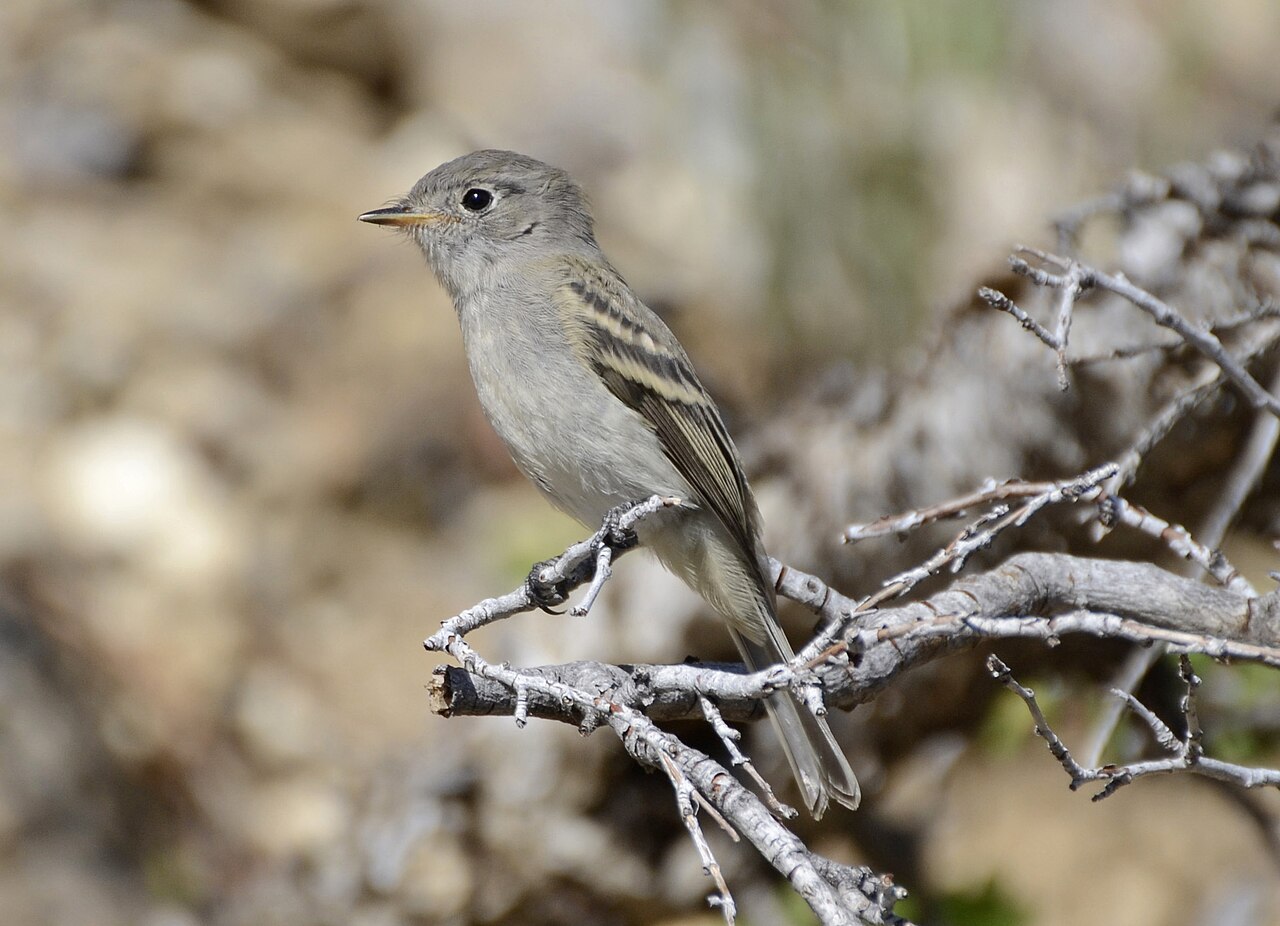
Dusky Flycatcher breeds on the brushy slopes and mountain chaparral of western North America, usually just below or beside the closed conifer forest that holds Hammond's Flycatcher. It winters in Mexico. On plumage it is barely separable from its closest relatives; the three-parted song and the dry call do separate it.
Voice
The song lasts a little over a second and has three parts: a rising prll-it, a husky prrdrrt and a clear, high pseet. Males constantly rearrange the order of those parts, but that high closing note is the handhold: in Hammond's Flycatcher the ending stays low and burry. The usual call is a dry, soft but distinct whit, given year round. On the breeding grounds there is also a du-hic, the du a mellow whistle and the hic a sharp rising note; rattles and trills belong to the repertoire as well, and agitated birds snap the bill audibly.
Recording: Brian Cox — CC BY-NC-SA 4.0 · Bear Canyon, Pryor Mountains, Carbon County, Montana, United States · xeno-canto
Identification
Grey-olive above, dingy white below with a grey breast wash and a pale yellow belly, with two white wingbars and a narrow to medium white eye-ring. The tail is fairly long, the primary projection short. The bill is medium, with an orange-yellow base to the lower mandible and a dark tip. It flicks wings and tail upward, perches fairly low and sallies from a lookout in the scrub. Here too, plumage characters shift with the individual and with wear, and only the voice gives an identification you can build on.
Confusion species
Against Hammond's Flycatcher the closing note of the song decides: a clear, high pseet here, a low burry note there; the call is a dry whit here, a sharp high peek there. In support: shorter primary projection, longer tail, an orange-based bill, and a habitat of shrub layer and open slopes rather than the canopy of tall conifer forest. Against Gray Flycatcher, the most similar pair of all, the tail movement decides: that species lowers the tail slowly like a phoebe, while Dusky flicks it up; the song there is a two-parted chu-wip … cheep against three parts here, and the bill there is longer with a sharply cut dark tip. Habitat separates them further: sagebrush (grey-green wormwood scrub of the dry western interior) and juniper against mountain brush and aspen. Least Flycatcher sings a rapidly repeated che-BEK and has a broader, rounder eye-ring and a shorter tail. Buff-breasted Flycatcher sings chee-lick and has a buff breast.
Habitat
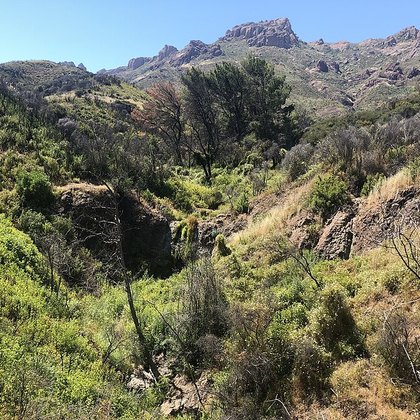
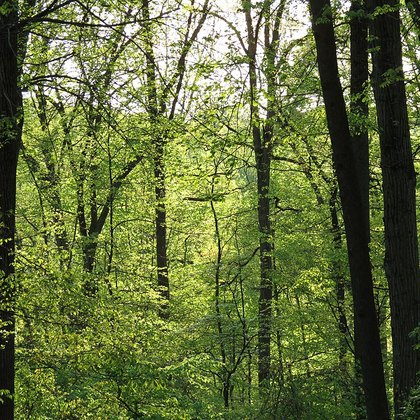
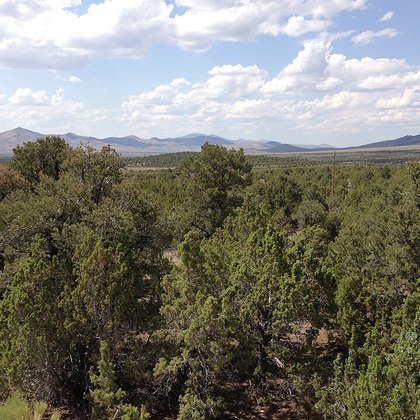
Open, brushy ground in the mountains: shrub fields, mountain chaparral, aspen groves, willow strips along streams and brushy edges of conifer forest, up to about 3000 metres. Burns, clearcuts and powerline corridors are taken up quickly, as long as there are shrubs with a few taller trees. On migration it uses desert scrub and riparian woodland. In winter it occupies oak scrub and pine-oak woodland of the Mexican highlands and scrub of the western lowlands.
Where the bird is most often found, arranged by the USNVC — the vegetation classification of the United States and Canada — and CMECS for sea and coast.



Range and movements
It breeds from Yukon and British Columbia south through the mountains of Washington, Oregon, Idaho, Montana and Wyoming into California, Nevada, Utah, Colorado, the Black Hills of South Dakota and the mountains of Arizona and New Mexico. Spring migration runs later and autumn migration earlier than in Hammond's Flycatcher. It winters almost entirely in Mexico, from Sonora and Baja California Sur south to Oaxaca, with small numbers in the far south of Arizona.
- Resident
- Breeding (summer)
- Winter
- Passage
- dark = core range, pale = thinly spread
Where and when to look
In June, walk the edge where conifer forest gives way to brush, for instance on an old burn: there it sings from a shrub top at eye level, while Hammond's sits high in the canopy in the forest behind. Outside the breeding season the dry whit gives you at best half the answer — note the tail movement and the habitat as well, and leave a silent bird unnamed.
Conservation
The species is listed as Least Concern (LC). Partners in Flight puts the world population at about 8.8 million birds and gives the species 11 out of 20 on the Continental Concern Score. The Breeding Bird Survey showed a roughly stable picture between 1968 and 2015. It gains from logging and fire that produce shrub cover; it declines where shrubland is grazed, converted to farmland, or where stream channels are fixed.
Scientific name
Empidonax oberholseri | Phillips, 1939
Phillips described the species in 1939 as Empidonax oberholseri, from material at Hart Prairie on San Francisco Mountain, Arizona; the name honours the American ornithologist Harry C. Oberholser. A new name was needed because the older name wrightii had long been applied to this bird, while its type material turned out to belong to Gray Flycatcher. The genus Empidonax was introduced in 1855 by Cabanis, from Greek empis, empidos 'gnat' and anax 'ruler'. The Dutch name refers to the scrub in which it breeds.