All species › Rodents › Voles and hamsters › Portuguese Field Vole
Portuguese Field Vole | Microtus rozianus
Microtus rozianus | Microtus rozianus
Microtus rozianus is a surface-living vole of the field vole group, not a pine vole. It belongs to the Microtus agrestis complex and not to the Iberian burrowing voles. It is the Portuguese and Galician lineage of that complex, which split off about 220,000 years ago and has remained on the Iberian Peninsula since. It has no vernacular name in common use and was until recently treated as a subspecies; its species status rests on genomic data, not on an external character.
No photograph of a living wild animal of this species with a suitable Creative Commons licence exists. Do you have one that meets the rules? Send it in.
Tracks
The species lives above ground; its signs are therefore those of the Field Vole and not those of the burrowing voles in the same area. In uncut, tussocky, damp grassland the runway system lies under the sward: extensive swept runs three to four centimetres wide, through the vegetation rather than in the soil, worn down to the root mat. Tunnels in the soil remain superficial, and earth heaps are hardly made; lines of fine heaps with plugged entrances indicate the Lusitanian or Mediterranean Pine Vole. Along the runs lie clipped grass stems: obliquely cut lengths of two to five centimetres in small heaps at the side. Droppings are four to seven millimetres long, cylindrical with blunt ends, grass-green when fresh and brown later, in small latrines at fixed points on the run. In the mountains the winter nests of finely clipped grass lie on the ground as balls after the thaw. There is also gnawed bark at the base of young plantings, especially of pine and eucalyptus, where the species is regarded as a pest. Barn Owl and Short-eared Owl pellets are the most reliable source but lead only to the field vole group, not to the species.
Identification
A medium-sized, shaggy vole of the surface-living type: thickset build, blunt muzzle, small eyes and short ears just clearing the fur, and a tail of 2.5 to 4.5 cm, roughly a third of head-body length. The coat is long, soft and dense with prominent guard hairs, giving the animal a shaggy appearance; this is the clearest difference from the smooth, short coat of the Common Vole. Brownish grey above with paler flanks and a grey underside; the tail is well haired, bicoloured and ends in a small tuft. Juveniles are greyer than adults. The karyotype of the field vole group has 50 chromosomes.
Similar species
No distinguishing character separates it from the other two species of the field vole group. Microtus agrestis to the north and Microtus lavernedii to the east look the same; the three were separated on the basis of modern and ancient genomes, and according to the authors the morphological identification of remains has not been resolved. Assignment is based on locality: this species occupies Portugal north of the Tagus and western Spain (Galicia, western Asturias, western León, Zamora and Salamanca), while M. lavernedii occurs further east in Cantabria, the Pyrenees and Catalonia. At the boundary between the two no field character is usable. From the other voles of Iberia the species can be separated. Compared with the Lusitanian Pine Vole and the Mediterranean Pine Vole, with which it shares much of its range, it is larger, shaggier, longer-tailed and clearly larger-eyed, and it uses surface runways rather than tunnels; earth heaps with plugged entrances indicate one of those two species. The Common Vole, on drier, short-grazed ground in northern Spain, has a smoother, yellower coat and ears that project further and are bare inside; in the field vole group the ears are smaller and hairy inside, which with the animal in the hand and in good light is the most usable character. Cabrera's Vole is larger, has a longer coat with yellow hair tips and lives in damp, uncut sedge and rush vegetation. The Bank Vole has a reddish-brown back, large eyes, projecting ears and a tail about half the body length.
Habitat
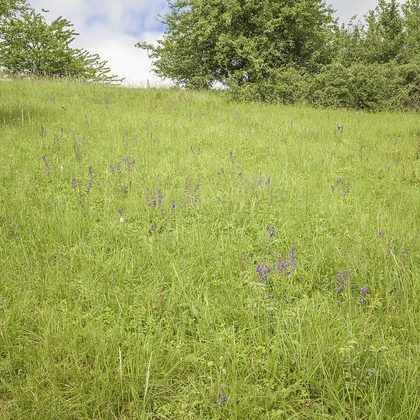
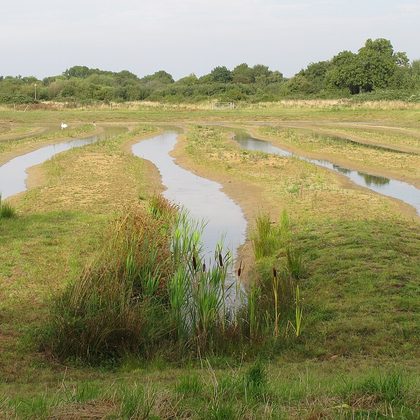
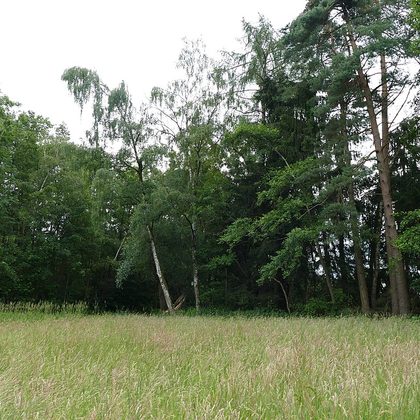
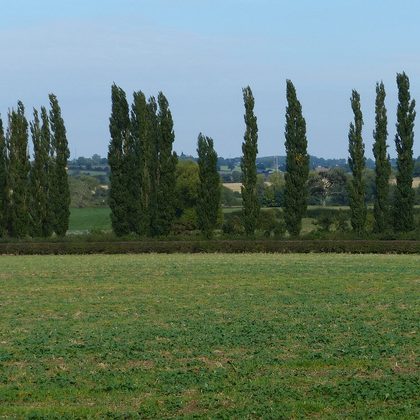
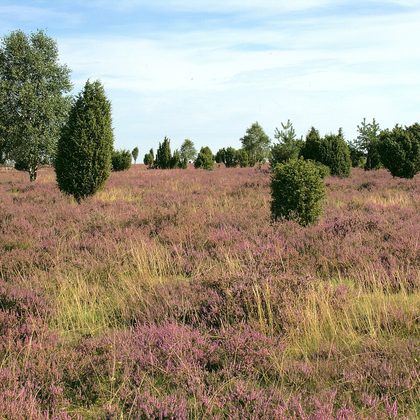
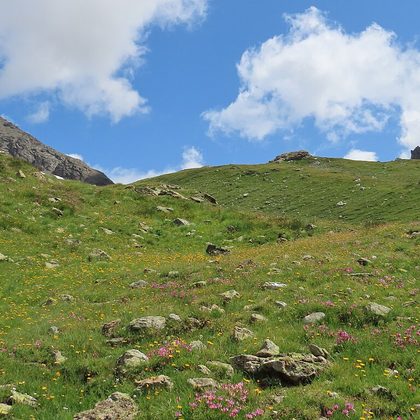
Dense, tussocky grassland with little or no grazing: rank pasture and hay meadow, wet grassland and bog margins, wood edges and tall-herb stands, young pine, eucalyptus and broadleaf plantations, and in the mountains pasture above 1,600 m. Cover is decisive: the species needs standing, uncut vegetation for its runway system and disappears from closely grazed or mown grassland, where the Common Vole replaces it.
Where the animal is most at home, classified with EUNIS — the European standard for habitats.
Distribution
North-western Iberia. In Portugal the area north of the Tagus, with the type locality at Geria near Coimbra. In Spain Galicia, western Asturias, western León, Zamora and Salamanca, with records from the coast of A Coruña and Lugo south to the Sierra de Francia. Further east, in Cantabria, the Pyrenees and Catalonia, lives Microtus lavernedii; M. agrestis itself occurs only north of the Pyrenees. Because the split is recent, most older Iberian records are still filed under M. agrestis; the forty-odd georeferenced records under the name rozianus derive almost entirely from recent trapping studies. Outside north-western Iberia the species does not occur.
- Native
- dark = core range, pale = thinly spread
Way of life
Active in short bouts of two to four hours spread over day and night, with peaks after sunset; mainly nocturnal in summer, more diurnal in winter. The species is herbivorous, preferring green leaves and stems of grasses and herbs, supplemented with grass seed, roots and fungi, and in winter with bark. It does not live in colonies like the Common Vole but in loose territories in which females keep their distance from each other. In Iberia breeding runs from February or March to October or November; after a gestation of 18 to 20 days four to six young are born, and a female may have up to four litters a season. The young are sexually mature at about four weeks. There is no winter dormancy; in the mountains the species is most active under the snow. In the wild it rarely lives longer than a year.
Where and when to look
Search rank, uncut grassland, such as an abandoned hay meadow in the Serra do Gerês, a wet pasture in Lugo or the edge of a young pine plantation in Zamora. Between the grass lie the runways, broader and more deeply worn than in many other voles. The absence of earth heaps separates this species most quickly from the burrowing voles that may occur in the same field. The animal itself is best seen by waiting at the edge of such a field in the first hours after sunset, or where a Short-eared Owl is hunting. Outside Portugal and western Spain the species cannot be named, and even there assignment rests on locality and not on external characters.
Conservation status
Least Concern (2024). The species was assessed separately for the first time in 2024, shortly after the Field Vole was split into three species; the range is large enough and the animals locally numerous enough for this category. The main threat is the loss of uncut, tussocky grassland: the abandonment of hay meadows, the intensification of the remaining grassland and above all the large-scale conversion of the hills of north-western Iberia into eucalyptus and pine plantations, in which the species can live only in the first years. In these plantations it is controlled as a pest. Because almost all existing data were collected under another name, data on trend and numbers of this species separately are lacking.
Scientific name
Microtus rozianus | (du Bocage, 1865) (GBIF: Microtus agrestis)
Du Bocage described the species in 1865 as Arvicola rozianus; because it was later moved to another genus, the author and year stand in brackets. Microtus is Greek, from mikros, 'small', and ous, genitive ōtos, 'ear', after the small ears hidden in the fur. rozianus is formed with the adjectival suffix -ianus on a name Roz; du Bocage does not explain the dedication and who or what is meant has not been established. The specimen the first description was based on came from Portugal, Coimbra.