All species › Carnivores › Cats › Leopard
Leopard | Panthera pardus
Luipaard | Leopardo
The leopard has a very large range, from southern Africa to the Russian Far East, but in the guide area it has almost disappeared. North Africa, the Levant and Turkey hold or held small, isolated populations; the Arabian leopard is regarded as locally extinct in the Negev and the Hebron hills, the species is possibly or certainly gone from Morocco and Tunisia, and in Turkey it has been recorded again since 2004. The IUCN has assessed it as Vulnerable since 2025.
Tracks
In Turkey the first new records after 2004 were based on footprints; later camera-trap and thermal-camera images and direct sightings followed. In deserts the leopard shelters by day in caves, burrows or the shade of dense vegetation, and cubs are born in caves, rocky outcrops, abandoned burrows or dense thickets.
Identification
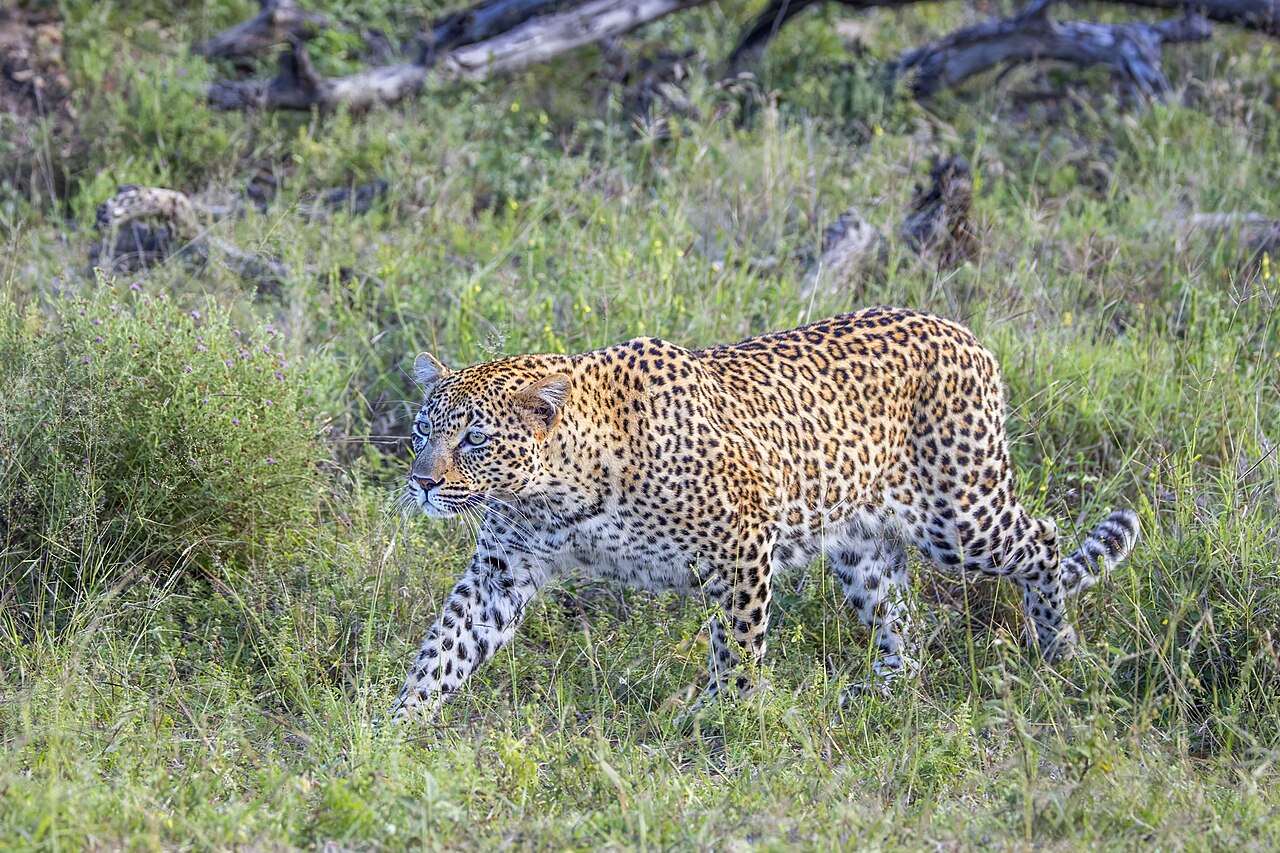
A large, powerful cat with a long tail, more than half the body length. The ground colour varies regionally from bright golden yellow to pale yellow and rusty yellow, with white underparts. Head, neck, shoulders, limbs and hindquarters carry black spots; on the flanks and back the spots form rosettes without a central spot. The tail is spotted and banded, with a tip that is black above and white below. The spot pattern is unique to each animal. Black (melanistic) leopards occur, far more often in Thailand, Malaysia and Java than in Africa. Males are larger than females; size varies greatly by region: Cape males average 30.9 kg and females 21.2 kg, while males of 50 to 60 kg occur elsewhere.
Similar species
No other large spotted cat occurs in the guide area. The caracal is much smaller, unspotted, with a short tail and ear tufts. The leopard differs from the American jaguar, which has rosettes with a central spot; that species does not occur in the guide area. A leopard can be recognised individually on a camera-trap image by its spot pattern.
Habitat
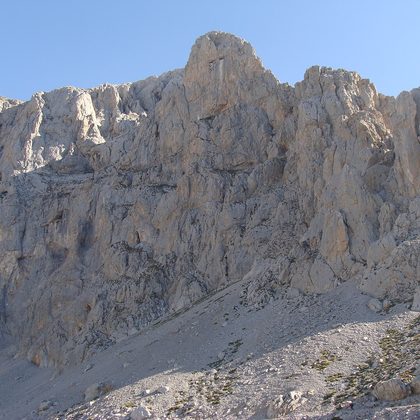
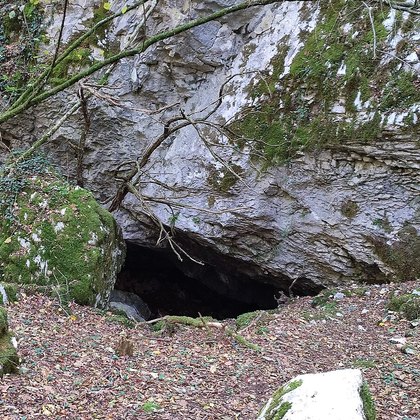
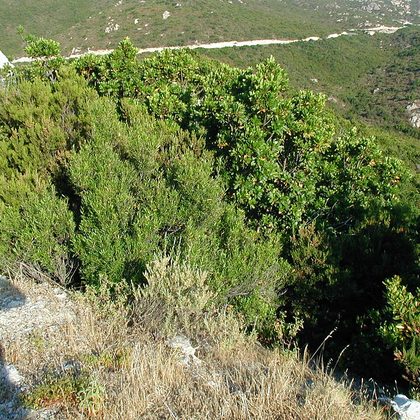
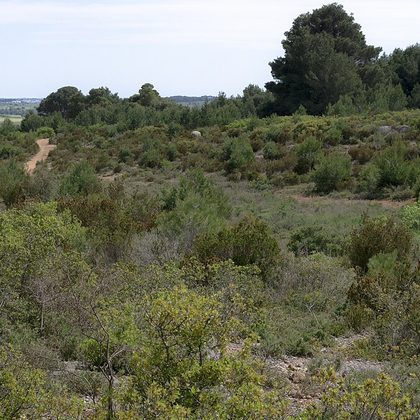
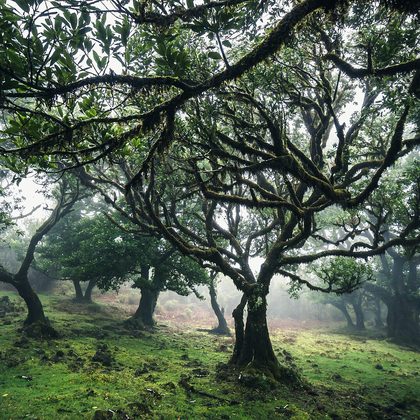
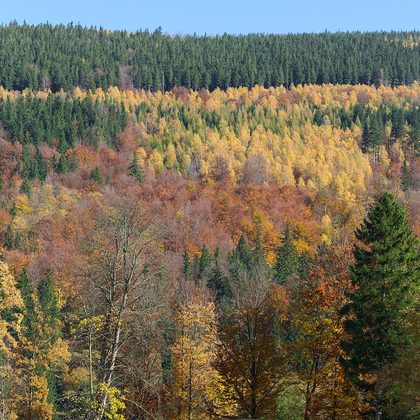
The leopard lives in almost every habitat type. In deserts it occurs only where river courses extend into them; in the Sahara, Sinai and Arabian deserts it uses caves, burrows or the shade of dense vegetation to survive daytime heat. Elsewhere it lives in savanna, forest, scrub and mountains. It can live close to people as long as it is not persecuted and has secure den sites.
Where the animal is most at home, classified with EUNIS — the European standard for habitats.
Distribution
Sub-Saharan Africa, isolated populations in North Africa, the Arabian Peninsula, the Caucasus and south-west Asia, and on through India and south-east Asia to Java, China and the Russian Far East. Within the guide area: possibly extinct in Morocco (last record 1983 according to a 2016 review), possibly still present in Algeria (last record 2005), extinct in Tunisia, present in Egypt. In the Negev and the Hebron hills the Arabian leopard is regarded as locally extinct. In Turkey the Anatolian leopard has been recorded since 2004 in many provinces, from Kars in the east to Antalya in the south; most records come from the north-east, outside the guide area. Of the records since 2006 within the guide area, nearly all come from Israel.
- Native
- dark = core range, pale = thinly spread
Way of life
Largely nocturnal in most areas studied. Leopards are solitary; outside mating the only lasting bond is between mother and young. A male's range usually overlaps those of one or more females. The leopard is an adaptable hunter of a wide variety of prey; in many areas the diet consists largely of small to medium-sized mammals of 5 to 45 kg. Females can come into oestrus at any time of year. After a gestation of about 96 days 1 to 3 cubs, usually 2, are born. They travel with the mother from about three months, are independent at 12 to 18 months and mature at two to three years.
Where and when to look
In the guide area a sighting is almost out of the question. Possible reports from North Africa, Sinai, the Negev or southern Turkey can be assessed only with a photograph or camera-trap image; the spot pattern also allows the individual to be recognised.
Conservation status
Vulnerable (VU, 2025) globally; it is listed on CITES Appendix I. In 2009 the Arabian, North African and Anatolian leopards, together with the Amur leopard, were listed as Critically Endangered subspecies. The main threats are loss of habitat and wild prey through expanding livestock farming, and persecution. The leopard can survive close to people and has no highly specific prey or habitat requirements, but it is vulnerable to persecution.
Scientific name
Panthera pardus | (Linnaeus, 1758)
Linnaeus described the species in 1758 as Felis Pardus; because it was later moved to another genus, the author and year stand in brackets. Panthera is Latin panthera, from Greek panthēr. The old reading as pan, 'all', and thēr, 'wild beast', is folk etymology; the word was probably taken over from the East, and its further origin is unknown. pardus is the Latin word for 'leopard', from Greek pardos, which itself came from the East; compare Persian pars. The specimen the first description was based on came from Egypt.