All species › Carnivores › Cats › Iberian lynx
Iberian lynx | Lynx pardinus
Pardellynx | Lince ibérico
The Iberian lynx is endemic to the Iberian Peninsula and lives almost entirely on the European rabbit. In 2002 it was down to 94 animals in two isolated nuclei in Andalusia. After a programme of captive breeding, releases and rabbit restoration, the official census of 2025 counted 2,663 animals in 26 nuclei in Spain and Portugal. The IUCN moved it from Critically Endangered to Endangered (2015) and then to Vulnerable (2024).
Tracks
The print is round and compact; that of the hind foot is longer and narrower. It shows four toe marks, usually without claw marks, and the main pad has a small notch at the front. The absence of claws separates it from fox and dog. Scats are deposited together at latrines as territorial marks: along the edges of dirt roads and forest tracks, on paths and next to rabbit warrens, preferably at junctions of paths and roads. They normally contain rabbit fur and small bones. A rabbit is killed with a bite to the base of the skull. Larger prey, such as a fallow or red deer fawn, is suffocated with a throat bite, dragged into cover and, after feeding, covered with leaves, soil and other debris.
Identification
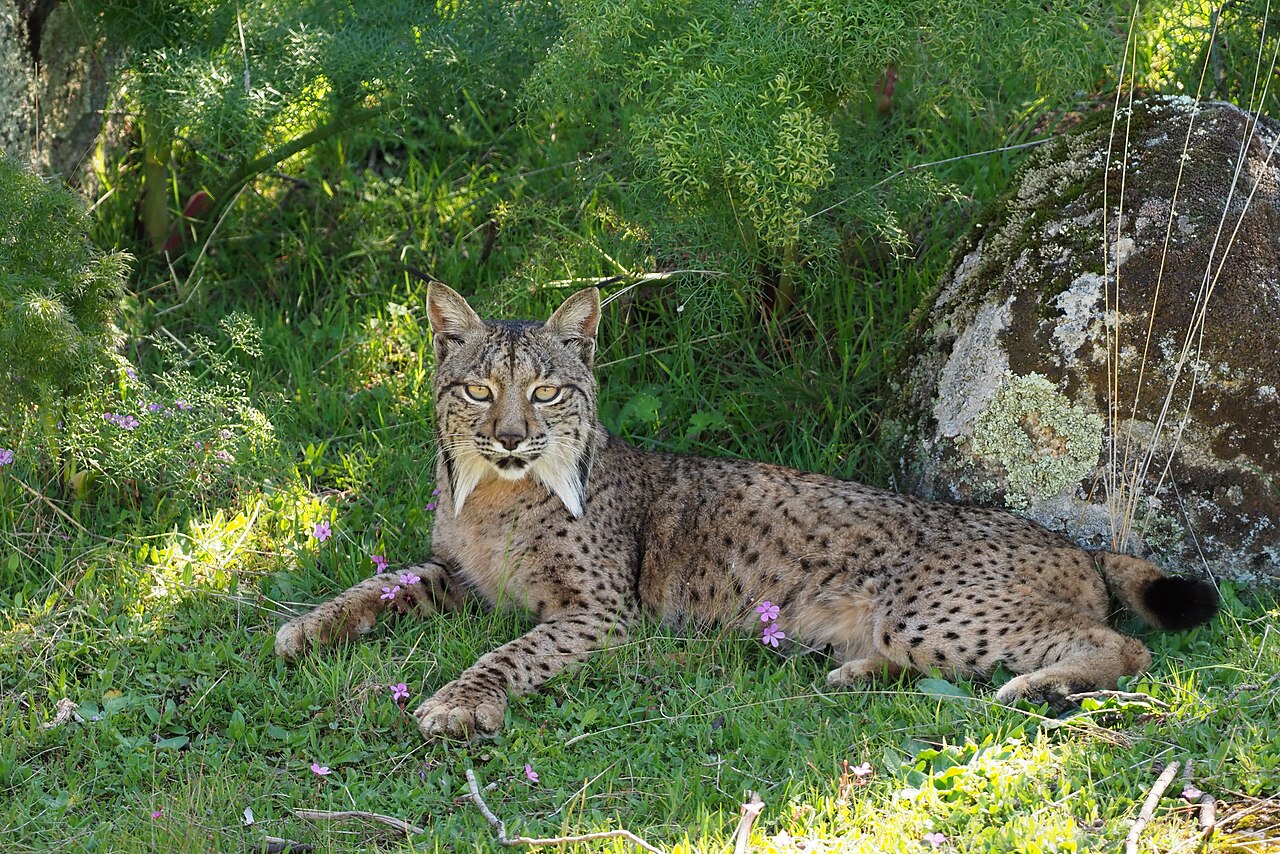
A medium-sized, long-legged cat with a short body, short tail and relatively small head. Both sexes have a prominent facial ruff and long black tufts on the ear tips. The coat is bright yellowish red to tawny with white underparts and is the most heavily spotted of all lynxes, with black spots over body and legs. The spot pattern differs between individuals and between the left and right flank; individuals are recognised by it on camera-trap images. The fur is short, sparse and coarse. Males are about 25% larger than females. The species is about half the size of the Eurasian lynx.
Similar species
Within the Iberian range the wildcat is the only other wild cat. It is much smaller, has a longer tail with dark rings and lacks the long ear tufts. A large, spotted domestic cat can cause confusion on a blurred photograph; the short tail, long legs and ear tufts decide. The Eurasian lynx is about twice the size.
Habitat
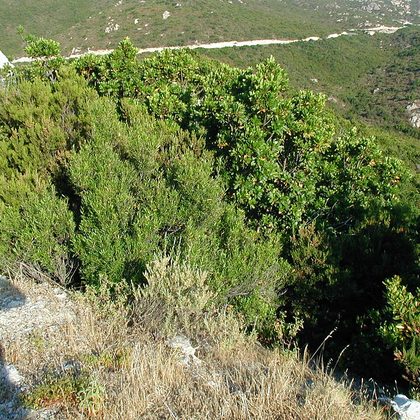
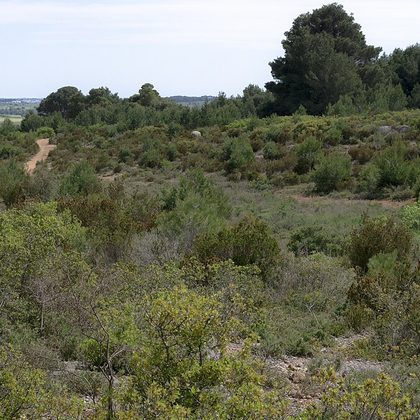
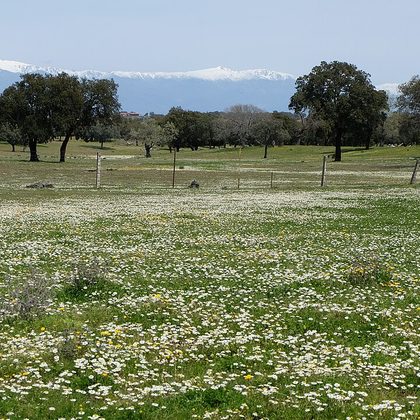
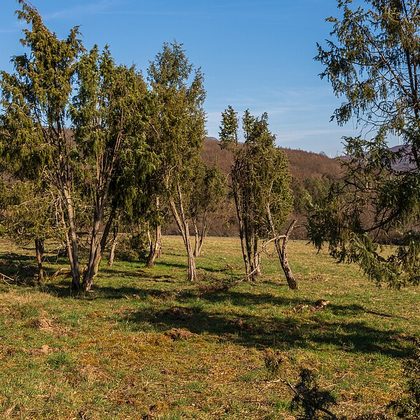
Most numerous in a mosaic of open woodland and extensive, dense Mediterranean scrub. In Doñana it prefers Mediterranean scrubland over all other vegetation types; more than 90% of daytime rest sites are in thick heather scrub. Pine and eucalyptus plantations are avoided. The two preferred habitats in Doñana were also those with the highest rabbit densities. Permanent water and little human disturbance are part of good habitat. At high rabbit density the territory of a breeding female covers 400 to 500 ha.
Where the animal is most at home, classified with EUNIS — the European standard for habitats.

Distribution
Endemic to the Iberian Peninsula. In 2002 two nuclei remained, both in Andalusia: Andújar-Cardeña in the eastern Sierra Morena (54 animals) and Doñana (40). Releases of captive-bred animals have created new populations in Castilla-La Mancha, Extremadura and the Guadiana valley in Portugal. The 2025 census gave by region: Castilla-La Mancha 1,051 animals, Andalusia 885, Portugal 394, Extremadura 302, Murcia 19, Castilla y León 11 and Madrid 1. Breeding was recorded in 18 of the 26 nuclei.
- Native
- dark = core range, pale = thinly spread
Way of life
Mainly nocturnal, with peaks around sunrise and sunset in summer; in winter it is also active by day. Its activity follows that of the rabbit. The rabbit makes up 75 to 93% of the diet in Doñana; young fallow and red deer, small rodents, snakes, lizards, ducks, geese and red-legged partridges are also taken. From feeding trials, a male is estimated to need some 379 rabbits a year and a non-breeding female 277. Iberian lynxes are solitary; ranges of residents of the same sex overlap little, while male ranges overlap those of females. Mating takes place in January and February; after a gestation of 63 to 73 days, 1 to 4, usually 2, kittens are born in March or April. Young remain in the mother's range until about 20 months old.
Where and when to look
The species is easiest to see in winter, when it is also active by day, in the oldest nuclei and in areas with many rabbits. A raised viewpoint over scrub and open woodland early in the morning or late in the afternoon gives the best chance. Look for latrines along forest tracks and at junctions: a series of scats in a fixed place indicates a territory. If you photograph an animal, record the spots on both flanks; the individual can be recognised from them.
Conservation status
Vulnerable (VU, 2024), after Critically Endangered and, from 2015, Endangered. It is on CITES Appendix I and legally protected throughout its range. Between 1960 and 1978 its habitat shrank by about 80%, through conversion of native woodland to pine and eucalyptus plantations and myxomatosis in rabbits; in 2002, 94 animals remained, with 27 breeding females. The 2025 census counted 2,663 animals (Spain 2,269, Portugal 394): 1,711 adults and subadults, 952 cubs and 542 breeding females. That is 10.9% more than in 2024 (2,401) and 95% more than in 2021. The figure is a minimum. Traffic is the main cause of death: of the 273 dead animals found in 2025, 212 (77.7%) were killed on roads. The population remains dependent on rabbit numbers.
Scientific name
Lynx pardinus | (Temminck, 1825)
Temminck described the species in 1825 as Felis pardina; because it was later moved to another genus, the author and year stand in brackets. Lynx is Greek lynx, probably from the root *leuk-, 'light, brightness', after the animal's reflective eyes. pardinus is Latin for 'leopard-like', from pardus (Greek pardos), 'panther', after the heavily spotted coat; Temminck wrote Felis pardina. The specimen the first description was based on came from Portugal.