All species › Rodents › Mice and rats › Golden spiny mouse
Golden spiny mouse | Acomys russatus
Gouden stekelmuis | Acomys russatus
The Golden Spiny Mouse is a spiny mouse of rocky desert terrain in Sinai, the Levant and western Arabia. Unlike other spiny mice it is active by day. This daytime rhythm is linked to the presence of a nocturnal spiny mouse in the same rocks: where that species is absent, the Golden Spiny Mouse shifts to dusk and night. Because it is day-active, it is the only spiny mouse in the region that can be observed without a lamp.
Tracks
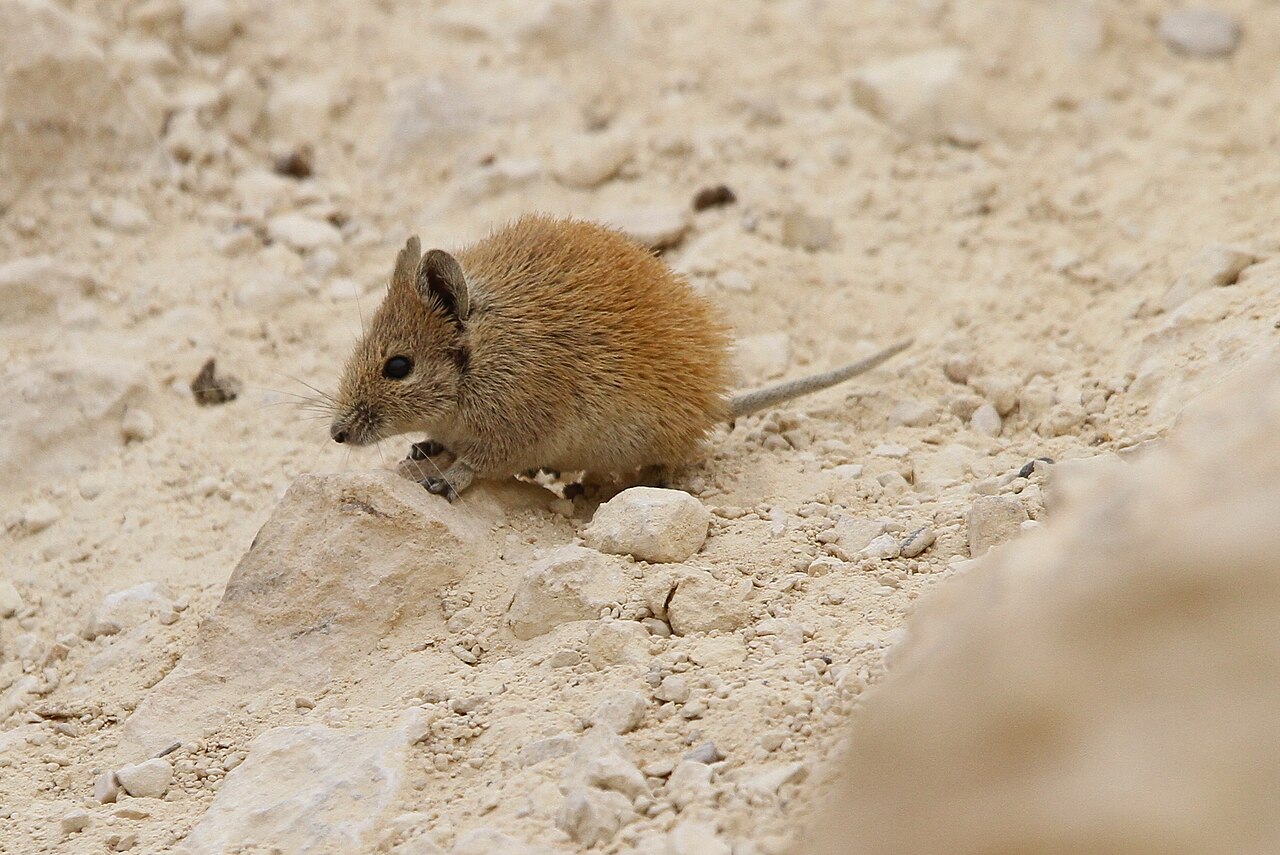
Because the species is active by day, signs are less important for identification than in other spiny mice. The latrines are like those of the other spiny mice: small heaps of black, glossy, spindle-shaped pellets three to five millimetres long on a fixed ledge, a flat stone or a rock step, used by the same animal for years. At the entrance of an occupied crevice lies food refuse: empty snail shells with a broadly gnawed aperture, husks and seed coats, and the hard parts of beetles and crickets. On rocks where the animals sit a great deal a smooth dark polish of grease and urine forms on the stone, especially at the crevice entrance and on lookout boulders; on pale limestone it is visible from about ten metres. Where the rock is covered with fine desert dust there are trails barely a centimetre wide, sometimes with a faint drag mark of the tail. As in all spiny mice, broken tail tips and shed pieces of skin near the shelter indicate an attack. The species also occurs in Barn Owl and Eagle Owl pellets, less often than the nocturnal spiny mice because of its daytime rhythm.
In its habitat
Head close-up
Identification
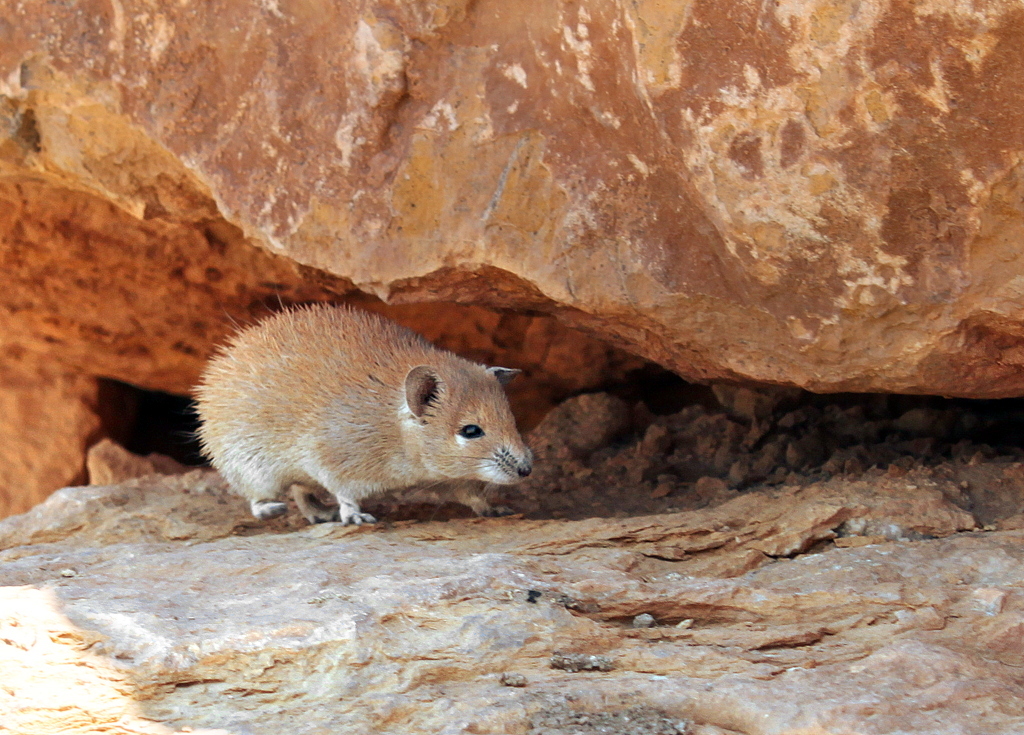
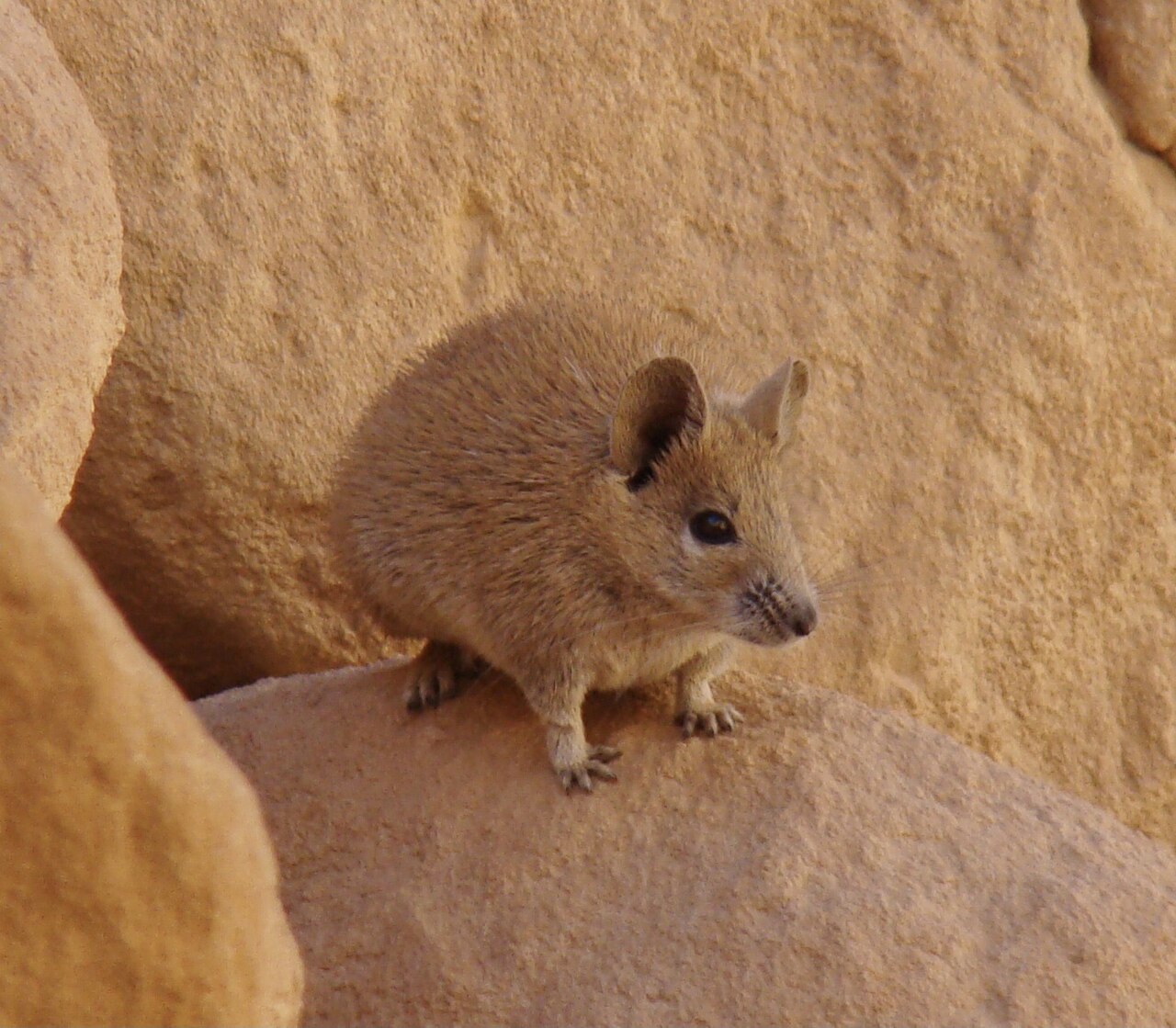
A heavy, thickset spiny mouse of ten to twelve centimetres, with a short tail of under eight centimetres, a good half to three-quarters of the head-body length; this is the decisive character. The back is rusty yellow to golden-orange, warmer in tone than in other spiny mice, and set with the flat, stiff spines of the genus, which give a ribbed golden sheen in sunlight. The belly is dirty white, the flanks yellow. Under each eye is a small, sharply defined white spot. The legs are grey with pale feet and black soles and palms. The ears are short and rounded (19 to 22 mm) and look smaller than in other spiny mice. Weight is forty to seventy-seven grams; an animal with large fat reserves looks almost spherical in late summer.
Similar species
The Arabian Spiny Mouse (Acomys dimidiatus) often sits on the same boulders and is the main confusion species on a brief view. It is pale sandy instead of golden-orange, has a long tail nearly equal to the head-body length, and is nocturnal. The Cairo Spiny Mouse (Acomys cahirinus) occurs alongside the Golden Spiny Mouse in Egypt's Eastern Desert and is likewise long-tailed and greyer. The gerbils of the same wadis are slimmer, with long hind legs and a tail much longer than the body, ending in a tuft. On colour alone a golden young Black Rat, or at long range a sunlit Rock Hyrax, may be mistaken for this species; size and spiny coat rule these out. A spiny mouse sitting on a rock by day with a short tail is a Golden Spiny Mouse.
Habitat
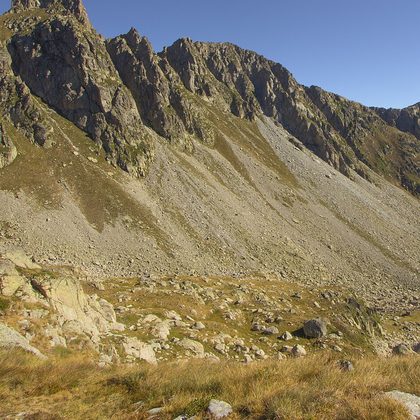
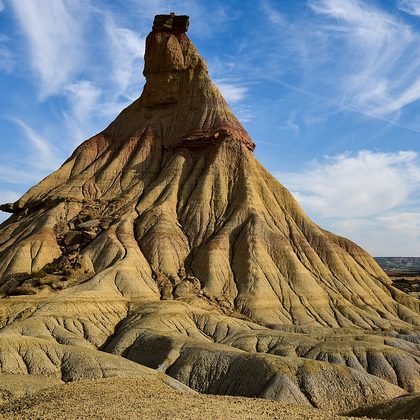
Desert boulders: granite boulder fields, limestone and sandstone faces, scree slopes and the boulder fields of wadi beds, from below sea level at the Dead Sea to 2285 metres on Mount Sinai. The species needs crevices for shelter and sunlit blocks to sit on; bare sand plains are avoided and buildings are hardly used. Where a nocturnal spiny mouse lives in the same rocks, the two species are separated in time: they use the same crevices and blocks at different hours.
Where the animal is most at home, classified with EUNIS — the European standard for habitats.
Distribution
From Sinai through Israel, Palestine, south-western Syria and Jordan into western Arabia, with a subspecies of its own (aegyptiacus) in Egypt's Eastern Desert between the Nile and the Red Sea. The habitat comprises the rocky areas of Sinai, the Negev, the Judean Desert, the canyons above the Dead Sea and the Jordanian rock desert beyond Petra. The species is locally numerous: in suitable rocky habitat densities of fifteen to forty-six animals per hectare have been measured, and home ranges of males and females overlap and average 340 to 726 square metres. The range is restricted to rocky terrain; where the boulders end, the species is absent.
- Native
- dark = core range, pale = thinly spread
Way of life
Active by day. This rhythm is not fixed: in captivity without competitors the species becomes nocturnal, and in the field its activity shifts towards dusk when the nocturnal spiny mouse disappears. The switch is driven by scent cues from that related species. Omnivorous: seeds, green desert plants, snails and insects. Unlike many desert rodents the species does not store food; reserves are kept as body fat. If food availability drops by about a third the animal enters daily torpor: body temperature falls and the animal remains inactive for up to nineteen hours at a stretch. In Egypt and Israel there is no breeding in winter. Gestation is about forty days; a litter has one to four young, which as in all spiny mice are born furred and with open eyes and are weaned after two weeks. They are adult at about eight weeks. A female has three to four litters a year, about five weeks apart. There is no hibernation; even in winter on Mount Sinai, where snow falls, the animals emerge during sunny hours.
Where and when to look
The Golden Spiny Mouse is the only spiny mouse in the region that can be seen without searching at night. Go in mid-morning or late afternoon to a rock face or boulder field in the Negev, Sinai or the canyons above the Dead Sea and check the sunlit side: at Ein Gedi, in Makhtesh Ramon and around the monasteries of Sinai the animals sit on the blocks and allow people to approach to a few metres. Look for the short tail and the golden-orange back; both can be seen at ten metres. In the heat of the day the animals withdraw into crevices; the hours shortly after sunrise and in the last light are best. Sit quietly by a block with a latrine; such a block is a lookout post to which an animal regularly returns.
Conservation status
Least Concern (LC, 2016). The species is tied to rocky country in a dry climate, which is little used by people; where it occurs it is often numerous. Risks are local: quarrying, road building and tourist development in canyons with the highest densities, and the loss of crevices when boulder fields are cleared. Its daytime rhythm makes it more exposed than the nocturnal spiny mice to disturbance at busy visitor sites; there are indications that it habituates to people there. The species is much studied as an example of a daily rhythm determined by competition with other species in the same habitat.
Scientific name
Acomys russatus | (J. A. Wagner, 1840)
J. A. Wagner described the species in 1840 as Mus russatus; because it was later moved to another genus, the author and year stand in brackets. Acomys is Greek, from akē, 'point, sharp tip', and mys, 'mouse', after the spiny hairs on the back. russatus is Latin for 'clad in red, dyed red', from russus, 'red', after the rust-coloured coat. The specimen the first description was based on came from Egypt, Sinai.