All species › Even-toed ungulates › Deer › Fallow Deer
Fallow Deer | Dama dama
Damhert | Gamo
The fallow deer (Dama dama) is a medium-sized, usually spotted deer with palmate antlers in the buck. After the last ice age the species was confined to Asia Minor; from Roman times onwards it has been spread across large parts of Europe, often first in enclosed deer parks. Of the original populations only a small group in south-western Turkey and a population on Rhodes remain.
Tracks
The slot is 5 to 6 cm long and up to 4 cm wide, with pointed halves; it is larger than that of roe deer and smaller than that of red deer. The droppings are black, cylindrical and pointed at one end, and lie in small heaps. During the rut bucks scrape bare patches in the ground at fixed places and urinate in them, and thrash shrubs and young trees with their antlers. Where many fallow deer live, woodland and parks develop a browse line: a horizontal limit at the height the animals can reach, below which leaves and twigs have been eaten away.
A colour morph

Identification
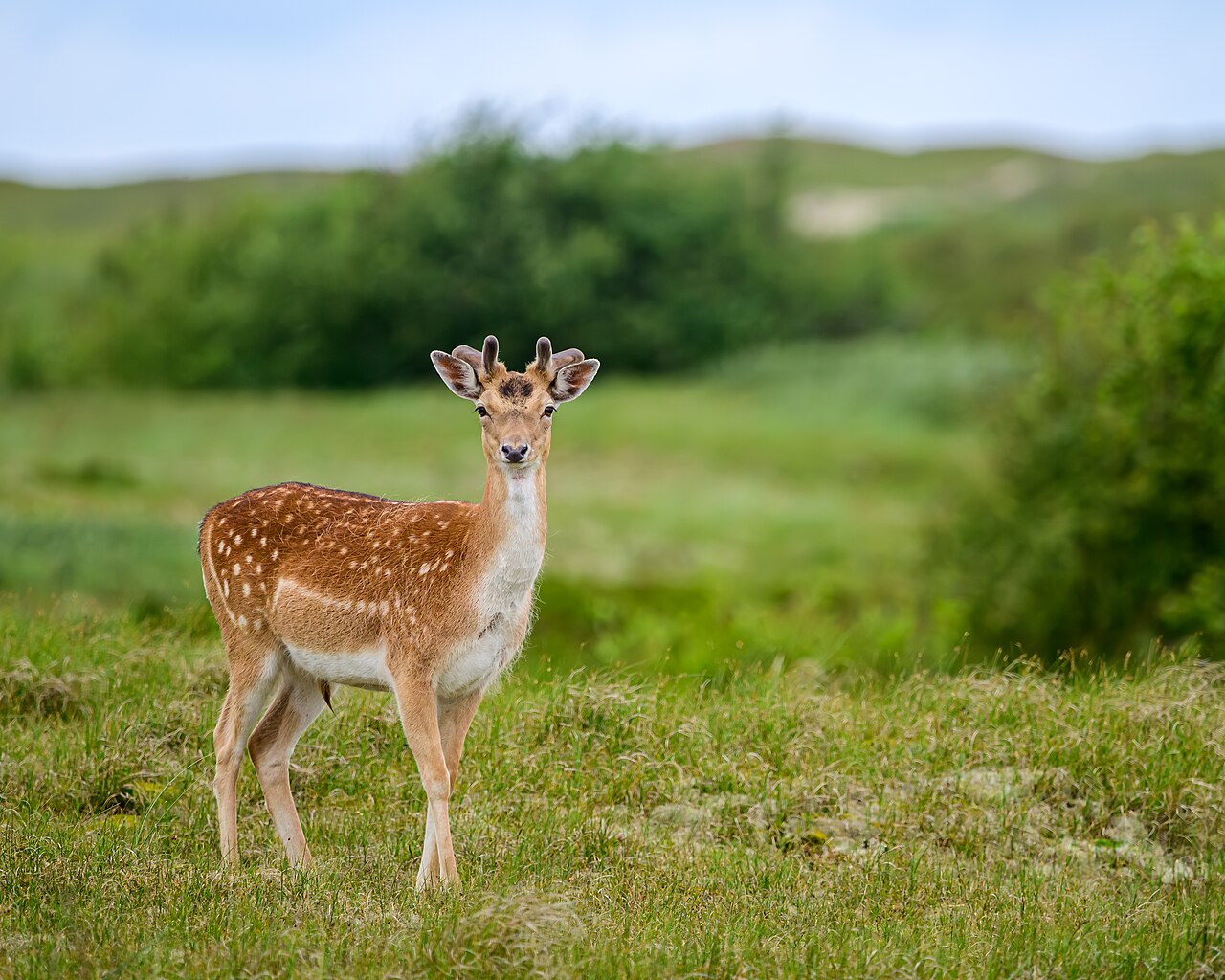
A medium-sized deer of 130 to 160 cm head-body length and 75 to 95 cm shoulder height; bucks weigh 60 to 100 kg, exceptionally up to 150 kg, does 30 to 50 kg. There are four colour forms. The common form is reddish brown with white spots on back and flanks in summer and greyish brown with faint spots in winter; the menil is paler and keeps clear spots all year; in addition there are a black and a white form, the latter not albino. The rump patch is white with a black border on each side, and the tail of about 20 cm is white with a black stripe on top; seen from behind the three black stripes form a pattern like the number 111. Only the buck carries antlers, broad and shovel-shaped from the third year.
Similar species
The red deer is much larger, unspotted as an adult, with a cream rump patch without a black border and branched antlers. The roe deer is smaller, has an invisible tail, a rump patch without a black border and short antlers with at most three tines per beam. The sika deer is also spotted in summer and has a white, black-bordered rump, but its tail is mainly white and short, and the stag carries branched, not palmate, antlers. The chital in Croatia keeps clear spots all year, has a white throat patch and antlers with three tines.
Habitat
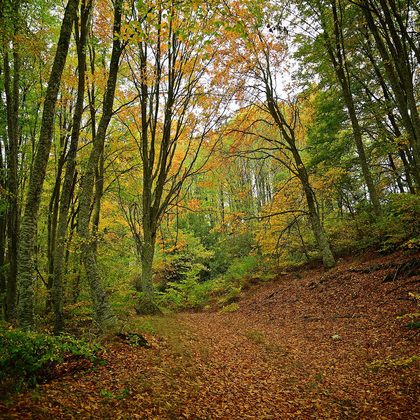
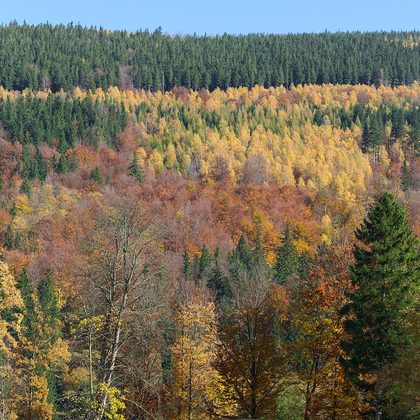
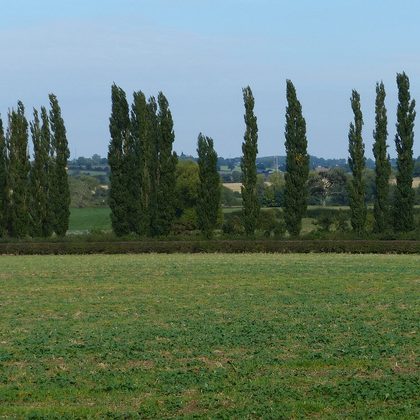
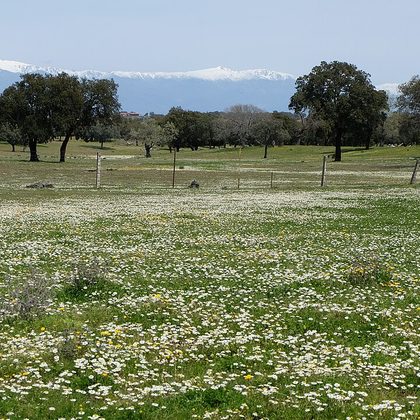
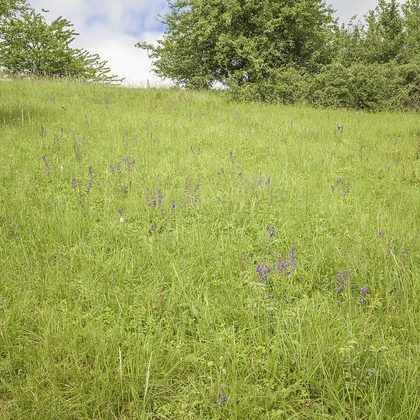
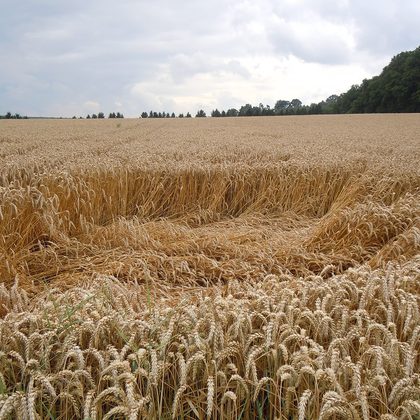
Broadleaved and mixed woodland with clearings, parkland, wood pasture and adjoining grassland and farmland. Fallow deer need less cover than roe deer and graze in groups in the open along the woodland edge. Many populations originate from deer parks or still live in large enclosed parks.
Where the animal is most at home, classified with EUNIS — the European standard for habitats.
Distribution
Originally after the ice age Asia Minor, and possibly Italy, the Balkans and Rhodes. In Turkey only the population of Düzlerçamı near Antalya survived, about 130 animals around 2010. On Rhodes live 400 to 500 fallow deer that differ genetically from the rest and whose presence on the island goes back to the Neolithic. The Romans brought fallow deer to central Europe and Britain; later introductions followed, and in Germany the first documented release dates from 1577. Today fallow deer occur in most of Europe, from Ireland and Spain to southern Sweden, Poland and the Balkans. The largest population lives in Great Britain, about 100,000 animals at the beginning of this century. A genetic study of 2024 indicates that the Turkish populations are the origin of most European fallow deer.
- Native
- dark = core range, pale = thinly spread
Way of life
Fallow deer are active mainly at dusk and at night; in quiet areas also by day. The diet is varied: grass, herbs and leaves in spring and summer, acorns and beechmast in autumn, grass, bramble, bilberry, heather, holly, ivy and conifer needles in winter. Outside the rut the sexes live apart, in groups of up to 150; group formation varies greatly between areas. The rut lasts from early October to mid-November, peaking in the second half of October; bucks groan, a low, repeated grunt, and locally gather on fixed rutting grounds. After a gestation of about 33 weeks a single fawn of 3 to 4 kg is usually born in June and lies hidden in the vegetation for the first weeks.
Where and when to look
Fallow deer are easiest to see in large parks and protected areas without hunting, such as Phoenix Park in Dublin, Richmond Park in London, the Amsterdam Water Supply Dunes and Doñana, preferably early in the morning. The rut in the second half of October is best followed at sunrise, when the groaning of the bucks can be heard. Keep your distance from bucks during the rut and do not feed the animals.
Conservation status
Least Concern (LC, 2008). In western and central Europe the fallow deer is numerous and locally increasing; high densities lead to browsing damage to woodland and crops and to road collisions. The original populations, by contrast, are small and vulnerable: that of Düzlerçamı in Turkey numbered about 130 animals around 2010, and the population on Rhodes is threatened by poaching, wildfires and water shortage, and by mixing with escaped fallow deer from elsewhere.
Scientific name
Dama dama | (Linnaeus, 1758)
Linnaeus described the species in 1758 as Cervus Dama; because it was later moved to another genus, the author and year stand in brackets. Dama is a Latin animal name, also written damma, used of a deer or an antelope; which animal the Romans meant, and where the word came from, is not settled. The specific name repeats the genus name. The specimen the first description was based on came from Sweden.