All species › Even-toed ungulates › Bovids › Dama gazelle
Dama gazelle | Nanger dama
Damagazelle | Gacela Dama
The dama gazelle (Nanger dama) is the largest gazelle and lives in the Sahel and on the southern edge of the Sahara. No more than 250 remain in the wild, in Chad, Niger and Mali. In North Africa, the part of the guide area where the species used to occur, it has been exterminated; the western form, the mhorr gazelle, survived only in captivity, including a breeding centre in Almería in Spain, and has been reintroduced in Morocco and Tunisia.
Tracks
Territorial males mark their territory with urine, droppings and gland secretions. The slot is narrow and pointed, larger than that of the Dorcas gazelle. When feeding the animals stand on their hind legs to reach acacia leaves; acacias browsed at that height indicate the species.
Identification
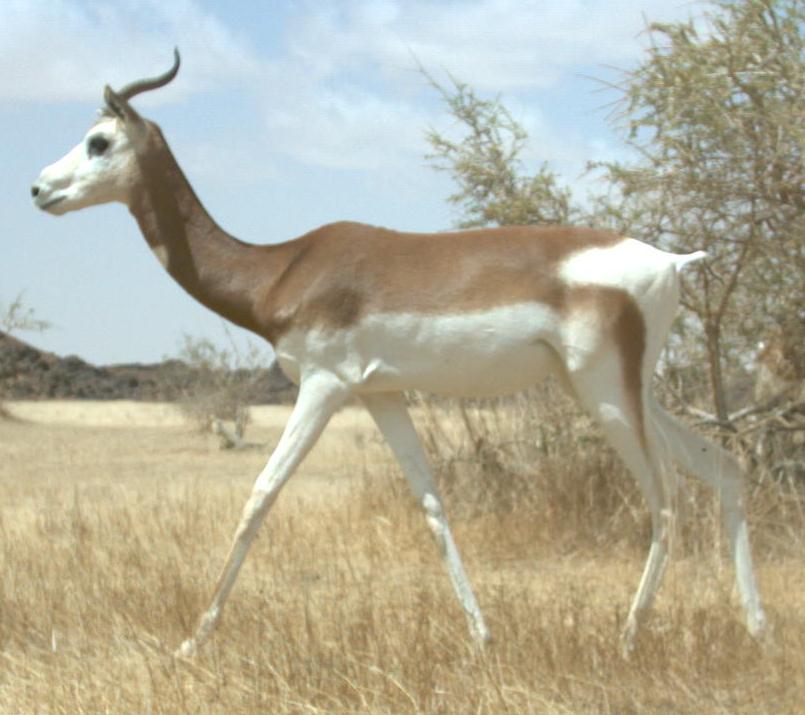
A large, long-legged gazelle of 140 to 165 cm head-body length, 90 to 120 cm shoulder height and 40 to 75 kg, with a long, slender neck and a tail of 25 to 35 cm. The coat is white with a reddish-brown head and neck; the amount of red increases from east to west. The western mhorr gazelle, the Moroccan form, is almost entirely reddish brown except for the underparts and rump. All forms have a small white throat patch, and the western forms have a dark stripe and red patches on the cheeks. Both sexes carry S-shaped horns of 20 to 43 cm, larger in males.
Similar species
The Dorcas gazelle is much smaller, sand-coloured with a reddish-brown flank stripe and white belly, and has a shorter neck. Cuvier's gazelle is small and dark greyish brown with a broad dark flank stripe. The scimitar-horned oryx is larger and heavier, with long horns curved backwards like a sabre, and partly lives in the same reserves.
Habitat
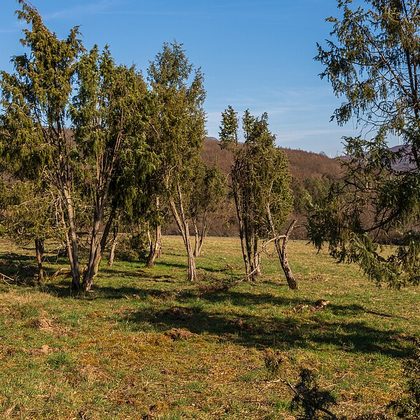
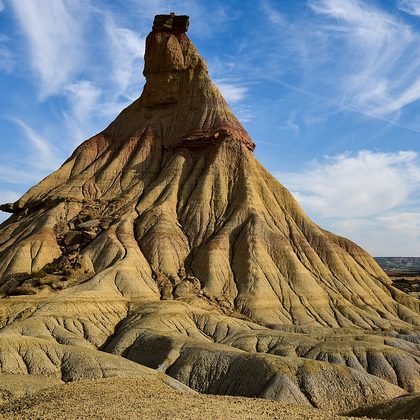
Grassland, scrub, semi-desert, open savanna and mountain plateaus. The animals move with the seasons: north into the Sahara in the rainy season, back to the Sahel in the dry season.
Where the animal is most at home, classified with EUNIS — the European standard for habitats.
Distribution
Originally the Sahel and southern Sahara from Senegal and Mauritania to Sudan, and in the north-west into Morocco. The species has been exterminated in Libya, Mauritania, Morocco and Nigeria and now lives in the wild only in Chad, Niger and Mali. In Spain a breeding centre for the mhorr gazelle, the Parque de Rescate de la Fauna Sahariana, was set up in Almería in 1971 with the last wild animals from southern Morocco. From this breeding stock animals have been reintroduced into fenced reserves in Morocco, Tunisia and Senegal. In May 2015, 24 gazelles were released in the Safia reserve in Western Sahara, close to the border with Mauritania: the first release outside a fence.
- Native
- dark = core range, pale = thinly spread
Way of life
The dama gazelle is active by day and moves over great distances. The animals live in mixed groups of about 15 to 20; males hold territories. Food consists of shrubs, herbs, grasses, leaves, especially of acacias, shoots and fruit. When in danger the animals leap upwards with stiff legs, which warns other members of the group. Gestation lasts about 6.5 months; a single young is born. Females are sexually mature at 9 to 12 months, males at 18 to 24 months. In the wild dama gazelles live to about 12 years.
Where and when to look
In the guide area dama gazelles live only in fenced reserves and breeding centres. In Morocco and Tunisia they can be seen in the fenced parts of protected areas, usually only with a guide. The breeding centre in Almería is a research institution and not a zoo.
Conservation status
Critically Endangered (CR, 2016), with no more than 250 animals in the wild. Causes are hunting, often from vehicles, habitat loss, drought, competition with livestock and poaching. Of the 24 gazelles released at Safia in 2015, seven were killed by dogs shortly after release and three by poachers in October 2015. The surviving animals established territories in suitable terrain, which shows that captive-bred animals can persist in the wild. Breeding programmes in European zoos are important for the conservation of the mhorr gazelle.
Scientific name
Nanger dama | (Pallas, 1766)
Pallas described the species in 1766 as Antilope dama; because it was later moved to another genus, the author and year stand in brackets. Nanger goes back to nanguer, the name Buffon took from Senegal for this gazelle; Lataste turned it into a genus name in 1885. Which African language the word comes from was never recorded. dama is Latin dama or damma, the name of the fallow deer and of antelope-like game generally; it stands undeclined in apposition to the genus name. The specimen the first description was based on came from Senegal.