All species › Hedgehogs, shrews and moles › Shrews › Cabrera’s Water Shrew
Cabrera’s Water Shrew | Neomys anomalus
Cabrera-waterspitsmuis | Musgaño de Cabrera
Cabrera's Water Shrew is the Neomys of the Iberian Peninsula. Cabrera described it in 1907 from the bank of the Jarama at San Martín de la Vega, south of Madrid. For a long time it was treated as a subspecies of a water shrew ranging from Spain to Iran, but a multilocus DNA study in 2015 showed that the Iberian animals form a species of their own, separated from the rest of Europe about 400,000 years ago. Since then only this Iberian species carries the name N. anomalus, and the species of the rest of Europe is the Mediterranean Water Shrew (N. milleri). Older English sources call both the Southern or Miller's Water Shrew.
No photograph of a living wild animal of this species with a suitable Creative Commons licence exists. Do you have one that meets the rules? Send it in.
Tracks
No sign belongs to this species alone. The droppings are small, black and full of chitin fragments, left on stones and roots along the bank; by eye they cannot be told from those of the Water Shrew nor, in streams where both occur, from those of the Pyrenean Desman. Collected droppings are therefore identified genetically; in northern Spain that is the standard method in desman surveys, and it yields the Neomys species as by-catch. Barn owl pellets are the other source: a lower jaw with red-brown tooth tips and a low ascending ramus points to this species, especially outside the range of the Water Shrew.
Identification
A medium-sized shrew with a dark grey to blackish back and a pale, greyish-white belly, usually with a clear boundary on the flank. The tooth tips are red-brown. It is smaller and less adapted to water than the Water Shrew: the hind feet are smaller, with shorter and sparser hair fringes, and the keel of stiff hairs under the tail covers only its rear half. The ears are small and hidden in the fur. Head-body 7.2 to 9.0 cm, tail 5.2 to 7.2 cm, hind foot 14.5 to 18 mm, weight 9 to 16 g; pregnant females can be heavier. Compared with the Mediterranean Water Shrew of the rest of Europe it has a longer tail and a larger hind foot.
Similar species
In northern Iberia the species lives alongside the Water Shrew (Neomys fodiens), and that is where the difficulty lies. The measurements overlap: the hind foot of Cabrera's Water Shrew reaches 18 mm, while that of the Water Shrew starts at about 16 mm, and tail lengths also overlap. Useful in the hand is the combination of a smaller body, smaller feet with shorter swimming fringes and a tail keel confined to the rear part of the tail; in worn animals that character too disappears. In the skull the height of the coronoid process of the lower jaw is usually below 4.8 mm, above it in the Water Shrew. In central and southern Iberia, where the Water Shrew is absent, every Neomys is Cabrera's. In the north-east, in part of Catalonia, the Mediterranean Water Shrew occurs and cannot be told externally; only DNA decides there. The Pyrenean Desman shares the same streams but is far larger and has a mobile, trunk-like snout.
Habitat
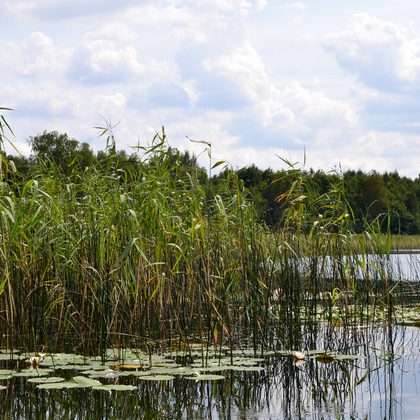
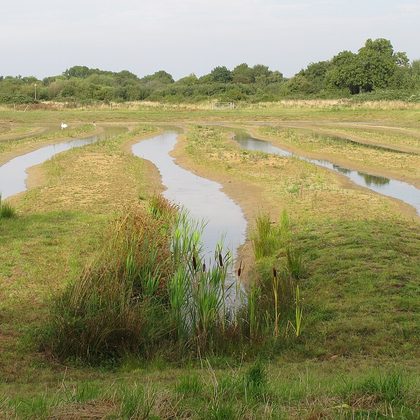
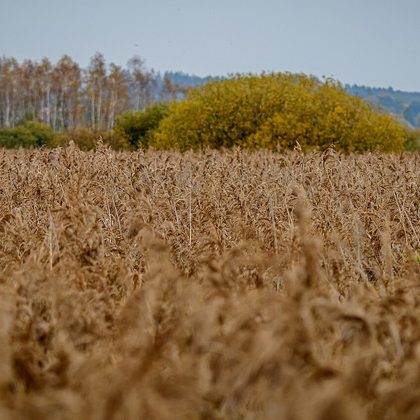
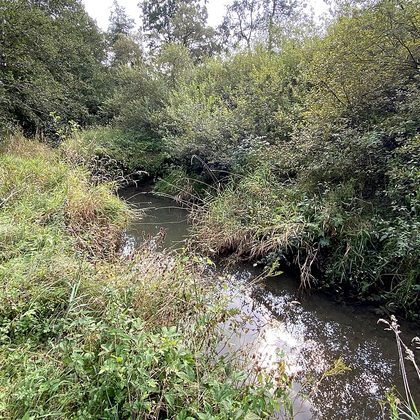
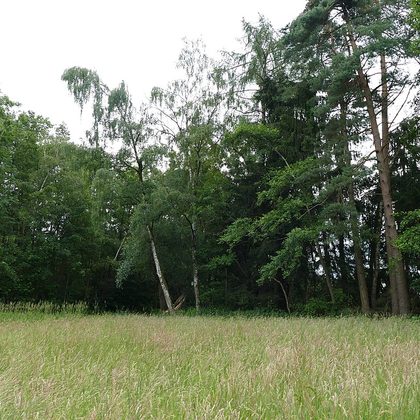
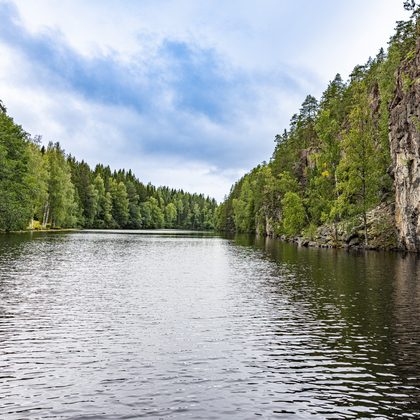
Damp places along running and still water: streams and rivers with bankside vegetation, springs, ditches, irrigation channels, small marshes and wet meadows. It is less dependent on water than the Water Shrew and has a clearer Mediterranean affinity; it is also found in damp tall herbage and gardens some way from open water. It occurs from sea level to above 1600 m in the Pyrenees and the Sierra de Gredos, in areas with an annual rainfall of just over 300 to almost 1900 mm.
Where the animal is most at home, classified with EUNIS — the European standard for habitats.

Distribution
Its range lies almost entirely within Spain and Portugal. It is widespread in the northern half of the peninsula except the north-east, where the Mediterranean Water Shrew takes its place, and in the south occurs only in scattered pockets: eastern Andalusia, southern Albacete, western Huelva and southern Badajoz. Because much of southern and western France lacks Neomys anomalus in the old, broad sense, the Iberian populations are isolated from the rest of Europe, and that isolation accounts for the split. Genetic work points to several glacial refugia within the peninsula, a pattern repeated in other semi-aquatic mammals of Iberia, among them the Pyrenean Desman. Its known range in Spain has been estimated at about 73,000 km².
- Native
- dark = core range, pale = thinly spread
Way of life
Mainly nocturnal, and shyer and less aggressive than the Water Shrew. The diet is strictly animal and consists of invertebrates from water and land: insects and their larvae, spiders, freshwater shrimps, snails and earthworms. Gestation lasts 20 to 24 days, a litter numbers five to thirteen young, and a female can raise several litters in a season. Little has been published on the social organisation of the Iberian species itself; in the related Mediterranean Water Shrew animals live in small, tolerant groups. It does not hibernate.
Where and when to look
Cabrera's Water Shrew cannot be identified with certainty by sight, but locality helps: in central and southern Iberia every small shrew with a dark back, a pale belly and swimming fringes is this species. Search at dusk along vegetated streams and irrigation channels and check stones and roots for droppings. Dissecting barn owl pellets from nests in churches, farmhouses and barns yields most records. In the north, where the Water Shrew and the desman also occur, a dropping can be assigned only by DNA; droppings intended for analysis should be kept dry or in alcohol.
Conservation status
Least Concern (2024); the species was assessed separately for the first time after the split. In Spain it is also regarded as not threatened, although water pollution and the loss of bankside vegetation have a demonstrable negative effect. Only about a tenth of its known range lies within protected areas. The greatest uncertainty is climate: models for Spain project a contraction of the climatically suitable area of 96 to 98 per cent by 2041–2070, with very little overlap between present and future range. Whether the species can escape this by moving to higher or cooler valleys has not been studied.
Scientific name
Neomys anomalus | Cabrera, 1907
Cabrera described the species in 1907 and placed it straight away in the genus where it still stands. Neomys is Greek, from neos, 'new', and mys, 'mouse'. anomalus is Latin for 'deviating, irregular', from Greek anōmalos: Cabrera took the animal for an aberrant form beside the familiar water shrew. The specimen the first description was based on came from Spain.