All species › Bats › Mouse-tailed bats › Arabian Mouse-tailed Bat
Arabian Mouse-tailed Bat | Rhinopoma cystops
Rhinopoma cystops | Rhinopoma cystops
The Arabian Mouse-tailed Bat is a medium-sized mouse-tailed bat of North Africa, the Sahel, the Horn of Africa and western Arabia. Oldfield Thomas described the form in 1903 from Luxor in Egypt. For a long time cystops was treated as a subspecies of Rhinopoma hardwickii; in 2007 genetic work showed that all small mouse-tailed bats from North Africa to the Middle East form one group, differing by about 9 per cent in cytochrome b from R. hardwickii in the strict sense. Older records of R. hardwickii from Egypt and the Levant therefore belong to this species.
No photograph of a living wild animal of this species with a suitable Creative Commons licence exists. Do you have one that meets the rules? Send it in.
Tracks
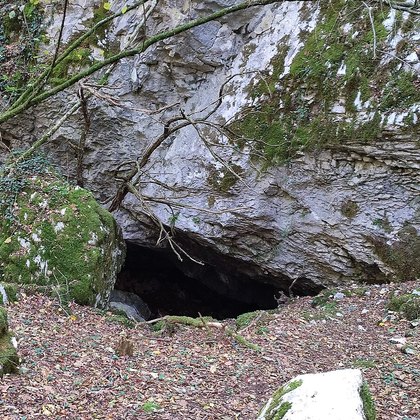
The species roosts in dry caves, ruins, underground passages and catacombs, mosques and old buildings, sometimes in fissures, small crevices and among boulders. Usually a day roost holds only a few animals, or colonies of 10 to 50; colonies of up to 200 are rare, and the largest groups reported, such as 500 in Jordan, are mixed with the Greater Mouse-tailed Bat. Before emergence a colony produces loud, audible calls. On contact, or when entering a colony, bats produce social calls accompanied by shivering of the extended wings and a raised tail. On a detector the calls are short, flat pulses around 33 to 34 kHz.
Identification
A medium-sized bat with a forearm of 50 to 67 mm and a weight of 6.5 to 17 g. The tail is very long and slender, clearly longer than the forearm, and projects mostly free beyond the tail membrane; the membrane attaches to the shin one fifth of its length from the end. The large ears are joined at the base by a fold of skin across the forehead. The nasal pad has swollen lateral ridges, a broad internarial ridge and a pronounced upper edge tapering into a small triangular nose-leaf; the nostrils are slit-like and can close. The fur is silky, each hair uniformly coloured, dark sepia grey on the back and paler grey to whitish below; wings and membranes are medium to dark brown. Rump and lower belly are naked or sparsely haired. In Libya much paler, almost white, and larger animals occur. Echolocation consists of short, near-constant-frequency pulses with several harmonics, most energy in the second harmonic at 32 to 37 kHz: mean 34.3 kHz in Jordan, 33.2 kHz in Sinai and 33.6 kHz in southern Morocco. Pulses last 4.5 to 12 milliseconds.
Similar species
The Greater Mouse-tailed Bat (Rhinopoma microphyllum) is larger (forearm 57–74 mm, weight 14–40 g), has a tail usually shorter than the forearm and shorter shins, and calls lower: the second harmonic lies around 27 to 31 kHz. In Israel both species hibernate in the same caves, sometimes in mixed colonies. The Lesser Mouse-tailed Bat (R. hardwickii) resembles R. cystops closely in external appearance and has the same chromosome formula (2n = 36), but as currently defined lives only from south-eastern Iraq eastwards; within the guide area only R. cystops is to be expected. The European Free-tailed Bat (Tadarida teniotis) and the Naked-rumped Tomb Bat (Taphozous nudiventris) have only a short free tail tip.
Habitat
Arid and semi-desert zones: semi-desert grassland with acacia scrub, oases with gardens and orchards surrounded by sand desert and hamada (bare rocky plateaus), and wadis with tamarisk and oleander, up to about 1100 m in the Maghreb and western Arabia. The bats forage in open space at about 10 m height. According to work in Israel the species tolerates lower temperatures than the Greater Mouse-tailed Bat, which may explain its wider distribution in the Mediterranean region.
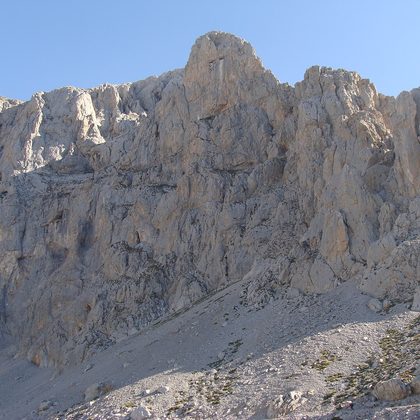
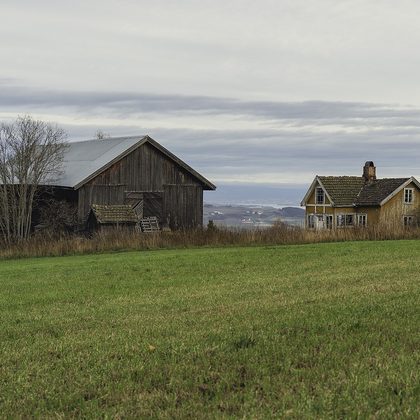
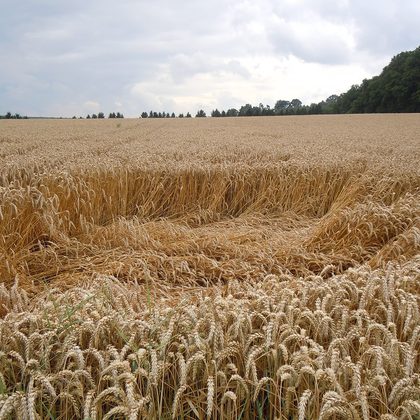
Where the animal is most at home, classified with EUNIS — the European standard for habitats.



Distribution
The nominate form lives in North Africa from Morocco to the Nile Valley in Egypt, in Sudan and northern South Sudan, and in the Sahel from eastern Mali to northern Chad. The form arabium lives in extreme south-western Syria, the Levant, western Arabia to Yemen and western Oman (including Socotra) and the Horn of Africa. Animals from Western Sahara, Mauritania and Senegal differ genetically by 6 to 9 per cent and probably represent an undescribed species. Within the guide area it occurs in the Maghreb, the Nile Valley, Sinai and the Levant.
- Native
- dark = core range, pale = thinly spread
Way of life
In the Mediterranean region the bats are inactive from October to April. In Israel they hibernate in caves, often together with the Greater Mouse-tailed Bat; they do not leave the roost to feed or drink and live on fat laid down in August to October. Body temperature stays around 21 to 23 °C all winter, without periodic arousals; a breathing cycle lasts about 15 minutes. They keep their eyes open, respond instantly to stimuli and can fly at a body temperature of about 23 °C. The diet consists of beetles and winged ants: in Israel in August to October 51 per cent beetles and 30 per cent ants, in Libya in May 81 per cent winged ants. Females have one young a year; in Egypt and Sudan early pregnancies have been found from late March to late April, pointing to mating in March-April, and lactation lasts into August. From May to July males and females live apart. Colonies are spread over many roosts, with changing composition.
Where and when to look
Emergence at an old ruin, catacomb or cave in the Nile Valley, Sinai or the Levant, shortly after sunset, gives the best chance. The long, thin tail can be seen on a bat passing low at dusk. A detector listening between 25 and 40 kHz separates calls around 34 kHz from those of the Greater Mouse-tailed Bat around 28 kHz. Winter roosts should not be entered: the bats respond instantly to disturbance and then use up fat reserve.
Conservation status
Least Concern globally (LC, 2016). The handbook lists no threats. Because the West African populations probably form a separate species, the delimitation of the species, and with it the assessment, may still change.
Scientific name
Rhinopoma cystops | O. Thomas, 1903
O. Thomas described the species in 1903 and placed it straight away in the genus where it still stands. Rhinopoma is Greek, from rhis, genitive rhinos, 'nose', and pōma, 'lid', after the flaps with which the animal can close its nostrils. cystops is Greek for 'bladder-face', from kystis, 'bladder', and ōps, 'face'; Thomas gives no explanation, and it presumably refers to the swollen muzzle. The specimen the first description was based on came from Egypt, Luxor.