All species › Rodents › Dormice
Dormice | Gliridae
Slaapmuizen | Lirones
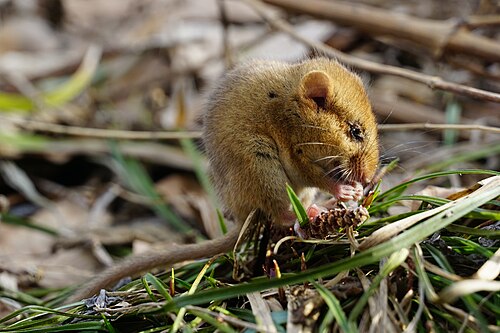
Small squirrel-like rodents with large eyes, rounded ears, long whiskers and — alone among Europe's rodent families — a furred tail, bushy in most species, short and softly haired in the hazel dormouse. The soles carry pads and the claws are slightly curved: all the species climb, and most come to the ground only rarely. The cheekteeth are low-crowned with transverse ridges, suited to buds, fruit, nuts and insects. There is no caecum, which sets the family apart from every other European rodent and means that coarse leaf and grass cannot be digested. They hibernate in earnest: on late-summer fat the body temperature and breathing sink far down, and the fat dormouse may sleep more than half the year. For rodents of this size they live remarkably long. The nest is a woven ball in a tree hole, a nest box or dense scrub.
Native species 6 species
Species that occur here by nature, including those released to bring back a population that had gone. They are arranged by genus, in the sequence of the list.
Fat dormice | Glirinae
1 species
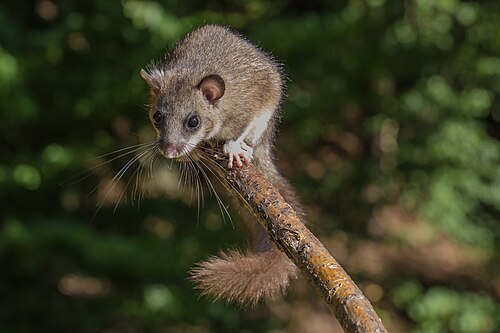


Garden and hazel dormice | Leithiinae
5 species
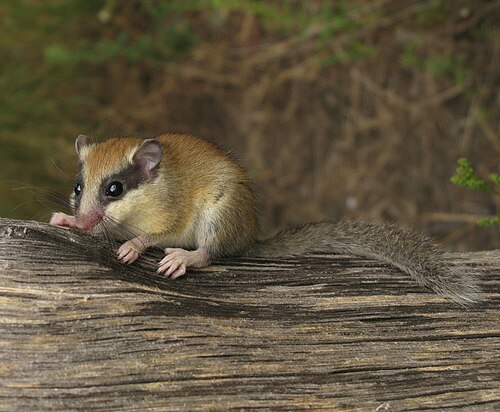

Eliomys 2 species
-
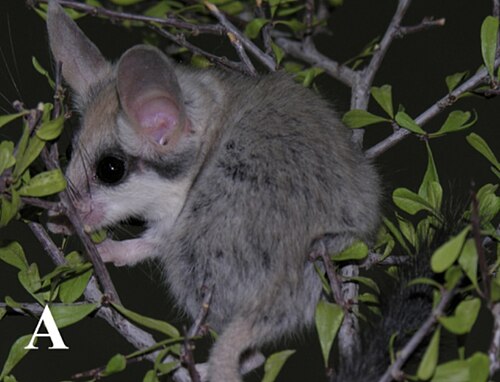
Asian garden dormouse
Eliomys melanurus Inland cliffs, rock pavements and outcrops
 Miscellaneous inland habitats with sparse or no vegetation
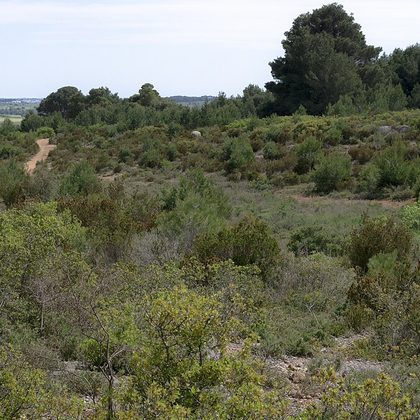 Garrigue
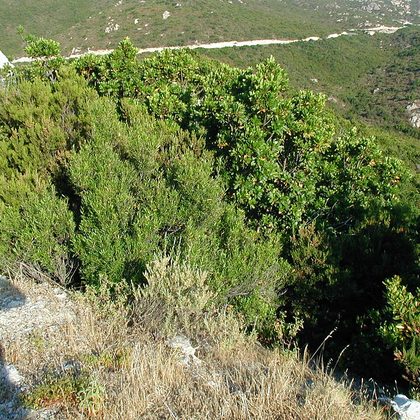 Maquis, arborescent matorral and thermo-Mediterranean brush
 Coastal dunes and sandy shores
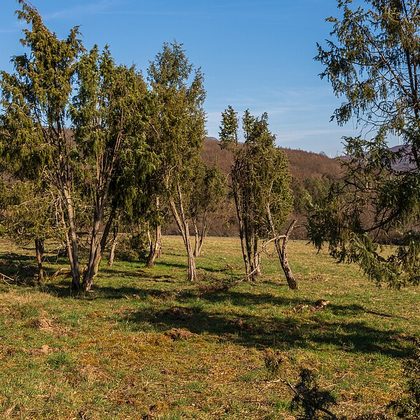 Dry grasslands
 Low density buildings
-
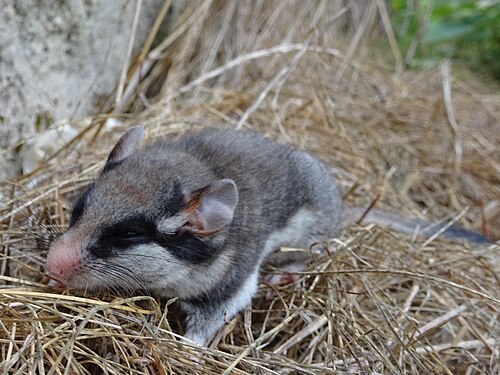
Garden dormouse
Eliomys quercinus Coniferous woodland
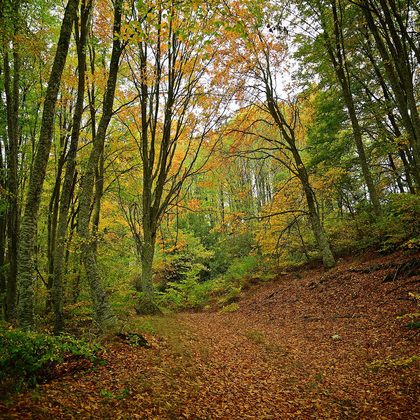 Broadleaved deciduous woodland
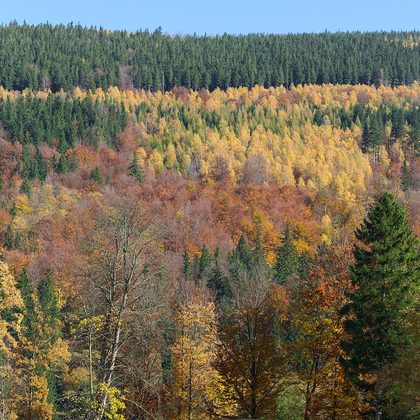 Mixed deciduous and coniferous woodland
- Inland cliffs, rock pavements and outcrops
 Cultivated areas of gardens and parks
- Low density buildings