All species › Nightjars › Nightjars › Swamp Nightjar
Swamp Nightjar | Caprimulgus natalensis
Moerasnachtzwaluw | Chotacabras del Natal
The Swamp Nightjar is a compact, short-tailed nightjar of open, marshy grassland. In the region it is scarce and local; in South Africa it has retreated sharply since the last century and is now seen only in northern KwaZulu-Natal.

Voice
A rhythmic series of short, rather liquid notes, chop-chop-chop-chop, up to dozens of times in a row, sometimes mixed with a soft croaking sound. It calls from the ground or a low mound, mainly at dusk.
Recording: Étienne Leroy — CC BY-NC-SA 4.0 · converted to mono · xeno-canto
Identification
21–23 cm. A rather small, stocky nightjar with a short, square tail. The upperparts are contrasting: blackish feathers with broad pale edges and spots, giving a spotted and scaly look. Head and breast are warm brown with fine markings and the belly is pale sandy. A rufous hind collar is almost absent. The male has white spots on the primaries and much white in the tail: the outer tail feathers are white along almost the whole outer web and at the tip. In the female these spots are pale buff.
Confusion species
The Square-Tailed Nightjar (Caprimulgus fossii) also has a square tail with white along the outer edge, but is longer, greyer and less boldly spotted, and churrs rather than repeating short notes. The Fiery-Necked Nightjar (Caprimulgus pectoralis) has an obvious rufous collar and a longer tail and lives in woodland. Habitat and voice are the best features.
Habitat
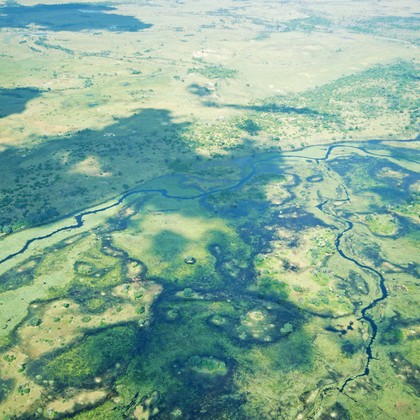
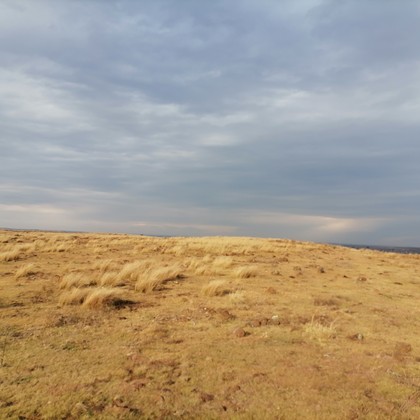
Open, damp to marshy grassland beside swamps, floodplains, vleis and riverbanks, also coastal grassland with palms and wet savanna. It roosts by day on the ground among grass tussocks, never in trees, and hunts insects low over the grass.
Where the bird is most at home, classified by the vegetation units of southern Africa.
Range and movements
Local in the north and east of the region: the great floodplains of Zambia (Bangweulu, Kafue Flats, Liuwa and Barotseland), eastern Angola, northern Botswana (Okavango) and the Zambezi Region of Namibia, the coastal plain of Mozambique, scarce in Malawi and Zimbabwe, and in South Africa now only in Maputaland in northern KwaZulu-Natal. Beyond the region it is widespread but local in West, Central and East Africa.
- Resident
- dark = core range, pale = thinly spread
How and when to look
Best on the Kafue Flats or the Liuwa Plain in Zambia and along the fringes of the Okavango, at dusk. Listen for the series of chop notes and scan low over the grass with a lamp; a flushed bird shows the short tail with much white along the edges.
Conservation status
Not globally threatened, but scarce in southern Africa and locally reduced by wetland drainage, sugarcane and timber plantations and changes in flooding regimes. In South Africa it has declined strongly and is of regional concern.
Scientific name
Caprimulgus natalensis | Smith, 1845
Smith described the species in 1845 and placed it straight away in the genus where it still stands. The genus Caprimulgus was introduced in 1758 by Linnaeus. Caprimulgus is Latin, from capra 'nanny goat' and mulgere 'to milk', after the old belief that nightjars suckled goats at night. natalensis means 'from Natal', the region on South Africa's east coast (now KwaZulu-Natal) where the first specimen was collected. The specimen the first description was based on came from Durban, South Africa.