All species › Birds of prey › Hawks, eagles and kites › Martial Eagle
Martial Eagle | Polemaetus bellicosus
Vechtarend | Águila Marcial
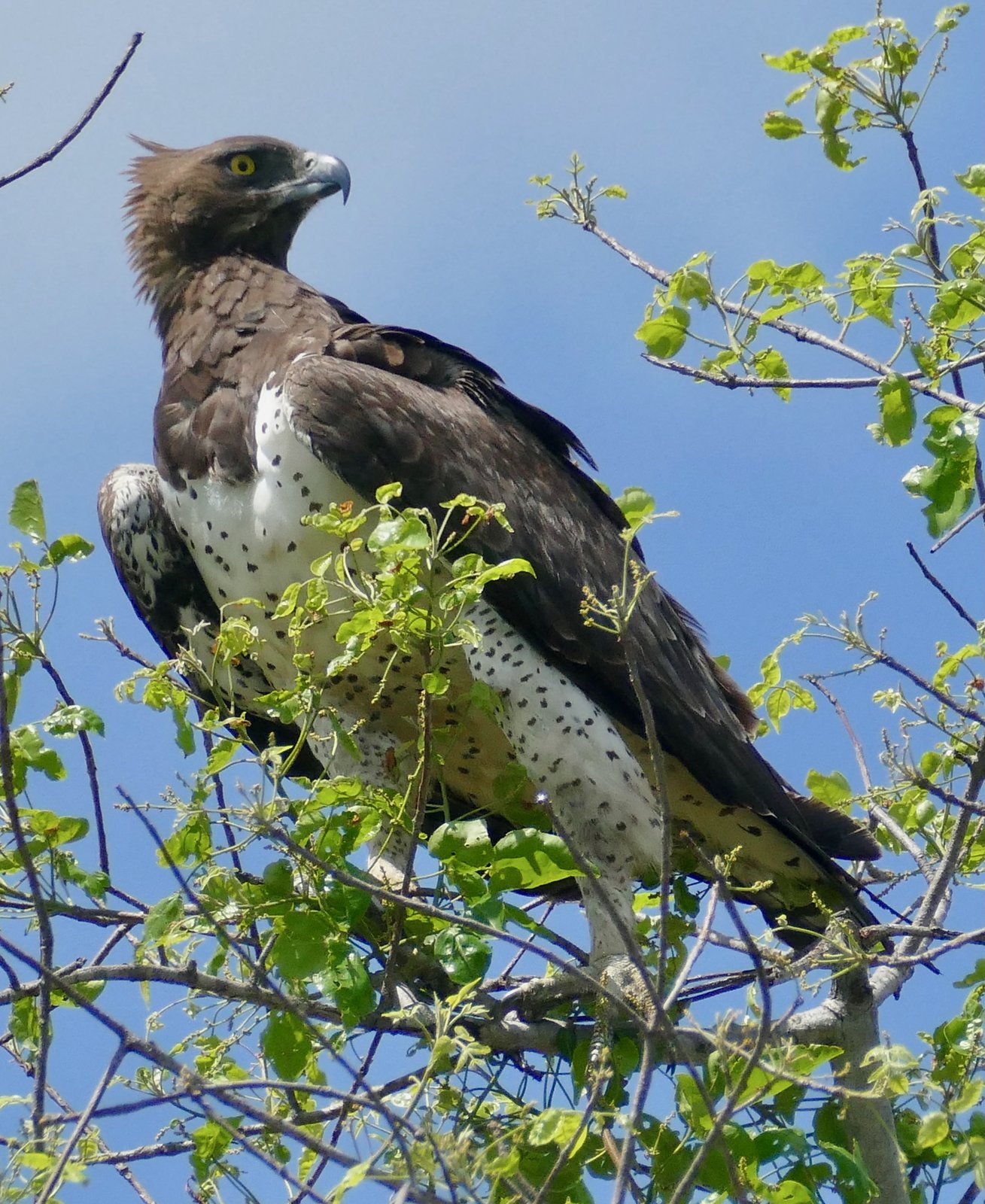
The Martial Eagle is Africa's largest eagle: a heavy raptor with a dark head and breast, a white, finely spotted belly and a stare that leaves no doubt. It hunts from great height and takes prey up to the size of a young antelope.
Voice
Mostly silent. Around the nest and in display a loud, clear klee-klee-klee-kluee and a soft, croaking kwolui. Young birds beg with a high, repeated whistle.
Recording: Kileo Jumah — CC0 · converted to mono · xeno-canto
Identification
78–86 cm, wingspan 190–240 cm; the female is larger than the male. Head, upperparts and breast dark greyish brown; belly and thighs white with small, scattered dark brown spots. Short, flat crest, bright yellow eyes and heavy legs feathered down to the toes. In flight the wings are long and broad; the underwing is dark through the dark coverts, with finely barred grey flight feathers, and the tail is short for the bird's size. The juvenile is pale grey above and pure white below, with a white underwing and finely barred flight feathers; adult plumage is reached only after five or six years.
Confusion species
Black-Chested Snake Eagle (Circaetus pectoralis) is much smaller, with an unspotted white belly, a white underwing and bare legs. Crowned Eagle (Stephanoaetus coronatus) is a forest bird with barred, rufous underparts and short, rounded wings; the juvenile Crowned Eagle has black-spotted legs and a barred underwing. African Hawk-Eagle is smaller, with streaked white underparts and white wing panels.
Habitat
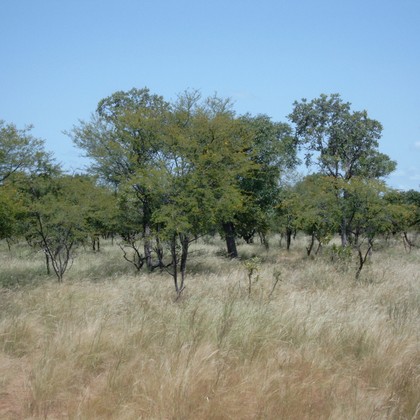
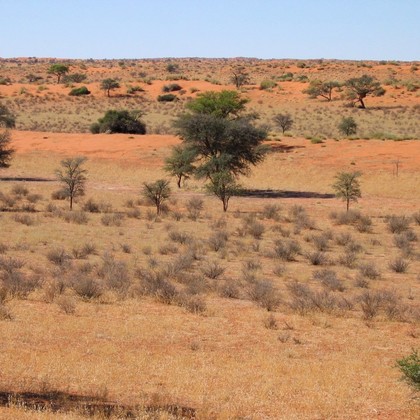
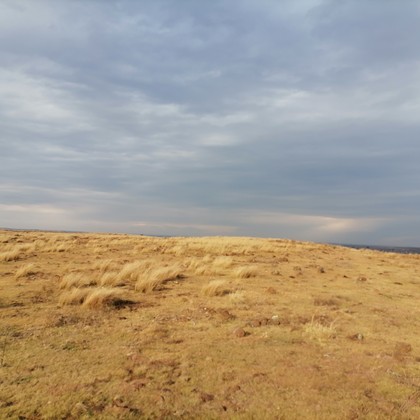
Open and semi-open savanna, thornveld, the Kalahari, grassland with wooded gorges and the edges of semi-desert; also farmland with scattered trees or power pylons. It often hunts from a high soar, then attacks in a long, slanting stoop. It eats francolins, guineafowl, bustards, monitor lizards, hyraxes, young antelope and sometimes lambs. The nest is a large stick platform in a tall tree or, increasingly, on a power pylon.
Where the bird is most at home, classified by the vegetation units of southern Africa.
Range and movements
Thinly spread over the whole region: South Africa (mainly the Kalahari, the Northern Cape, Limpopo, Mpumalanga, KwaZulu-Natal and the Karoo, rare in the Western Cape), Eswatini, Lesotho (rare), Namibia, Botswana, Zimbabwe, Mozambique, Zambia, Malawi and Angola; densest in large protected areas. Beyond the region throughout Africa south of the Sahara, from Senegal to Ethiopia and Somalia.
- Resident
- Summer visitor (c. Oct–Mar)
- Winter visitor (c. Apr–Sep)
- Passage (Mar–Apr, Oct–Nov)
- dark = core range, pale = thinly spread
How and when to look
Look for perched birds on the tallest tree around or on a power pylon; in the Kgalagadi and Kruger they are seen regularly, often picked out from afar by the white belly and the upright, heavy stance. In the air the bird may be so high that it is barely visible to the naked eye; look up when francolins or guineafowl flush.
Conservation status
Endangered on the Red List; raised from Vulnerable to Endangered in 2020. The species is declining fast, even in protected areas. Causes are persecution and poisoning by farmers, electrocution and collisions with power lines, drowning in farm reservoirs, loss of prey and a low breeding rate: a pair raises at most one young every two years.
Scientific name
Polemaetus bellicosus | (Daudin, 1800)
Daudin described the species in 1800 as Falco bellicosus; because it was later moved to another genus, the author and year stand in brackets. The genus Polemaetus was introduced in 1890 by Heine. Polemaetus comes from Greek polemos, 'war', and aetos, 'eagle': 'war eagle', for its powerful, predatory nature. bellicosus is Latin for 'warlike', from bellum, 'war' — for the power of this large eagle. The specimen the first description was based on came from Great Namaqualand, Namibia.