All species › Nightjars › Nightjars › Fiery-Necked Nightjar
Fiery-Necked Nightjar | Caprimulgus pectoralis
Roesthalsnachtzwaluw | Chotacabras Músico
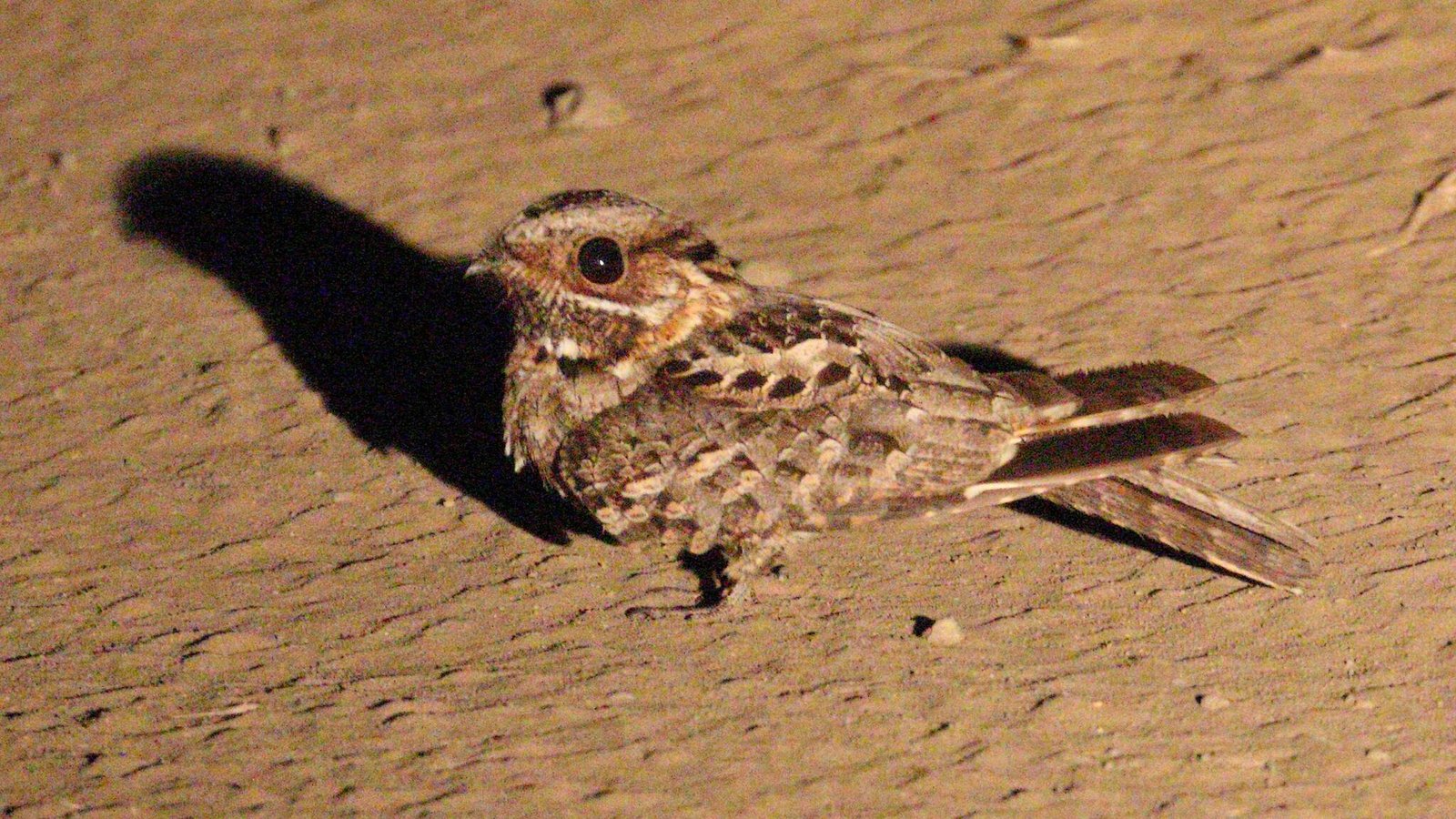
The Fiery-Necked Nightjar is the most widespread nightjar of the woodlands of southern Africa. Its descending, plaintive whistled song, rendered as Good Lord, deliver us, is for many people the sound of an African night.
Voice
A clear, descending series of whistles, tiu-wee-tee-tee-tee-trrrr, ending in a short trill; the rhythm is rendered as Good Lord, deliver us. Repeated from a branch or post, mainly at dusk and at full moon, and heard all year, most often from August to November.
Recording: Lynette Rudman — CC BY-NC-SA 4.0 · shortened to the first 60 s, mono · xeno-canto
Identification
23–25 cm. A medium-sized, warmly coloured nightjar with finely vermiculated grey-brown upperparts, a broad rufous hind collar and a rufous to orange-buff throat and upper breast, with a white throat patch. The crown is greyish with black streaks and the scapulars have black spots with a pale edge. The male has large white spots on the four outer primaries and broad white tips to the two outer tail feathers; in the female the wing spots are smaller and paler and there is less white in the tail.
Confusion species
The Rufous-Cheeked Nightjar (Caprimulgus rufigena) is paler and greyer with less rufous on throat and breast, and churrs rather than whistles. The Square-Tailed Nightjar (Caprimulgus fossii) has a narrower, less obvious collar and white along the whole outer edge of the tail. The Montane Nightjar (Caprimulgus poliocephalus) in the mountains of Malawi and Zambia is darker with more white in the tail. The European Nightjar (Caprimulgus europaeus) is larger, greyer and lacks a rufous collar.
Habitat
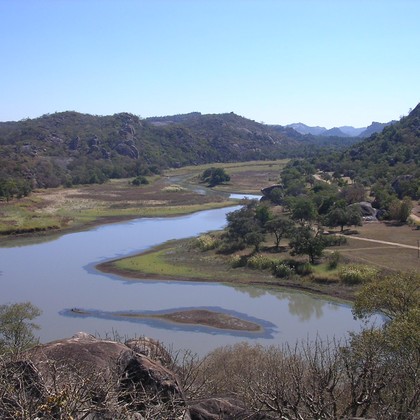
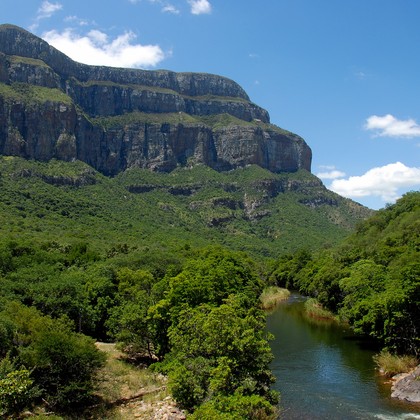
Woodland of all kinds: miombo, mixed broadleaf woodland, mopane and acacia savanna with large trees, riverine forest, forest edges, eucalyptus and pine plantations, and large gardens. It roosts by day on the ground in leaf litter, sometimes on a branch. It hunts moths and beetles from a perch.
Where the bird is most at home, classified by the vegetation units of southern Africa.

Range and movements
Widespread over most of the region: Angola, Zambia, Malawi, Mozambique, Zimbabwe, northern and eastern Botswana, northern Namibia and, in South Africa, from Limpopo, Mpumalanga and KwaZulu-Natal along the east coast to the Eastern and Western Cape; also Eswatini. Absent from the arid west, the Karoo and the Namib. Beyond the region north to DR Congo, Uganda and Kenya.
- Resident
- Summer visitor (c. Oct–Mar)
- Winter visitor (c. Apr–Sep)
- Passage (Mar–Apr, Oct–Nov)
- dark = core range, pale = thinly spread
How and when to look
All year, but especially on clear spring evenings from August to November. Follow the song to a dead branch or post along a woodland track; in torchlight the eyes glow red. By day the bird is found only when it flushes from the leaf litter at your feet.
Conservation status
Not threatened and common over most of the region. It benefits locally from plantations and large gardens. Road kills and woodland clearance cause local declines.
Scientific name
Caprimulgus pectoralis | Cuvier, GLCFD, 1816
Cuvier, GLCFD described the species in 1816 and placed it straight away in the genus where it still stands. The genus Caprimulgus was introduced in 1758 by Linnaeus. Caprimulgus is Latin, from capra 'nanny goat' and mulgere 'to milk', after the old belief that nightjars suckled goats at night. pectoralis is Latin for 'of the breast', from pectus, 'breast' — for the rufous collar and breast. The specimen the first description was based on came from Knysna, South Africa.