All species › Passerines › Cisticolas › Chapin's Apalis
Chapin's Apalis | Apalis chapini
Chapins apalis | Apalis de Chapin
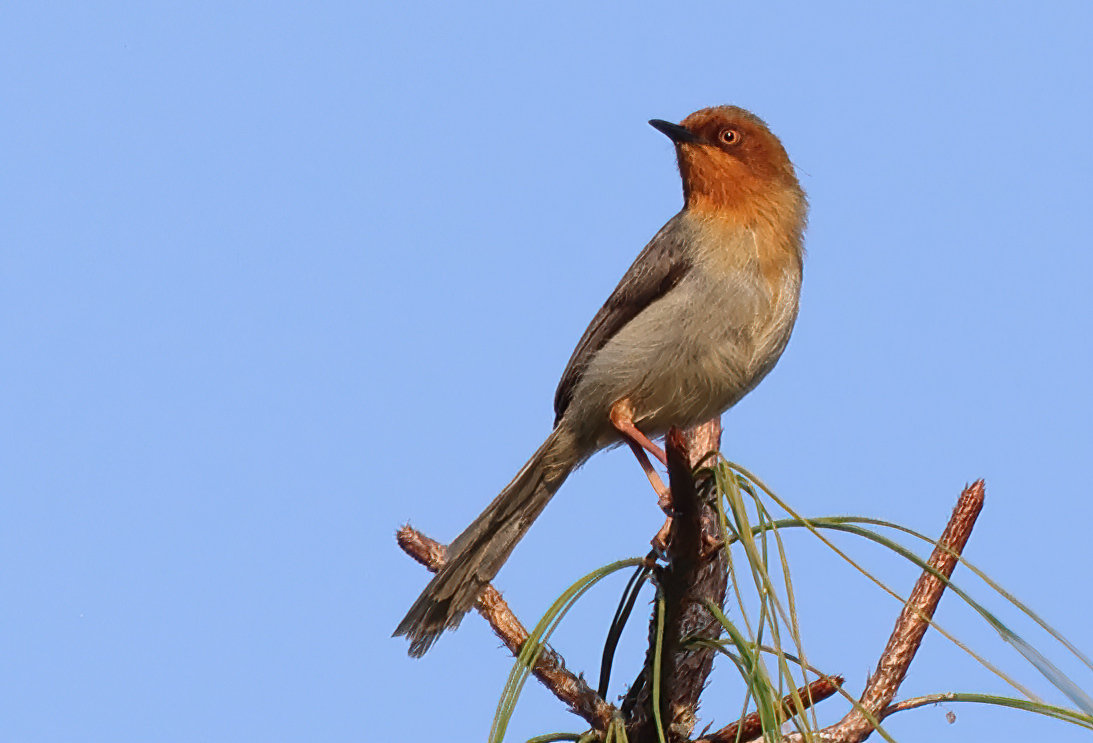
Chapin's Apalis is a dark grey apalis of the canopy of montane forest, with a warm rufous throat and breast. It inhabits a small number of montane forests in southern Tanzania and just enters the region in extreme northern Malawi and north-eastern Zambia.
Voice
The male gives a quick series of high, insect-like notes, tsee-tsee-tsee-tsee, between which the female inserts short tip notes. The sound is high and thin and often missed among other forest sounds.
Recording: isaac kilusu — CC BY-NC-SA 4.0 · converted to mono · xeno-canto
Identification
12–13 cm, with a fairly long tail. Crown, cheeks and upperparts dark slate-grey, the tail grey with white tips to the outer feathers. Throat and breast warm rufous-brown to chestnut, sharply set off against the pale grey to white belly. In the southern populations, to which the birds in the region belong, the chin is also rufous; northern birds have a white chin. The iris is pale brown, the bill black, the legs pink. The sexes are nearly alike; juveniles are duller, with a paler orange throat.
Confusion species
Red-Capped Forest Warbler Artisornis metopias also shows rufous on the head, but mainly on the crown and face rather than the throat and breast, has a much shorter tail, and lives low in the undergrowth. Bar-Throated Apalis Apalis thoracica, which occurs in the same forests, has a white throat with a black collar and a green or grey back. Brown-Headed Apalis Apalis alticola has a brown crown and white underparts without rufous. Outside the region Chestnut-Throated Apalis Apalis porphyrolaema is very similar, but it lives further north. The rufous throat and breast on an otherwise dark grey apalis are diagnostic within the region.
Habitat
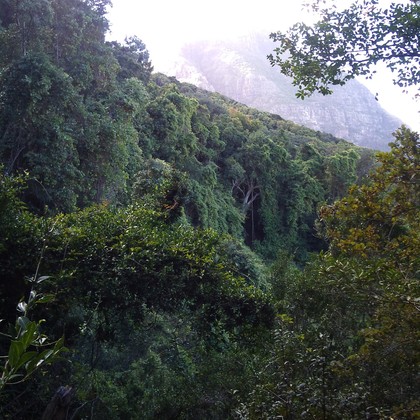
The canopy and upper strata of moist montane forest, mainly above 1500 m, and the edges of forest remnants. It forages singly, in pairs or in small groups, often in mixed flocks, high in the crowns and among moss and creepers.
Where the bird is most at home, classified by the vegetation units of southern Africa.
Range and movements
Within the region only in extreme northern Malawi (the forests of the Misuku Hills) and in the Mafinga Mountains on the Zambia–Malawi border; it is very local here and little recorded. Beyond the region in the montane forests of southern Tanzania, from the Udzungwa Mountains south-west to the highlands around Mbeya, with a separate form in the eastern Democratic Republic of the Congo.
- Resident
- dark = core range, pale = thinly spread
How and when to look
Year-round. Mughesse forest in the Misuku Hills in northern Malawi is the most accessible site in the region. Listen for the high, fast series in the canopy and follow mixed flocks; the rufous throat is best seen when the bird sits above you against the light. Records from Zambia are few and well worth documenting.
Conservation status
Not globally threatened, but with a small, fragmented range. Within the region confined to a few small montane forests under pressure from cutting, cultivation and fires.
Scientific name
Apalis chapini | Friedmann, 1928
Friedmann described the species in 1928 and placed it straight away in the genus where it still stands. The genus Apalis was introduced in 1833 by Swainson. Apalis comes from the Greek hapalos, 'delicate, gentle' — for these slender, finely built little warblers. chapini honours the American ornithologist James Paul Chapin (1889–1964), authority on the birds of the Congo. The specimen the first description was based on came from Nyingwa, Uluguru Mountains, Tanzania.